Arrest and Case Investigation of 12 Dual-National Managers in Iran
Despite the Iranian Minister of Intelligence’s emphasis that “there are no dual-national managers in the government,” one parliament representative has claimed the arrest and ongoing investigation of 12 such managers.
On Tuesday (November 15) a report from the National Security and Foreign Policy Commission regarding a request to review the status of dual-national individuals and those with green cards among senior managers and officials of the Islamic Republic, as well as “identifying legal gaps in this matter,” was read in the Islamic Consultative Assembly.
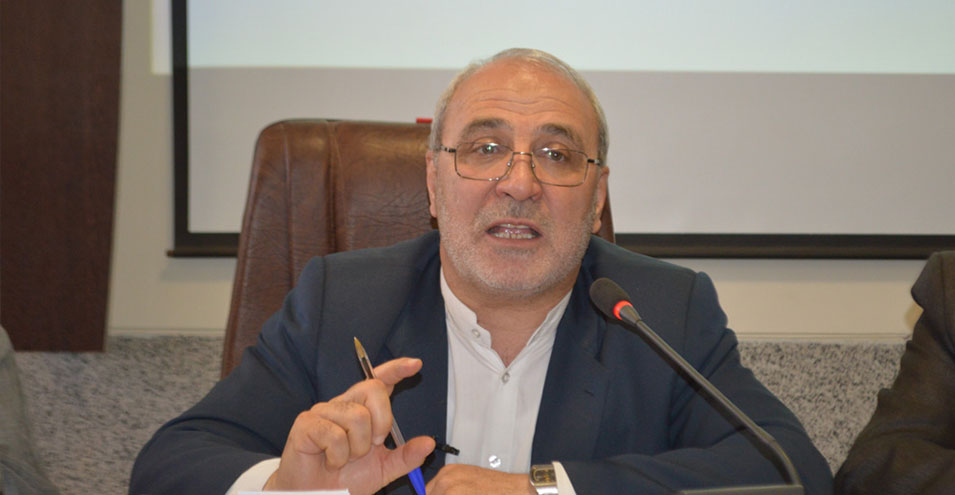
Following the reading of the report, Hosseinali Haji Deligani, representative of Shahinshahr, said: “Fortunately, a number of managers with dual citizenship who had infiltrated important management and decision-making sectors of the system have been arrested, convicted, or have cases under investigation.”
“Enemy Infiltration” Manifests in Dual-National Issue
Sensitivity regarding dual-national managers and officials increased especially after Ali Khamenei, the Leader of the Islamic Republic, repeatedly emphasized the danger of “enemy infiltration” in the system’s decision-making apparatuses and called upon all to conduct “greater jihad” against infiltration and foreign attacks.
In one of his recent statements on this matter, the Leader of the Islamic Republic, on June 26, in a meeting with members of the Assembly of Experts, while emphasizing the dangers of the “enemy” and “foreigners,” stated that the main objective of enemies of the Islamic Republic “in this stage of soft warfare is to create conditions for draining the system of internal elements of power.”
Following Khamenei’s repeated warnings, attacks against the Rouhani government, the faction called “moderates” and media close to them intensified. For instance, on September 21, twelve parliament representatives in a memorandum to the Ministers of Intelligence and Islamic Culture and Guidance demanded serious confrontation with “hundreds of infiltrators from Western intelligence services in newspapers and chain media.”
Hosseinali Haji Deligani was one of the signatories of this memorandum.
Simultaneously, the issue of “enemy infiltration” also gripped government managers and officials. Abbas Jafari Dolatabadi, Tehran’s prosecutor, on August 17 revealed the arrest of a “dual-national suspect” in Tehran and said that this person had been “connected to the British intelligence service.” The Tehran prosecutor made no reference to this person’s role in major government decision-making, but emphasized repeated statements by the Leader of the Islamic Republic regarding “the need for officials to be vigilant against enemy infiltration, especially after the JCPOA agreement.”
Then Javad Karimi Qodoosi, a principlist parliament representative, claimed that this “spy” was an American infiltration operative in the “nuclear negotiating team.” The Mashhad representative in parliament introduced this person as Abdolrasoul Dari Esfahani, the banking affairs manager of the nuclear negotiating team.
The Iranian Foreign Ministry quickly denied this news. Bahram Qassemi, the Foreign Ministry spokesman, on September 24 called Karimi Qodoosi’s statements “regarding the presence of the arrested person in Zarif’s accompanying delegation on a recent trip to Turkey” “baseless allegations.” He also harshly criticized Karimi Qodoosi for “hastily presenting incorrect claims without any preliminary investigation, solely for political exploitation.”
Following the Foreign Ministry, the head of Iran’s nuclear negotiations expert team also rejected the espionage accusations against Dari Esfahani and considered it “an insult to Iran’s intelligence and security apparatuses.” Hamid Baeidinejad in a detailed response to the accusation wrote that “based on reliable information, Mr. Dari is not a British national at all.”
Political analysts assess the continuous raising of the “enemy infiltration” danger, especially after Iran’s nuclear agreement with the West, as a manifestation of power struggle among Iran’s government leaders. Khamenei’s radical supporters were and remain concerned that implementing the JCPOA would strengthen the government supported by reformists and moderates and endanger the position of the Leader of the Islamic Republic.
Haji Deligani in his remarks today in parliament attempted to present his statements as a non-factional issue beyond power struggle. He said: “The purpose of the investigation and scrutiny is solely to clarify the status of dual-national senior managers and officials and in no way intends to target or condemn individuals of a particular faction or apparatus, but rather solely to clarify and address a threat that they are now trying to prepare conditions for in the country, and in some places these conditions have already been established.”
Implicit Espionage Accusation Against All “Dual-Nationals”
The Shahinshahr representative in parliament listed the “dangers” of government managers being dual-national, including that they “instead of loving their homeland, foster love for a foreign country within themselves.” Another danger in his view is that in “special and dangerous conditions for the country… they are not risk-takers and are not willing to stand and defend our country’s special interests.” Haji Deligani cited his third reason for defending the investigation and scrutiny of dual-national managers and those with green cards as follows: “When these individuals want to enter our country, they are not treated as citizens of foreign countries and necessary procedures in this regard are not observed, which can pose dangers to the country.”
This parliament representative went further and implicitly deemed all dual-national managers’ objective as espionage: “These managers, because they consider themselves Iranian, approach the country’s officials and even extract their personal information and relay it to foreigners.”
Arrest of “Second Person” from Nuclear Team
In addition to naming Dari Esfahani as one of the accused in the “espionage” and “enemy infiltration” case who “has his wife and children living in Canada” and receiving “a certificate of merit” from the highest executive official of the country and is “now free after posting bail and remaining in the country,” Haji Deligani spoke of the arrest of another person who “was in the legal team of the negotiators and was arrested on charges of espionage and cooperation with hostile states.”
The Shahinshahr representative also referred to Sirous Nasseri, a former member of the nuclear negotiating team, saying: “It is said he is seeking even a third nationality. A year ago a warrant for his arrest was issued by the judiciary on espionage charges, but he has fled the country.”
One of the principlist media outlets on June 12 of the current year claimed “issuance of an arrest warrant” for Sirous Nasseri. The following day, Gholam-Hossein Mohseni Ejei denied this news and said: “He has not been arrested and no arrest warrant has been issued for him.”
Hosseinali Haji Deligani, while requesting the judiciary to clarify “how many dual-national individuals had infiltrated important management and decision-making sectors of the system in the past two years,” said: “Fortunately, a number of them have been arrested, convicted, or have cases under investigation. The statistics we have show 12 people.”
Although Mahmoud Alavi, Iran’s Minister of Intelligence, had said that he would prevent dual-national managers from continuing their work, mid-November of the current year he stated in a detailed interview with the state news agency IRNA that the issue of dual-national managers is one of the scenarios prepared by opponents to weaken the government; otherwise, “there are no dual-national managers in the government.”
Source: DW