Deepening Gender Gap in Education; The Catastrophe of Girls Dropping Out of School / Elah Amani
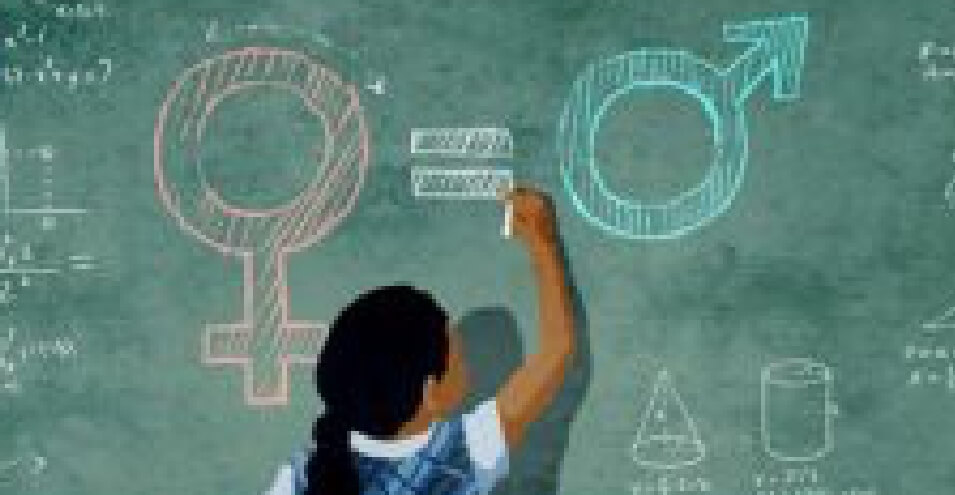
The coronavirus pandemic has had profound and lasting impacts on educational systems worldwide, leading to the closure of many primary, secondary, and higher education institutions globally, a process whose full ramifications are not yet fully evident. According to estimates by international organizations, by September 30, 2020, over one billion and seventy-seven million students have been deprived of in-person education. Like other sectors, the coronavirus pandemic has deepened existing gaps in society through education, and the damage inflicted on children and youth from working-class and poor communities on the margins of society is particularly severe. Nearly one-third of the world’s children lack access to remote education. School closures for many children and adolescents have resulted in widespread harmful processes not only in terms of educational deprivation but also in health, security, and even nutrition. The nutrition of many children and adolescents from the United States to poor countries depends on free food provided in public schools, and this group benefits from medical and mental health services provided by specialized staff in schools. According to reports from the World Health Organization, the consequences of school closures have deepened the gender gap in education, and achievements made over several decades to reduce the gender gap at the primary level, which had been substantially achieved, could be lost. Eleven million girls are at risk of never returning to school due to the coronavirus pandemic. This number, based on estimates from the World Health Organization and based on projections and research conducted during the Ebola pandemic in Africa, speaks to a catastrophe that lies ahead.
Global experience shows that when schools close, girls face greater risks. The danger of forced marriages, child marriage, physical and emotional violence and mental health issues, child labor, and the heavy responsibilities girls bear in the private sphere, including caring for the sick and household work, are all areas that impede their return to schools after reopening.
The gap in educational justice and inequalities in societies regarding access to and use of educational facilities have become more pronounced with the coronavirus pandemic, depriving children and adolescents, particularly girls, of their human right to education. Previous studies on school closures due to pandemics, floods, or earthquakes have proven that even a few weeks of school closure can cause long-term disruption to student learning and academic achievement. The reality is that the global community faces a massive crisis in the educational sector, linked to an economic storm on the horizon. The patterns of educational systems at the primary, secondary, and higher education levels will undergo change and paradigm shift. We will never return to what was “normal” and “customary.”
According to United Nations reports, in 71 countries worldwide, fewer than half the population has internet access. However, despite the existing gap, 73 percent of the 127 countries that reported have used virtual education platforms for both remote and hybrid teaching. Additionally, most of these 127 countries that submitted reports (three-quarters) use television to replace in-person instruction.
Malala Fund, which works on children’s education, particularly girls’ education globally, has seriously expressed concern about the possibility of girls not returning to schools after reopening. This organization, along with other institutions such as UNESCO, the World Health Organization, and UNICEF, emphasize that countries should prioritize safely reopening schools without endangering children’s health, and school closures should be the last resort for public health. The severe, particularly long-lasting impacts on the lives and human rights of girls must be prevented through effective planning, as its effects would be catastrophic and enduring.
Another aspect that the coronavirus pandemic has highlighted is the accelerated trend of privatization of public education and non-governmental schools. Privatization is one of the neoliberal projects that the coronavirus pandemic has severely undermined. Private schools lack the capacity to cope with crises, and we are witnessing the fragility of neoliberal educational systems because the privatization of public education has created non-resilient and unsustainable educational systems. Private schools are established like other commercial enterprises with the goal of profit. Governments’ neglect of free and universal education has facilitated the growth of private schools, which in many countries, including the United States, are supported by religious extremist and right-wing forces and form an integral part of neoliberal policies. In America, during months when public education faced a profound crisis, budgets allocated for emergency aid and critical coronavirus relief were directed to private schools, many of which are religious, until a federal court judge ruled that this was illegal and must stop.
Today, many private schools in Peru, Pakistan, India, England, and Argentina face the danger of closure. Many believe that the only way out of this situation is for countries to intelligently invest in public educational systems, making them accessible to all and ensuring these systems are resilient and resistant to crises.
Iran
In Iran too, the characteristics of the crisis in the educational system, which can no longer be concealed or hidden today, are one of the greatest challenges: the lack of adequate infrastructure, economic and cultural poverty, and the gaps that existed in society before the coronavirus, which are now highlighted and evident.
Although schools in Iran have been divided during this year into in-person, hybrid, or remote categories or red, yellow, and white zones, the coronavirus will mark the weakness in educational justice with a tsunami of vast numbers of students, particularly girls, not returning to school.
The enormous gap between poverty and wealth in Iran has challenged the educational system in various dimensions and aspects.
Many children do not have suitable phones, families are unfamiliar with virtual spaces, and the internet is not accessible to all. The available internet bandwidth for communication is also inadequate. In many rural areas, parents are illiterate or semi-literate, and overall, based on information reflected in Iranian media, 40 percent of students—approximately four million seven hundred eighteen thousand—have been deprived of participation in virtual spaces and study alongside their classmates for the aforementioned reasons. Regarding economic barriers to participation in virtual spaces, it can be noted that the price of phones increased by approximately one million tomans over one month.
A teacher discussing the challenges in villages around Shiraz says that in addition to internet problems and the lack of smartphones, many students attended school one shift and worked the other shift. For them, the coronavirus brought no quarantine because due to economic difficulties they were forced to work two shifts, hazardous and low-income work at that, leaving no capacity for education.
Moreover, during this crisis and disruption in in-person education, instead of the government and the Ministry of Education being held accountable for determining strategy and approach, many parents, teachers who had to work much harder to effectively present educational content in hybrid and remote formats, and even many of those who had to personally cover needs that schools previously provided, have been held responsible. This itself creates greater psychological stress for teachers. Iran’s honorable and hardworking teachers should not be held accountable for the shortcomings of the educational system.
Another aspect worth reflecting on in Iran, which aligns with policy trends in other countries, is the neoliberal project of private schools. In the late 1960s, private schools were welcomed by the government and affluent and middle-class urban classes as a way to address shortages and neglect of the public educational system, given the growth of the student population and high classroom density in public schools, some of which taught in two or even three shifts.
However, as we see in other countries, this sector in Iran has also faced crisis and lacks the necessary resilience to face current challenges.
In Iran, 16,700 non-governmental schools are active nationwide, accommodating 11 percent of all students. These commercial institutions, which neither pay taxes nor face particular oversight, have experienced high growth over the past three decades. If it is true that most top-ranking scores on the nationwide university entrance exam over the past decade are products of non-governmental schools, it must be acknowledged that these commercial institutions use tactics to maximize profit that lack transparency, including inviting outstanding students in the final years of high school to register at their schools without paying tuition so that with their university entrance exam success, they can increase their own credibility. This demonstrates both the weakness and qualitative deficiencies in the educational content of public schools and reflects the pallid state of educational justice.
Fourteen million Iranian students, of whom only 11 percent have access to private institutions, face numerous challenges, particularly in rural areas and border provinces such as Kurdistan and Sistan and Baluchestan. In this regard, girls form the most vulnerable part of the student population whose education has been disrupted.
In Iran, like other countries in Asia, Africa, and Latin America, educational content is provided through television networks. The “Shad Network” in Iran is responsible for this education.
From a cultural perspective, virtual education in Iran faces a values challenge. In dominant discourse in the educational sphere and generally, virtual space was considered an “unhealthy” space and a threat to the values governing society. Parents feared internet addiction and were concerned about the harms of children and adolescents being exposed to computers and virtual spaces. The coronavirus crisis quickly transformed the “desirable” values into their opposite, and all previous challenges and mental constructs were set aside, harms became less significant, and the educational system, without infrastructure and even without many teachers’ preparation, was forced to use virtual space.
These changes undoubtedly have far-reaching impacts on society. In Iran, where the concept of democracy has faded, participation in and control of virtual space is not encouraged for political, cultural, and religious reasons. Of course, undoubtedly, unintelligent and unhealthy presence of children and adolescents in virtual space has its own harms, and a society with the complexities of Iranian society lacks the necessary preparation to protect children’s and adolescents’ health and security in virtual spaces.
In any case, in the post-coronavirus era, the reality will be that Iranian society will transcend engineered caution and theoretical misgivings about virtual space contradictions. Crises like the coronavirus pandemic give educational systems the opportunity to, if there is political will to respond to society’s needs, particularly those on the margins, create a resilient and resistant system. Iran’s students and educational staff should have access to today’s world’s capabilities for development. May we break through heaven’s ceiling and establish a new design.
Source: Hrana