Bahai Persecution in Employment Continues
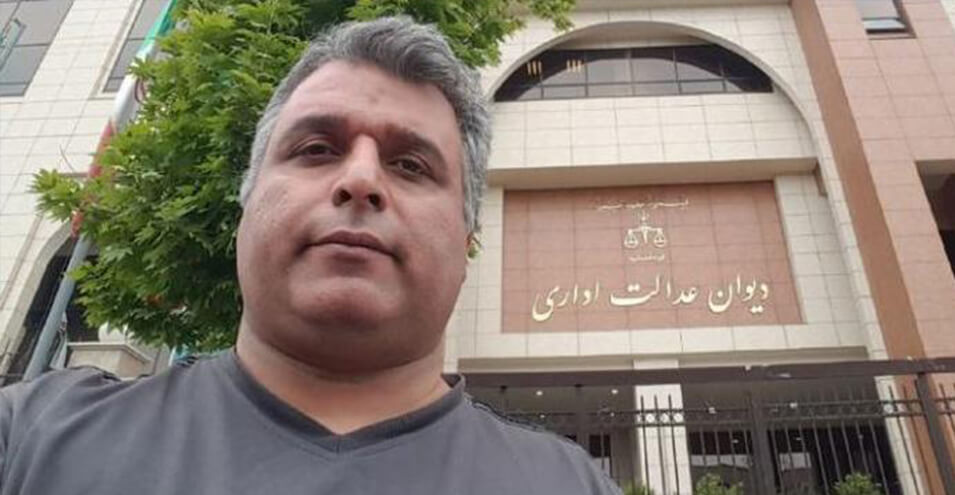
A Bahai citizen whose eyeglass shop in Nizar Abad, Karaj has been sealed for ten years plans to file a complaint against the judiciary with Commission 90 of parliament. The Bahai community describes the prevention of Bahais from conducting business as “economic apartheid.”
Payam Vali, an Iranian Bahai whose shop was sealed ten years ago and whose other business activities have also been blocked, has decided to file a complaint against the judiciary. He told the “Campaign for Human Rights in Iran” that his eyeglass shop was closed under the pretext of not having a health network permit: “I had and have a business license from the opticians’ union and a technical certificate in optometry from the Ministry of Labor. However, ten years ago when there were approximately 6 eyeglass shops in Nizar Abad, 5 eyeglass shops that belonged to Bahais were sealed while one eyeglass shop whose owner was Muslim remained open.”
He stated that after 9 months of unemployment and unsuccessful follow-ups, he obtained a cosmetics and hygiene product agency, but information agents also blocked this work by intimidating buyers: “Now I have been practically unemployed for about two years.”
This Bahai citizen says the Nizar Abad court referred his initial complaint to a city security council resolution against Bahais: “I complained to the department of places and the security council, and they said they can do nothing for you. You must go to the Ministry of Information and commit that you will not propagandize.”
Payam Vali also appealed to the Office of the Inspector General of the Country but discovered that his name was registered on this organization’s website as someone who has not renounced the Bahai faith: “This means my complaint in judicial institutions will not be investigated because I am Bahai.”
He says that once in February 2010 he was arrested for pursuing matters related to the removal of the seal from his shop and spent three months in prison on charges of “taking action against national security and propaganda against the system.”
Mohammad Javad Zarif, Iran’s Foreign Minister, said in May 2017 that being Bahai is not a crime in Iran and no one goes to prison because of “being Bahai or not believing in God.”
In fall 2017, sources close to Bahais reported that more than 100 young Bahais who were accepted in that year’s national entrance exam faced “incomplete file” status at the field selection stage. After referring to the National Organization for Educational Testing, they were told that due to being Bahai and a resolution by the Supreme Council of the Cultural Revolution, they were not allowed to study unless they confessed that they had renounced the Bahai faith and become Muslim.
In addition to being denied education or government employment, Bahais are also not guaranteed personal security. Their homes or graves are also destroyed by “unknown agents” and desecrated.
The most common charge that the Iranian government brings against Bahais is “espionage.” At least 200 Bahais were executed on this charge in the early days of the revolution. The global Bahai community says that persecution of followers of this religion has increased under the Rouhani government.
Source: DW