Bandar Abbas: 8 Bahai Citizens Sentenced to Total of 14 Years in Prison
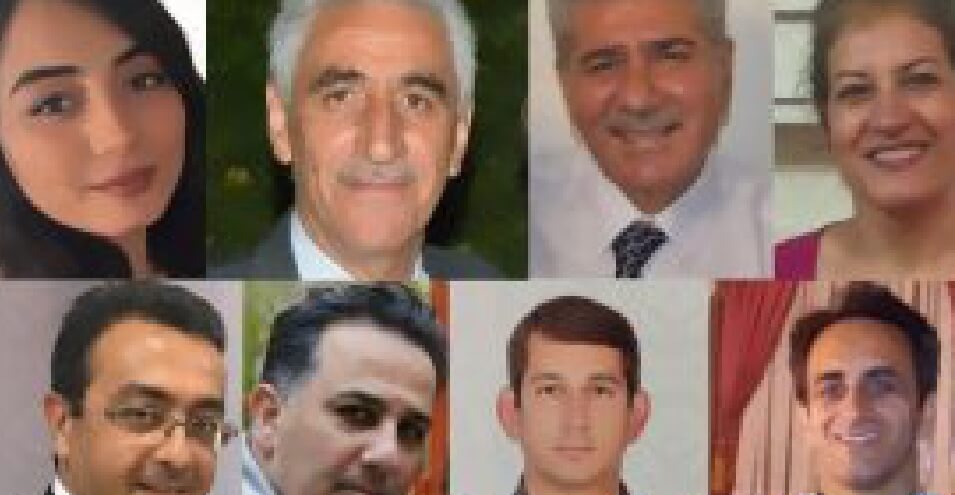
Arash Rasekhi, Nasim Qanvatan, Maral Rasti, Mahnaz Jannesar, Omid Afsaghi, Ruhollah Afshar, Adib Haghpazuh, and Farhad Amri, eight Bahai citizens residing in Bandar Abbas, have been sentenced by Branch 2 of the Bandar Abbas Revolutionary Court to a combined 14 years of imprisonment. In addition to this sentence, these citizens have been sentenced to supplementary punishment including a two-year ban from membership in political and social parties and groups, prohibition from participating in Bahai gatherings and assemblies, and mandatory attendance of five counseling sessions regarding sectarian issues under the supervision of professors at the Sajjadiyeh Institute of Thought in Bandar Abbas.
According to Hrana news agency, the media organ of the Iranian human rights activists network, eight Bahai citizens residing in Bandar Abbas have been sentenced by the Revolutionary Court to a combined 14 years of imprisonment.
Based on this verdict issued by Branch 2 of the Bandar Abbas Revolutionary Court under the presidency of Judge Baladbar and recently served on these citizens, Maral Rasti, Mahnaz Jannesar, Arash Rasekhi, Nasim Qanvatan, Ruhollah Afshar, and Omid Afsaghi have each been sentenced to two years of imprisonment, while Farhad Amri and Adib Haghpazuh have each been sentenced to one year of imprisonment. The charge against these citizens has been described as assembly and conspiracy with intent to threaten national security.
In addition to this sentence, these citizens have been sentenced to supplementary punishment including a two-year ban from membership in political and social parties and groups, prohibition from participating in Bahai gatherings and assemblies, and mandatory attendance of five counseling sessions regarding sectarian issues under the supervision of professors at the Sajjadiyeh Institute of Thought in Bandar Abbas. Part of this verdict states that if the named individuals do not comply with the terms of the supplementary punishment during its execution, the court will increase the supplementary punishment by up to one-third for the first violation and, in case of repetition, will convert it to level seven or eight imprisonment or fine.
A source close to the family of one of these Bahai citizens told Hrana regarding the issued verdict: “After three years from the case file formation in Branch 3 of the Bandar Abbas Public and Revolutionary Prosecutor’s Office, Mr. Rahimi, the case prosecutor, after three years of investigation, ultimately told these Bahai citizens that after three years, no evidence was provided by the Bandar Abbas Intelligence Organization to support the crimes they claimed, and if by the end of the month, despite the three-year passage, they do not provide evidence, the case will be closed and a non-prosecution order will be issued. After this incident, Prosecutor Rahimi was removed from Branch 3 of the Public and Revolutionary Prosecutor’s Office and a new prosecutor entered the case. By that time, the charge of propaganda against the system had already been presented to these citizens, and the new prosecutor, without notifying the defendants and their lawyers of the new charge, escalated the charge from Article 500 to Article 610 of the Islamic Penal Code concerning conspiracy to threaten national security and sent the indictment to the Revolutionary Court.”
This informed source told Hrana regarding the court session for these citizens: “On December 13 of this year, the court session for these Bahai citizens was held in Branch 2 of the Bandar Abbas Revolutionary Court. During this session, the lawyers and eight Bahai citizens realized for the first time that the charge of propaganda against the system under Article 500 of the Islamic Penal Code was changed and escalated to Article 610 of the Islamic Penal Code as assembly and conspiracy with intent to threaten national security, and despite the lawyers’ insistence that the legal proceedings were flawed and the case should be returned to the prosecutor’s office, the judge proceeded to issue a verdict without considering the legal process.”
This informed source further added: “The supplementary punishment issued in the verdict demonstrates that these eight Bahai citizens have been convicted solely because of being Bahai, and according to the main prosecutor of the case, there was no evidence in the file to prove the claims of the Intelligence Office.”
Arash Rasekhi, Nasim Qanvatan, Maral Rasti, Mahnaz Jannesar, Omid Afsaghi, Ruhollah Afshar, Adib Haghpazuh, and Farhad Amri were previously arrested in spring 2017 and were released on bail after the case file was formed in Branch 3 of the Bandar Abbas Prosecutor’s Office.
Among these citizens, Adib Haghpazuh had previously been arrested and convicted, and with the application of the amnesty of February 12, 2019, he did not face implementation of the imprisonment sentence.
Bahai citizens in Iran are deprived of freedoms related to religious beliefs. This systematic deprivation occurs despite Article 18 of the Universal Declaration of Human Rights and Article 18 of the International Covenant on Civil and Political Rights, which state that everyone has the right to freedom of thought, conscience, and religion, including the freedom to change religion and the freedom to express these beliefs individually or collectively, publicly or privately.
Based on unofficial sources in Iran, there are more than three hundred thousand Bahai followers, but Iran’s Constitution recognizes only Islam, Christianity, Judaism, and Zoroastrianism, and does not recognize the Bahai faith. For this reason, over the years, the rights of Bahai citizens in Iran have been systematically violated.
Source: Hrana