Bazaar Merchants Continue Strike in Tehran and Several Iranian Cities in Protest Against Dollar Fluctuations and Economic Recession
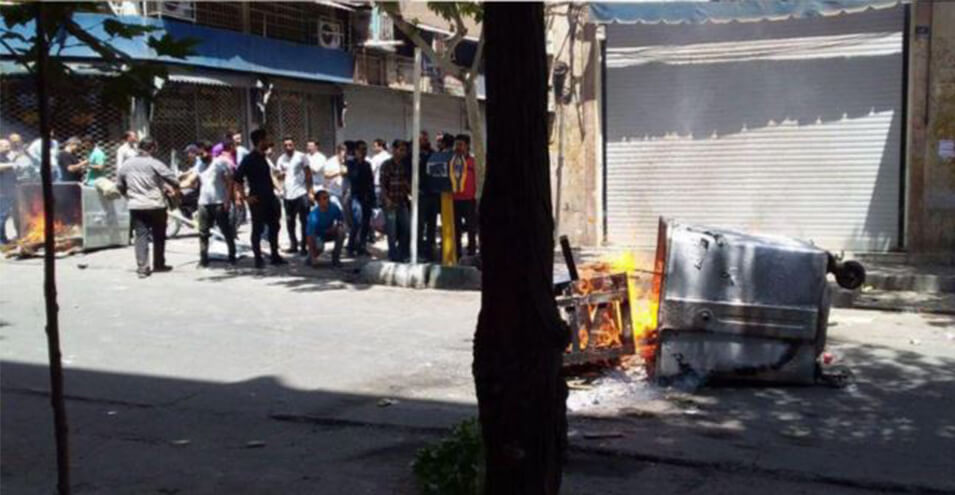
Some reports and images published on social media indicate that the strike in some areas of Tehran’s bazaar and several other Iranian cities continued for a second day.
Based on these images, most shops on Tehran’s Laleh Zaar Street and the jewelry section of the Grand Bazaar were closed on Tuesday, June 25, in protest against currency market fluctuations, continuous price increases of goods, and economic recession.
Reports have also emerged of the closure of Yaaft Abad furniture market and Delavarān market in Tehran, Kermanshah bazaar, and Vakil Bazaar in Shiraz.
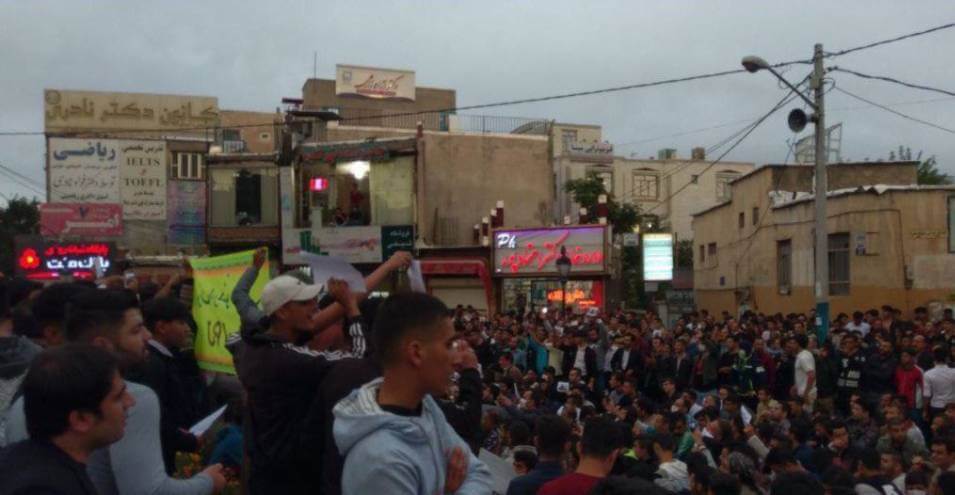
Images published on social media show groups of merchants encouraging other shopkeepers to close their stores and continue the strike. There have also been reports of garbage bins being set on fire and gatherings on streets surrounding the bazaar.
Meanwhile, the communications director of the Metro Operating Company announced that Mellat Station on Metro Line 2 was closed for a period due to gatherings. It has also been reported that during an attack by police on protesting merchants, at least two people were wounded.
On Monday, merchants of Tehran’s Grand Bazaar and shopkeepers from Jomhouri Street protested against currency market disorder, price increases, recession, and confusion among customers and sellers on Monday, June 24, by staging a strike and protest gathering.
Other images indicated that merchants in Mashhad, Bandar Abbas, and Qeshm also closed their shops and held marches.
Based on published videos, after closing their shops, merchants marched and chanted slogans including “Our enemy is right here, they lie it’s America” and “Death to freeloaders with thick necks.” This gathering subsequently faced confrontation with police and tear gas in some areas.
Some of the protesters also chanted “Reza Shah, may your soul rest in peace.”
Some reports indicated that police attacked bazaar merchants with batons and forced them to open their shops. Another report suggested that some merchants went in front of the Islamic Consultative Assembly building and chanted slogans.
Images published on social networks indicate that special police units fired tear gas to disperse people in front of the parliament.
Monday’s strike has also prompted reactions from Iranians and the opposition outside the country in solidarity with protesters in Iran.
Prince Reza Pahlavi, in several tweets, referring to Iran’s deep economic problems, wrote that these problems are the result of decades of incompetence by rulers and have ultimately led to street protests by the people.
Maryam Rajavi, leader of the National Council of Resistance of Iran, also tweeted that while the country suffers from economic problems, the government squanders the nation’s wealth on exporting wars and terrorism.
Many Iranians and Iranian-Americans in their tweets, by sharing links related to demonstrations in Iran’s capital on television news networks, have called for Iranian communities in America to express solidarity with protesters in Iran.
On Sunday, following a sudden increase in the free dollar rate to over 8,000 tomans and approaching 9,000 tomans, mobile phone sellers in two main markets for this commodity in Tehran, Ala’addin Passage and Chaharsou, closed their shops and gathered in protest against rising prices and currency rate fluctuations.
The fluctuation in the free currency rate in Tehran’s open market has intensified over the past two days, with each US dollar reaching approximately 9,000 tomans by the end of Sunday.
Source: Voice of America