Blinken on Iran’s Upcoming Elections: Supreme Leader Determines Islamic Republic’s Approach
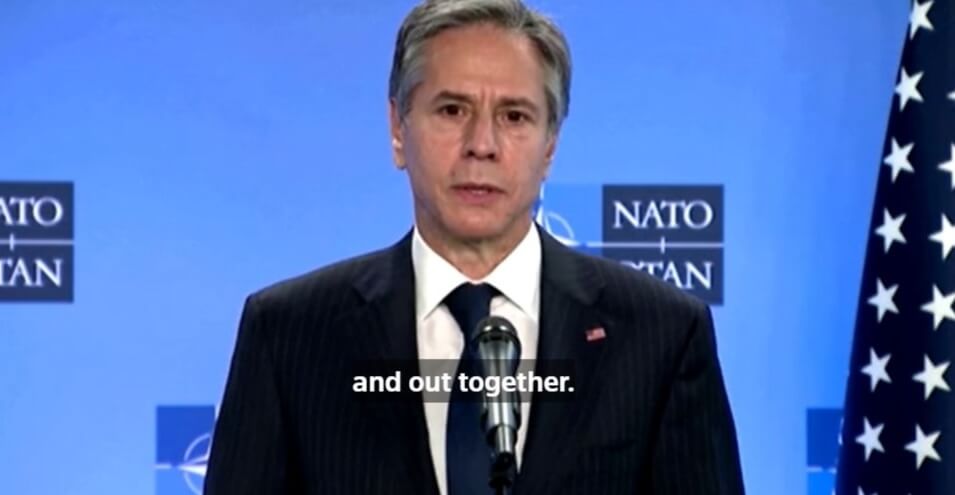
U.S. Secretary of State Antony Blinken said on Tuesday, April 3rd, regarding the impact of Iran’s upcoming presidential election on nuclear negotiations, that the Supreme Leader of the Islamic Republic is the decisive factor in determining Iran’s main approach and policies.
Antony Blinken, in an interview with Roula Khalaf of the Financial Times, said he does not want to speculate about the impact of Iran’s presidential election on indirect U.S.-Iran negotiations within the framework of the Joint Commission of the nuclear deal, known as JCPOA, in Vienna, the capital of Austria.
The U.S. Secretary of State said, “Look, I don’t want to engage in speculation about what this outcome or that outcome of Iranian elections will mean for nuclear negotiations. It’s clear that the Supreme Leader in the Iranian system is the decision-maker, and he is the one who makes fundamental and basic decisions about Iran’s approach.”
In recent days, there had been speculation about candidates in Iran’s presidential election, including that Mohammad Javad Zarif, Iran’s Foreign Minister and Iran’s principal nuclear deal negotiator, would also participate in the election.
However, the release of an audio file from Mohammad Javad Zarif criticizing the approach of the Quds Force and Russia led to widespread reaction. Ayatollah Ali Khamenei, the Supreme Leader of the Islamic Republic, described Mohammad Javad Zarif’s remarks as “repeating the hostile words of enemies and America.”
Ayatollah Ali Khamenei also said that the country’s foreign policy is determined by “higher-level assemblies and high-ranking officials” and the Ministry of Foreign Affairs is merely the “executor” of it.
Following the Supreme Leader’s remarks, Mohammad Javad Zarif, while expressing regret at the release of the audio file, said that these were “personal viewpoints” and were “solely expressed to convey experiences.”
The Long Road of Nuclear Negotiations
The U.S. Secretary of State further stated regarding the negotiations on reviving the JCPOA in Vienna that “some progress” has been made in these negotiations but there is still a long way to go in nuclear talks.
Antony Blinken said, “We still need to see whether Iran is willing and able to make the necessary decisions to return to implementing its commitments. And I think, as one of my colleagues said yesterday, the road ahead is longer than the road we have traveled.”
The third round of negotiations between the members of the JCPOA Joint Commission ended on Saturday, April 1st. So far, all parties, including the United States, have reported “progress” in the talks, though most have emphasized that it is too early to make a judgment in this regard.
Some news sources, including Israeli media, citing senior officials of that country, have said that the United States will likely return to the JCPOA in the coming weeks.
Iran-Saudi Arabia Negotiations
The U.S. Secretary of State also, in response to a question about negotiations between Saudi Arabia and Iran, said if they are talking to each other, that is generally a good thing. Dialogue is always the best alternative. But will these talks lead to a result? That is another question.
Six years after the severance of diplomatic relations between the two countries, some reports indicated that “direct” negotiations were held between senior officials of the Islamic Republic and Saudi Arabia in early April in Baghdad.
After the announcement of that news, informed sources said that the second round of these talks would be held by the end of April or early May, but no further details were announced.
Now the New York Times, on Saturday, April 1st, in a report on relations between the two countries, wrote, citing “officials who did not want their names disclosed,” that the two countries have agreed that the second round of talks will be held “in May and possibly at the level of ambassadors.”
Iranian and Saudi officials have not formally confirmed or denied the holding of these negotiations. Nevertheless, Saeed Khatibzadeh, spokesman for Iran’s Foreign Ministry, said on April 19th that the Islamic Republic welcomes negotiations with Saudi Arabia.
France Press Agency also wrote on April 19th, citing an Iraqi official and a Western diplomat, that in the first round, the delegations of the two countries, headed by Ali Shamkhani, secretary of Iran’s Supreme National Security Council, and Khalid bin Ali al-Hamiddan, head of Saudi Arabia’s Ministry of Intelligence, met with each other in Baghdad.
Source: Radio Farda