Boundless Repression, From Child Arrests to Deadly Mines
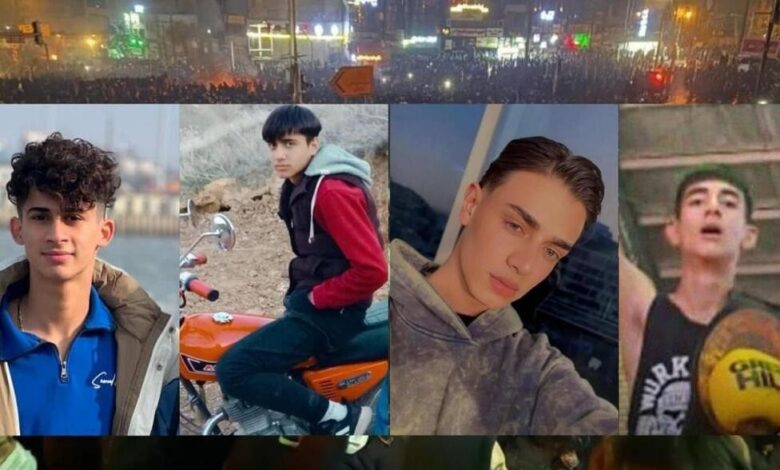
Published reports indicate boundless repression in Iran, with accounts of child arrests, torture of protesters, and silent victims of war mines.
Coinciding with the expansion of public protests across various Iranian cities, a new wave of arrests ranging from children aged 15 and 17 to civil activists and ordinary citizens presents a concerning picture of intensified repression; repression that recognizes no age, ethnicity, nor even the passage of decades since a war that ended long ago but whose mines continue to claim lives.
Four children named “Adib Ahmadinezhad,” “Mehdi Haqqjoo,” “Armin Sharifian,” and “Mohammad Hossein Khorsidvand” have been arrested by Islamic Republic security forces during public protests in the cities of Sanandaj, Langarud in Gilan Province, Nishapur in Razavi Khorasan Province, and Kahrizak, Tehran.
According to reports by the Hengaw human rights organization, on Monday, February 9, 2026, 17-year-old Kurdish child Adib Ahmadinezhad from Sanandaj was arrested by government forces in that city, and to date no information about his fate is available.
Similarly, on Sunday, February 8, 2026, 17-year-old Armin Sharifian from Nishapur was violently arrested by intelligence directorate forces while at his workplace at “Tile Line,” and to date no information about his fate and detention location has been released. According to published reports, his father has suffered seizures due to severe psychological pressure from the arrest and lack of information about his son’s condition.
On the other hand, on Wednesday, January 15, 2026, 15-year-old Lur child and athlete Mohammad Hossein Khorsidvand from Khorramabad was arrested at his family residence in Maskan-e Mehr, Kahrizak, Tehran by government forces and transferred to one of Tehran’s juvenile detention centers. According to received information, he is being held in the quarantine section of that detention facility.
Previously, on January 13, 2026, 17-year-old Gilaki youth Mehdi Haqqjoo from Langarud was arrested at his family residence by government forces. His family was only informed that he was transferred to Lakan Prison in Rasht, and until the time of writing this report, no other information about his condition and detention circumstances is available.
Many other children also exist who, due to severe pressures and threats against their families, have yet to have any information about their arrests or disappearances available, and news of their arrests has not been covered by media.
While the Islamic Republic is a signatory to the “Convention on the Rights of the Child” and is committed to special protection of individuals under 18 years of age, the arrest and detention of children under security conditions and in ignorance of families’ concerns is considered a clear violation of international obligations.
Coinciding with the arrest of these protesting children, news emerged of the death of another child; but this time not in detention, but in a minefield.
A 13-year-old Kurdish child died on Tuesday, February 9, 2026, following an explosion of a mine left over from the Iran-Iraq War in the “Cham-Handi” area of Dehloran County in Ilam Province. According to informed sources, the explosion occurred in the evening of that day, and the child died on the spot due to the severity of injuries sustained. According to informed sources, this explosion occurred in the evening of that day, and this child died at the location due to the severity of wounds sustained.
The border areas of Ilam, particularly Dehloran County, remain among the regions contaminated with mines left over from the Iran-Iraq War, and annually several citizens die or are injured as a result of these mine explosions. More than three decades after the war’s end, complete demining of these areas has still not been accomplished, and victims are mostly among children and residents of the country’s most deprived areas.
In continuation of the widespread wave of citizen arrests, at least seven other citizens have been detained and are living in limbo. The names of these citizens are as follows:
Poyan Golami, a Bahai citizen resident of Kerman, was arrested on Tuesday, February 9, 2026, by government forces at his workplace and transferred to an unknown location. After arresting this citizen, government forces conducted a search of his residence.
Sorosh Safarpour, a 31-year-old Gilaki citizen and player for Shahin Khoshkbijari football team, was arrested on Thursday, January 26, 2026, during a government forces raid on his residence in Khoshkbijari neighborhood in Gilan Province.
Alireza Mirkhorsandi, a Gilaki citizen from Langarud and an employee of that city’s environmental department, was arrested on Monday, January 23, 2026, at his workplace in the environmental department by government forces.
Yazdan Hashemi Khoshkbijari, a 27-year-old Gilaki citizen residing in Khoshkbijari, was arrested on Sunday, January 22, 2026, after receiving a phone call from the Lashtneshan Revolutionary Guards and reporting to that security institution, and was transferred to Lakan Prison in Rasht.
Milad Didar, a 27-year-old Gilaki citizen from Rasht, was arrested and tortured on Monday, January 13, 2026, during public protests in that city by government forces, and after forced confessions were extracted, was transferred to Lakan Prison in Rasht. This citizen faces the charge of “leading the protests,” which has raised concerns about his fate.
Davoud Abbasi, a 40-year-old filmmaker and citizen, was forcibly arrested on January 10, 2026, by Islamic Republic government forces in Karaj and transferred to Qarchak Prison. This citizen faces security charges and despite suffering injury during his arrest, has been deprived of appropriate medical attention.
Sajid Khabazi, a 33-year-old Gilaki citizen from Lahijan, married with one child, was arrested by government forces in Lahijan and transferred to Tehran. According to informed sources, this citizen has been subjected to severe physical and psychological torture. In one instance, a mock execution was performed on him with a request to prepare for execution and write a will.
Coinciding with child arrests, torture practices, pressure on families, and the continued casualties from war mines, a picture of a multifaceted crisis emerges; a crisis in which social protests are met with severe security responses and standards of fair trial, children’s rights, and the rights of religious and ethnic minorities have been called into question.
As protests continue in various cities, widespread arrests and violent confrontations have not only failed to quell grievances but have added to both domestic and international concerns.
The narrative of these days is not merely one of arrests; it is the narrative of a generation that faces both repression on the streets and, in forgotten border margins, mines left behind from an old war.