Brother of Nasser Razaei: My brother was a protester, they answered him with bullets
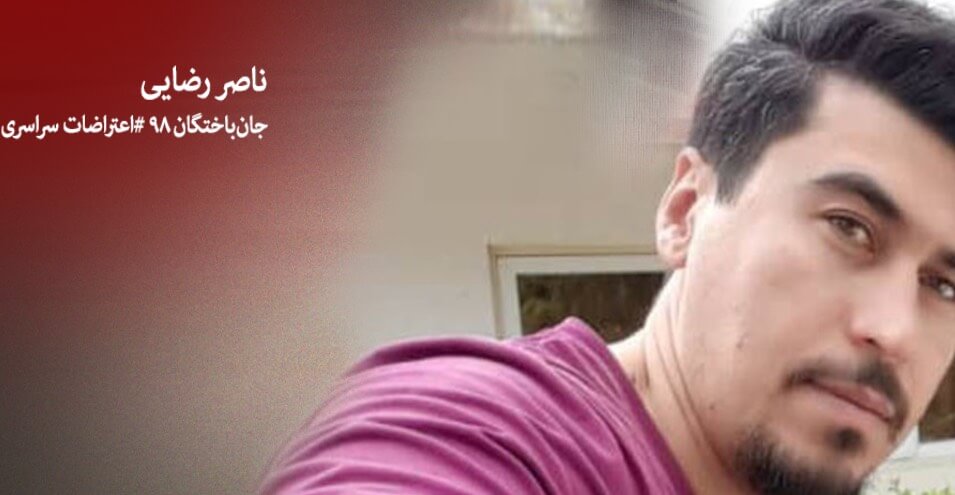
Mansour Razaei, the brother of Nasser Razaei who died on Sunday, November 17, 2019 as a result of a gunshot wound, said in an interview with the Human Rights Campaign in Iran that his brother was a protester, but security agencies had asked his family to introduce him as a “passerby” in an interview with Iranian television and say that he was killed by “ruffians”.
Mr. Razaei told the campaign that his brother was shot in the right eye area and the death certificate stated “gunshot wound” as the cause of death.
There is no precise figure for the number of deaths in the November protests in Iran. The Islamic Republic authorities refrain from providing official statistics on deaths and arrests. Amnesty International has documented 304 cases, and Reuters news agency, citing sources in Iran’s Interior Ministry, reported that approximately 1,500 people were killed during the November protests, as well as an order from Iran’s leader to end the protests “by any means possible”.
The Human Rights Campaign in Iran stated in a statement that the use of violence by Iranian authorities against protesters in Iran, including the use of firearms and weapons, has resulted in the deaths of hundreds of people, and these government actions constitute a blatant and unjustifiable violation of international law and must be stopped immediately.
According to his brother, Nasser Razaei was 35 years old and an agricultural engineering graduate. Mansour Razaei told the campaign: “Nasser had changed his field of study and was engaged in buying and selling cars in Fardis, Karaj, where he lived with his wife of two years. The day he was killed, I spoke to him by phone around 5:45 PM, and a quarter of an hour later, because he was participating in the protests, I called back out of concern when someone else answered his mobile phone and said that he had been shot. We live in Sanandaj and by the time we reached Karaj it was midnight, and they did not allow us to even approach Qaim Hospital where my brother had been taken. The streets were closed.”
“It was around 7 AM when we went to the hospital and they said they had sent Nasser’s body to Beesat-e Sakina cemetery. We went to Beesat-e Sakina and they said we had to sign a letter and commit that there would be no funeral procession and he would be buried quickly that same day. They didn’t charge us any money and that evening at 6 PM we received the body and headed to our city, and at night we buried him in Qrveh, Sanandaj without any ceremony and without any funeral procession, with only our family and a few acquaintances who had been notified.”
Nasser Razaei’s brother spoke to the campaign about the pressures exerted by security agencies on him and his family: “We only had one ceremony at a mosque which also had the presence of security forces. They wanted to interview me in a staged manner where they would give me a piece of paper that I would memorize and repeat what was written on it. That Nasser was a passerby, that ruffians had shot at him, and things like that. They wanted to clear their own names and say that the shooting was done by people. I refused. They said file a complaint, we did not file a complaint. They said we will declare him a martyr and pay blood money, but we did not accept any of these.”
He told the campaign that he did not know which agency or institution the plainclothes officers who requested such an interview from Nasser Razaei’s family belonged to. Mansour Razaei told the campaign: “My brother was not a passerby, he was a protester and participated in the protests, and even on that day when he talked to me he said that this time we should get our rights. He had no affiliation with any organization and now many people are asking who he went with. He didn’t go with anyone. He went on his own initiative and he was protesting against gasoline prices, he was protesting against the government, he went and they answered him with bullets. A bullet that hit his right eye.”
Nasser Razaei’s brother reported continued security harassment and said: “They continue to harass me, for example I wanted to take an exam for a certificate but they did not allow it and made up excuses and prevented me from taking the exam. They said you’re not the right age, I said why did you enroll me, why did you take my money. They had given me a card to enter the exam hall, they took it from me and did not respond further. My parents were hospitalized in the hospital and officers came looking for me at the hospital and took my mobile phone from me. They said we need to check it for security reasons and after approximately two weeks they returned it. They did not allow us to write the epitaph on his gravestone as we wished, and wherever we went, for example if we went to get flowers or a gravestone, they would immediately follow us and ask questions.”
Mansour Razaei told the campaign: “We wrote a poem by Shamloo on Nasser’s gravestone and they said we should not write that either. But we wrote it. A poem that Nasser himself liked and would hum: ‘A man sat down against the whirlwind of calamity, a man rose up like lightning from the whirlwind, he bit that shame and made it his shield, and he desired this name without a shield.’ Below this poem we also wanted to write the cause of death as gunshot wound, but they went and erased it and said they would not allow the stone to remain. They erased it but the poem remained.”
Nasser Razaei’s family has not filed a complaint to identify the killer of their son. His brother told the campaign: “They told us to go file a complaint, we will declare him a martyr and pay blood money. Who should we file a complaint against? Against whom? The court is them, they are not investigating. We need to have someone to address. We were in Sanandaj, they were in Fardis Karaj, by the time we arrived they handed over the body that was hit by bullets. Which agency should we file a complaint against? Against whom? They said come file a complaint so that after some time we can go and say we are satisfied, declare him a martyr, then they print a banner and hang it around the square saying he was a Basij member. I myself saw people for whom banners were printed in the name of Basij. We did not file a complaint and we neither accept martyrdom nor blood money. We cannot do anything about it. My father is 70 years old and my mother is 65 years old, they cannot do anything. I can only inform people, and the media cannot do anything for us either.”
Mansour Razaei told the campaign that they were not given his brother’s death certificate: “They did not give us the death certificate. At Beesat-e Sakina when they delivered Nasser’s body, they opened the file from behind a glass partition and said come and see and confirm the details. That’s when I saw it written that the cause of death was gunshot wound, but they did not give it to us.”
Source: Human Rights Campaign in Iran