Bushehr Court of Appeals Issues Custody Separation Order for 2-Year-Old Child of Christian Couple
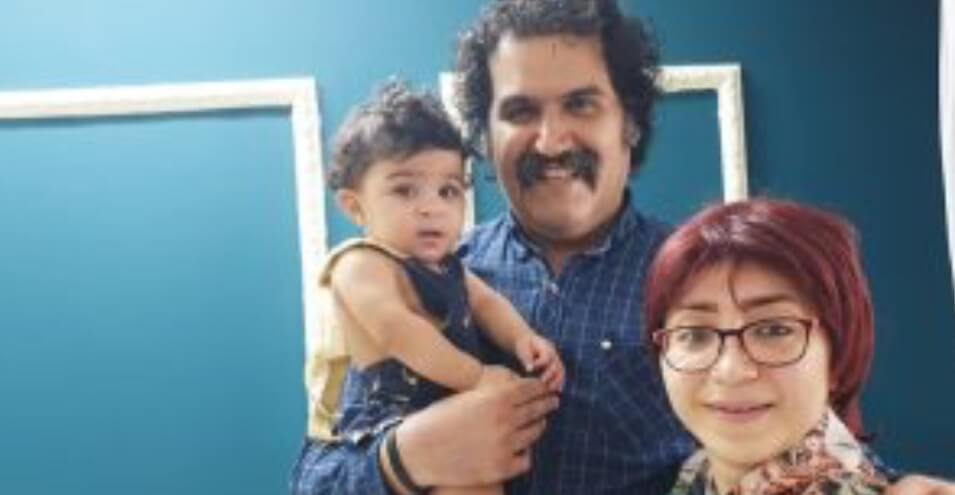
On Wednesday, Mehr 2, the Bushehr Province Court of Appeals issued a custody separation order for the 2-year-old adopted child of Maryam Fallahi and Sam Khosravi, a Christian couple who had been guardians since the child was ten weeks old. According to the issued ruling, because the child was born to a Muslim mother, the Christian family cannot retain guardianship.
According to Hrana news agency, citing Article 18, on Wednesday, Mehr 2, 1399, the Bushehr Province Court of Appeals issued a custody separation order for the 2-year-old adopted child of Christian couple Maryam Fallahi and Sam Khosravi, who had been guardians since the child was ten weeks old.
Based on this report, the issued ruling stated that because the child was born to a Muslim mother, the Christian family cannot retain guardianship of the child.
This ruling was confirmed despite the fact that previously, on Tir 29, the judge of the Bushehr Family Court had issued a ruling acknowledging that there is “an intense emotional bond” between the child and the Christian couple, Maryam Fallahi and Sam Khosravi, and that returning this sick child to an orphanage would face an “unknown future,” with the probability of another family adopting Lydia due to her illness being “zero.”
According to the report, this two-year-old child suffers from heart and digestive diseases, and the Welfare Organization had not informed the Christian couple about Lydia’s illness. Nevertheless, without any objection, they made all efforts to improve the child’s condition. The Welfare supervision officer and legal medicine expert also confirmed that during the guardianship period, Maryam Fallahi, who had been a nurse at Bushehr Heart Hospital for years, and her husband provided the best care for this child.
On the other hand, the case’s attorney stated: “The judge’s ruling to separate Lydia from the Christian couple is completely contrary to the religious edicts of Naser Makarem Shirazi and Youssef Sanei, two sources of emulation for Shiites. Naser Makarem Shirazi, in response to the attorney’s clarification and question, issued a fatwa that due to ‘necessity,’ the child could remain in this family. Sanei also issued a fatwa that ‘guardianship by the couple has no religious objection and their being non-Muslim does not prevent it, and the choice of religion is up to the child after maturity.’ Furthermore, this ruling contradicts not only international laws but also Iranian laws.”
The attorney-at-law added: “Article 3 of the Law on the Protection of Unaccompanied and Poorly Supervised Children and Adolescents states that all Iranian nationals residing in Iran can accept children as guardians, and no specification regarding religion is mentioned. According to the Constitution, the clients are Iranian nationals and residents of Iran, and Christianity is officially recognized in the Iranian Islamic Republic system, which according to clause ‘tz’ of Article 6 permits entrusting a child to recognized religions according to the Constitution, and therefore according to this law, there is no obstacle to guardianship of the child by the clients.”
Maryam Fallahi and Sam Khosravi are among seven Christian converts who were arrested by Bushehr security forces on Tir 10, 1398, and tried in the Bushehr Revolutionary Court.
Based on the Revolutionary Court’s ruling, Sam Khosravi was sentenced to one year of punitive imprisonment and two years of residence ban in Bushehr, and Maryam Fallahi was sentenced to 80 million rials in fines and permanent dismissal from government service.
It should be noted that although Christians are officially recognized as a religious minority according to law, the security apparatus treats the issue of Muslim conversions to Christianity with particular sensitivity and deals with Christian converts forcefully.
Source: Hrana