Campaign ‘Unity for Navid’ Calls for Islamic Republic’s Expulsion from Tokyo Olympic Games
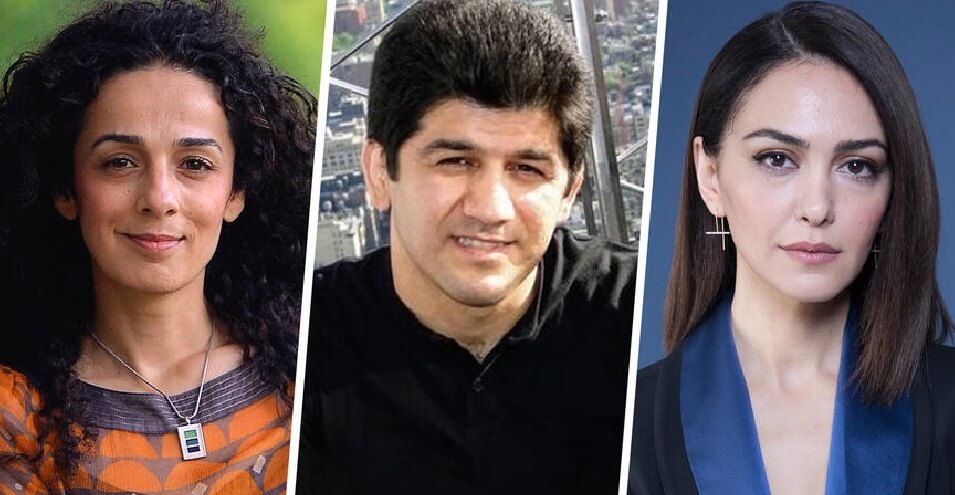
A new campaign launched in protest against the Islamic Republic’s execution of Navid Afkari, an Iranian wrestler, has called for the country’s removal from the 2021 Tokyo Summer Olympic Games.
The campaign is called “Unity for Navid” and has been formed by a number of human rights activists and Iranian athletes.
Masih Alinejad, an independent journalist and host of the “Tablet” program on Voice of America, is one of those raising awareness about this campaign through her social media accounts, publishing messages from prominent Iranian sports and cultural figures. She describes this campaign as “solidarity of Iran’s gold medalists (athletes who have won gold medals in international competitions) with human rights activists.”
Masih Alinejad, referring to the reception of the Persian hashtags “#Unity_for_Navid” and English “#United4Navid” on social media, calls on all world sports federations and the International Olympic Committee to suspend the Islamic Republic due to Navid Afkari’s killing.
Prominent Iranian sports and cultural figures are publishing their video messages with the hashtag “#United4Navid” asking the International Olympic Committee and the International Football Federation to ban the Islamic Republic from participating in Olympic Games and football competitions.
Among the figures who have recently joined this campaign are former wrestler Sardar Pashaei, Nobel Peace Prize winner Shirin Ebadi, football referee Mohammad Reza Faghani, mountaineer Fateme Aghajani, former swimmer Tonya Valiollahi, actress and human rights activist Nazanin Boniadi, former runner Amir Kamali, former cricket player Sudabeh Lashkari, former futsal player Shiva Aminei, former martial arts champion Majid Fallah, and political activist Fateme Sepahri.
Participants in this campaign, particularly athletes, have shared aspects of their personal experiences in their messages and have also referred to other issues such as gender, religious, and ethnic discrimination in Iranian sports, the ban on female spectators entering stadiums, and pressure exerted by the Islamic Republic on athletes to refrain from competing against Israeli athletes.
Nazanin Boniadi, Iranian-American actress and human rights activist, told Voice of America: “The Islamic Republic has politicized sports just like cinema, because it fears every aspect of life that brings people together, and it stifles every common language of the people that addresses the free world.”
She further recalls that just as South Africa’s ban from the 1964 Olympic Games led to the eradication of apartheid in that country, sanctioning the Islamic Republic’s participation in international competitions could lead to the eradication of the injustice and oppression of that regime against the Iranian people.
According to participants in the “Unity for Navid” campaign, what happened to Navid Afkari is an example of “the brutal treatment of the regime” toward public protests.
The campaign, citing Amnesty International’s report on torture and physical abuse of detainees in the 2018 protests, reported the arrest of more than 7,000 protesters. According to members of this campaign, the failure to take action against widespread human rights violations by the Islamic Republic sends the wrong message to the Iranian people that their lives do not matter.
The execution of Navid Afkari, an Iranian wrestler, by the Islamic Republic has been accompanied by protests from many athletes, sports organizations, and human rights institutions. These protests led to the issue of Navid Afkari’s execution being raised at last week’s International Olympic Committee meeting in Switzerland. Following that meeting, Thomas Bach, president of the International Olympic Committee, answered journalists’ questions about the wrestler at a press conference. While alluding to his actions in this regard, he refrained from imposing sanctions on Iran for the execution of Navid Afkari, who was arrested for participating in nationwide peaceful protests against government corruption in the country in 2018.
The International Olympic Committee’s refusal to take action against the Islamic Republic in response to Navid Afkari’s execution has been accompanied by considerable criticism.
The sports organization “Global Athlete” in a statement it released in this regard, considered the International Olympic Committee’s failure to defend athletes’ rights—including not standing up for athletes who are detained, tortured, and executed—as a “shameful abdication of this institution’s responsibility.”
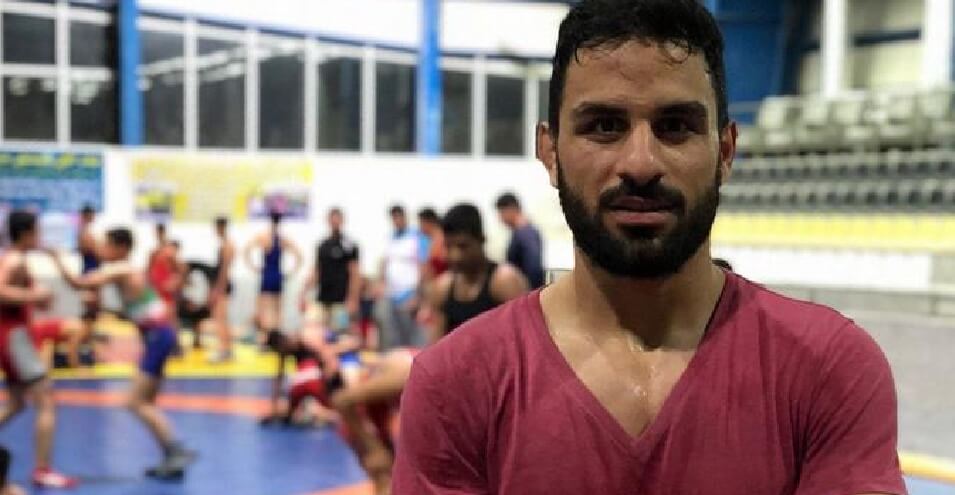
Navid Afkari, a 27-year-old Iranian wrestler and one of those detained during public protests in August 2018 in protest against the fall in the value of the rial and the rise in the price of coins and dollars, was executed by the Islamic Republic. Despite widespread international calls to prevent Navid Afkari’s execution, the Islamic Republic executed the athlete on Saturday, September 12.
The Islamic Republic accused Navid Afkari of killing a security officer; however, Mr. Afkari, his family, and his lawyers emphasized that there is no reliable and convincing evidence about his role in the killing and he was convicted solely on the basis of confessions extracted under torture. After the hasty execution of Afkari, regime security forces buried his body under strict security measures in the village of Sangar, located in Sepidan, Fars Province.
According to human rights organizations, groups supporting athletes, and Western governments, Navid Afkari was brutally tortured to confess to a crime he did not commit and was framed.
Earlier, U.S. Secretary of State Mike Pompeo on Saturday, September 12, called the execution of Navid Afkari by the Iranian regime a malicious and tyrannical act and strongly condemned it.
Mike Pompeo, in a message on his Twitter account, while using the Persian hashtag “They Killed Our Navid,” wrote: “The execution of Navid Afkari by the Iranian regime is a malicious and tyrannical act.”
On the other hand, Robert Destro, Director of Democracy and Human Rights at the U.S. State Department, expressed his anger and displeasure over the execution of Navid Afkari following torture and forced television confession and tweeted: “The Iranian regime’s cruelty knows no bounds and they must be held accountable.”
Human rights institutions say the Islamic Republic does not fairly investigate allegations and sometimes innocent people have been tried and even executed. For example, the Islamic Republic executed thousands of people who had prison convictions in the 1980s.
The United States says the Islamic Republic uses its country’s wealth to support terrorist groups and destabilize the Middle East instead of serving the Iranian people. The United States has also repeatedly condemned the institutionalized financial corruption and looting of Iran’s natural resources by affiliates of the ruling regime in the country and has considered them among the main factors in Iran’s economic and financial problems.
Source: Voice of America