Ceasefire in Question; Trump’s Sharp Criticism of Iran and Battle of Narratives Between Tehran and Washington
With Trump’s sharp criticism of Iran and escalating contradictions following the ceasefire, the battle of narratives between Tehran and Washington has intensified.
While a ceasefire agreement between the United States and Iran was formed with the aim of reducing tensions, field developments and contradictory statements from both sides have shrouded this agreement in a veil of ambiguity.
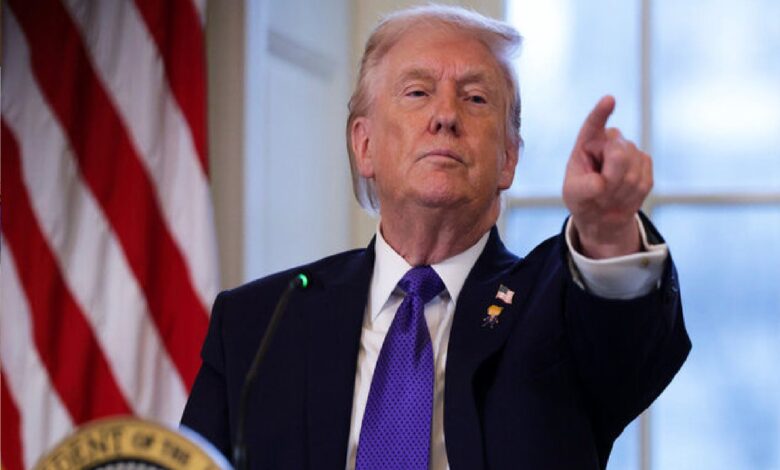
Donald Trump, in his latest response, sharply criticized Tehran’s performance in reopening the Strait of Hormuz, deeming it contrary to the agreements reached. He wrote in a message: “Iran is doing a very poor job, some even say it’s shameful, in allowing oil to pass through the Strait of Hormuz. This is not something we agreed on.”
In response, the Islamic Revolutionary Guard Corps issued an official statement denying any attacks in the hours following the ceasefire. The statement said: “In recent hours, various news agencies have published reports regarding drone and missile attacks on facilities of some countries bordering the southern Persian Gulf. It is hereby announced that the armed forces of the Islamic Republic of Iran have absolutely made no launches toward any country during the ceasefire hours up to this moment.”
The military institution also claimed that reports published about the attacks relate to actions by the United States and Israel; a claim that has not yet been met with official responses from these countries.
Simultaneously with these tensions, Kuwait reported an attack on one of its National Guard bases. Officials of the country announced that hostile drones targeted a base, resulting in significant material damage, though no casualties were reported.
This incident has heightened concerns about the fragility of the ceasefire and the possibility of escalating clashes in the Persian Gulf region.
Within the United States, the agreement has also faced criticism. “Sarah Elbert,” a member of the Armed Services Committee, has called for greater clarification on the details of this agreement and the future course.
She said: “We have had multiple classified sessions about the war, but there has never been a public discussion. It is very important that the American people hear some kind of strategy or plan. We should have heard this before entering the war, and now we need to know what the exit is.”
Elbert also expressed doubt about the increase in military budget and added that Trump’s action was taken without Congressional authorization. Referring to the course of the Iraq War, she recalled that at that time, “George W. Bush” had gained Congressional support before starting the war.
She also added: “The President has made no effort to bring Congress into this planning. Some of my colleagues also refrain from exercising oversight and creating balance against this President, and this is very disappointing.”
The Strait of Hormuz remains one of the most sensitive crisis points. Despite some reports about limited passage of tankers, traffic through this vital route has not returned to normal and many ships are waiting to pass through.
International experts believe that any disruption in this passage could have far-reaching consequences for the global energy market and could even lead to a sharp increase in prices.
Meanwhile, Mohammad Baqer Qalibaf, referring to the continuation of Israeli attacks on Lebanon, considered these actions a violation of the ceasefire and warned that the continuation of this process could affect negotiations between Tehran and Washington. He emphasized that if these conditions continue, the continuation of talks may be meaningless.
The sum of these developments shows that the announced ceasefire, rather than leading to a reduction in tensions, has become a stage for the confrontation of narratives and increased mistrust between the parties; a situation that could face the future of negotiations and regional stability with serious challenges.