CIA Chief: Regardless of Vienna Talks Outcome, Iran Will Remain a Middle East Threat
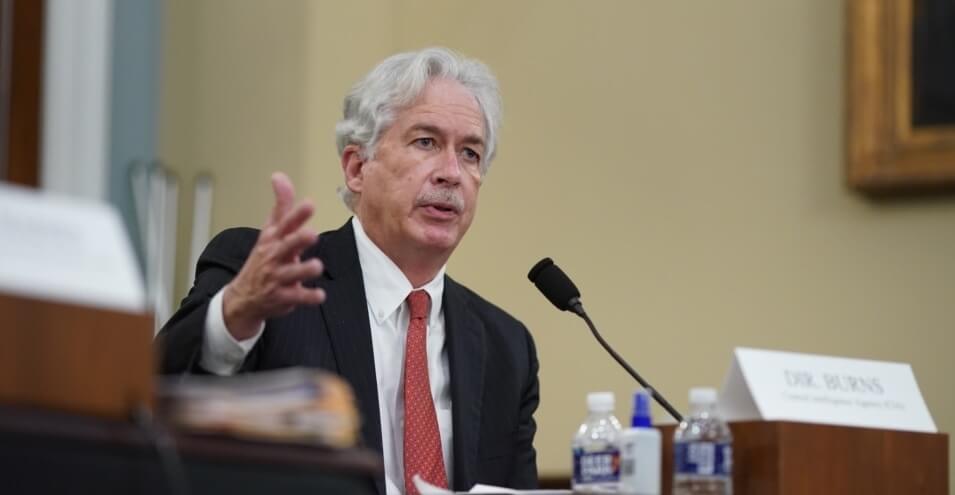
The head of the Central Intelligence Agency (CIA), the U.S. intelligence organization, says that regardless of the outcome of Vienna negotiations between Iran and world powers to revive the JCPOA, the Islamic Republic of Iran will remain a threat throughout the Middle East.
William Burns said on Tuesday, March 8, during a hearing of the U.S. House of Representatives Intelligence Committee that the Iranian regime, in addition to nuclear and missile issues, poses a threat to all of the Middle East and to America’s allies in the region.
He added that regardless of how the Vienna negotiations conclude, the threats emanating from Iran will remain a challenge for the region.
William Burns emphasized that he is making this assessment based on realities and as a result of his personal experience conducting negotiations with Iranian officials over the years.
His remarks refer to negotiations he conducted as Deputy Secretary of State in the Barack Obama administration, the former U.S. president, with Iranian officials including Ali Akbar Salehi in Muscat, the capital of Oman, which after several years led to the JCPOA.
William Burns is emphasizing the continuation of Iranian threats to the entire Middle East while being recognized as one of the senior American officials supporting the revival of the JCPOA.
His testimony to the House Intelligence Committee comes as Jen Psaki, White House spokeswoman, said on March 7 that the Vienna negotiations “have made significant progress.” The United States has an indirect presence in the Vienna negotiations but is recognized as the principal party for reviving the JCPOA.
Ms. Psaki in her remarks described some unexpected problems created by Russia in the path of reviving the JCPOA as part of the “difficult issues” that “always occur at the end of a difficult process.”
U.S. Intelligence Community Report on Iran “Threat”
Hours before the CIA chief’s appearance at the House Intelligence Committee hearing, the U.S. intelligence community released its annual report on global threats, including dangers stemming from Iran.
The report states that Iran’s confrontation with America and Washington’s allies in the Middle East is a vital struggle for Tehran’s regime.
The report says the long-standing ambitions of the Iranian regime to seize regional leadership have not ceased.
According to the report, the Iranian government uses its expanding nuclear program, weapons plans, and proxy forces to advance its objectives while simultaneously employing diplomacy.
The U.S. intelligence community, comprising 16 intelligence agencies including the CIA, FBI, and National Security Agency, issued the report.
In the report, it is assessed that Iran threatens Americans, both directly and through proxy groups, particularly in the Middle East, and simultaneously continues its other objective, which it has pursued over the past decade, of recruiting and establishing networks within America.
In recent periods, America has emphasized that alongside increased Iranian cyber activities against U.S. national security, the Islamic Republic’s intelligence agencies have even been working to kidnap and assassinate Iranian activists or American officials.
U.S. intelligence organizations, including operations by the branches of the Iranian government’s intelligence apparatus to kidnap Masih Alinejad, an American-Iranian political activist, have been exposed.
The Washington Examiner also reported this week on a Revolutionary Guards plot to design the assassination of John Bolton, the former national security advisor to the White House.
The new annual report from the U.S. intelligence community also described the activities of the Iranian regime that pose a threat to Israel.
U.S. intelligence organizations in their report, referring to Ebrahim Raisi’s coming to office as President of the Islamic Republic of Iran, wrote that this has prompted Ali Khamenei, the system’s leader, to accelerate the long-term vision he has set for his government.
According to the report, the regime’s leader’s goal is to transform his government into an Islamic power defending the “ideals of Muslims worldwide” while relying on a militaristic state within the country.
Source: Radio Farda