Collective Hunger Strike Continues at Qazalhesar Prison in Protest Against Executions
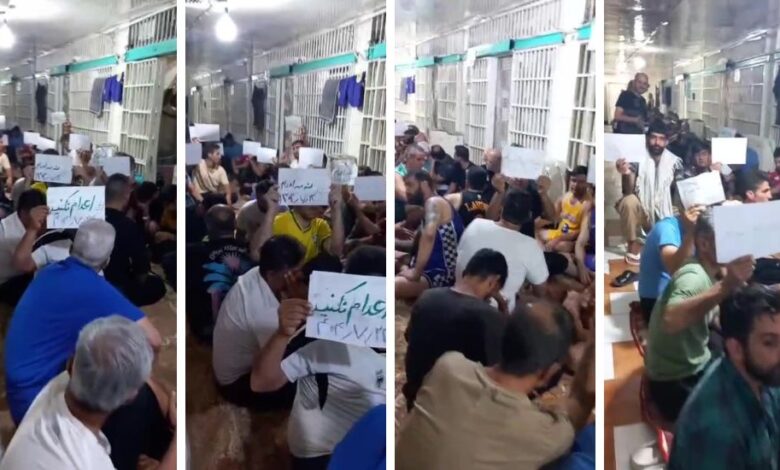
The ongoing mass hunger strike by hundreds of death row inmates at Qazalhesar Prison in Karaj, coupled with reports of deteriorating health conditions among some strikers, has heightened concerns about the imminent execution of six inmates. Iran Human Rights Organization states that prison authorities have refused to transfer unconscious inmates to medical facilities despite their critical condition.
Iran Human Rights Organization has announced that the hunger strike by death row inmates in Ward 2 of Qazalhesar Prison, which began on July 13, continues. According to the organization, the strike aims to prevent the execution of six inmates convicted on drug-related charges who have been transferred to solitary confinement cells in preparation for execution.
On Friday, July 26, the organization reported that the physical condition of several strikers has deteriorated, yet prison authorities have refused to transfer them to medical facilities despite their urgent need for medical services. Videos released from inside the prison show two unconscious inmates being held by their cellmates in front of the closed ward door to prevent their transfer for medical care. In these images, inmates can be heard chanting “No to execution.”
According to human rights reports, Ward 2 of Qazalhesar Prison holds approximately 1,500 inmates sentenced to death on drug-related charges. This is not the first time inmates in this ward have staged a hunger strike to protest the execution of death sentences. In October 2024, hundreds of inmates in this section conducted a six-day strike and stitched their lips shut to demand a halt to executions.
Following those protests and concurrent with demonstrations by inmates’ families outside the Iranian Parliament, prison and judiciary authorities reportedly promised protesters that executions related to drug offenses would be suspended pending review of legal reforms. However, recent reports indicate that the transfer of six inmates to solitary confinement has renewed concerns about the resumption of these executions.
As of the time of this report, officials of the judiciary and administrators of Qazalhesar Prison have not issued an official response to the claims made by Iran Human Rights Organization.
These developments occur as international bodies have repeatedly warned of a dramatic increase in the use of capital punishment in Iran. Amnesty International reported that Iran executed at least 2,159 people in 2025, a figure described as the highest recorded in recent decades and one that significantly contributed to the global increase in executions.
In one of the most recent responses, the “Tuesdays Against Execution” campaign, expressing solidarity with Qazalhesar inmates, warned of the danger of carrying out death sentences and emphasized: “The hunger strike by inmates in Ward 2 of Qazalhesar Prison protesting the transfer of six cellmates to solitary confinement for execution continues, and this action is a cry for the defense of the right to life.”
Death sentences are being issued for drug-related cases even as critics of Islamic Republic policies have repeatedly stressed that capital punishment for those convicted in drug-related cases has failed to effectively counter major trafficking networks and prevent the widespread entry of narcotics into Iran.
According to official statistics, thousands of tons of narcotics enter the country or transit through Iran from eastern borders annually, a process that would be impossible without complicity or inefficiency within government structures. This demonstrates that despite awareness and extensive capabilities of security and border agencies, the smuggling cycle continues. Many human rights activists argue that while the principal organizers and financial operators of this deadly trade remain relatively unscrutinized, executing low-level suspects is not a solution to this crisis.