Continued Iran-China Flights; Failure to Implement a Previously Announced Decision
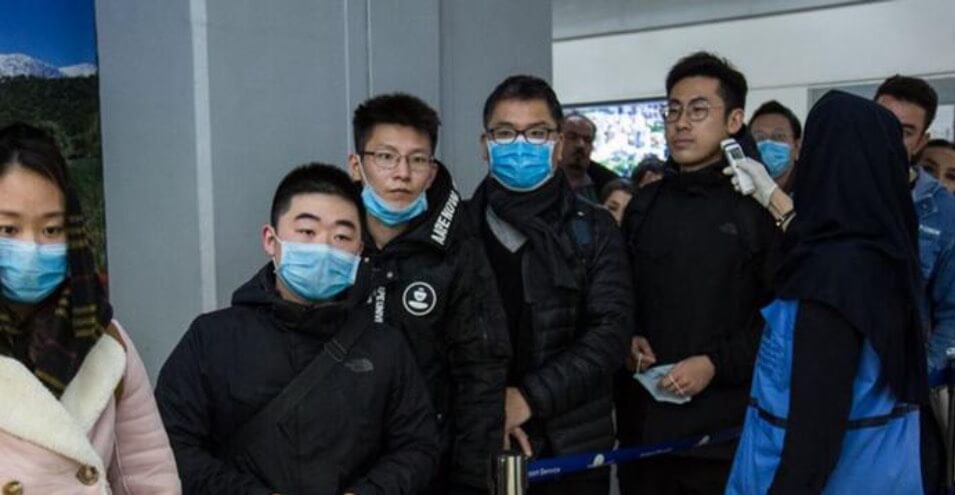
According to Iranian officials, all flights between Iran and China should have been suspended. But that is not the case. Some point to the “autonomous” conduct of the aviation organization. Others raise the issue of Mahan Airlines’ profit-seeking behavior.
As a follow-up to the outbreak of the new coronavirus, despite repeated emphasis by Iran’s health minister on canceling all flights to and from China, these flights have not been suspended.
Amid conflicting statements from officials and the failure to halt these flights, Bahram Parsaei, spokesperson for the Article 90 Commission of the Iranian Parliament, has called for Iran’s Supreme National Security Council to intervene on the issue of “failure to stop China flights.”
According to ISNA, Parsaei, while making this request, said on Tuesday, February 4: “I am issuing a warning to the government and officials, especially regarding the entry of the new coronavirus. Unfortunately, there is no oversight in this matter, and the government is not dealing with those who are putting people’s health at risk.”
This comes as Masoud Namaki, the health minister, last Friday, February 1, called for preventing “the entry of any passengers from China by any means (air, land, and sea)” and stated that he had asked Ishaq Jahangiri, the First Vice President of Iran, to convey this matter to the Foreign Ministry and the Ministry of Roads.
Simultaneously, on his Twitter account, Namaki effectively exempted the return of 70 Iranian students residing in Wuhan, the epicenter of the new coronavirus outbreak in China, from his request, writing: “Through repeated follow-ups and with the cooperation of the Foreign Ministry, more than 70 Iranian students residing in Wuhan, China, whom we were concerned about, will return to the country in the coming days with appropriate health measures, and for assurance of safety, they will be accommodated for two weeks in an appropriate location under complete supervision and care.”
That same Friday, an order to cancel direct flights to China was issued by the government. However, at the same time, some officials from the health ministry said that indirect flights had not yet been canceled. But it appears that “issuing an order to stop flights” in Iran does not necessarily mean the actual cancellation of flights.
A More Powerful Subsidiary Than the Supervisor?
Bahram Parsaei, referring today to the government’s order to halt China flights, said: “These flights were supposed to be maintained only for bringing students and Iranians back from China, but we have witnessed the continuation of China flights, and Iranian airlines are transferring Chinese passengers in transit from other countries. Moreover, the meeting between the Mahan Airlines manager and the Chinese ambassador and his announcement of readiness to continue cooperation with this country shows that the aviation organization has no control over its subsidiaries.”
Beyond criticism of Iran’s aviation organization, the “profit-seeking” behavior of Mahan Airlines has drawn the most criticism. Parsaei says: “We are witnessing that Turkey, whose main revenue comes from tourism and a significant portion of whose tourists are Chinese, has canceled all flights to China out of concern for people’s lives, certainly suffering losses of millions of dollars. But in Iran, where tourist traffic with other countries has reached a minimum, the manager of an airline is announcing readiness to transfer Chinese passengers for personal interests, which is a trade-off at the expense of people’s health and opportunism.”
About an hour after the government’s decision to halt flights to China was announced Friday by the health minister, one of Mahan’s planes flew to one of that country’s cities. Subsequently, Chang Hua, China’s ambassador to Iran, by posting images of his meeting with Mahan’s CEO, wrote in a Twitter message in Persian: “In a meeting with Mr. Arabnezad, the respected CEO of Mahan Airlines, he announced that he wishes to continue cooperation with China.”
An “Autonomous” Aviation Organization
The continuation of Mahan Airlines flights to China sparked considerable criticism, particularly on social networks, regarding the company’s “profit-seeking” and prioritization of “financial interests.”
Reports indicate that these flights continued in the following days and, contrary to the promises of government officials and the health ministry, were not halted.
Quds Online news agency, based on images published on social media from Turkish airports, wrote: “Chinese nationals who, due to flight bans worldwide, could not find any flights to return to their country, after learning that an Iranian company still flies to China, came from all over the world to Turkish airports to return to their country through this Iranian airline!”
Although this news has not been officially confirmed by Iranian officials, the statements of Shiraz’s representative in parliament suggest its accuracy. Parsaei tweeted: “Contrary to the government’s decision, we continue to witness the entry of passengers from China to Iran and the transfer of Chinese passengers from other airports in the world by Iranian airlines. Is the aviation organization autonomous and not subject to the government? This defiance and recent air incidents show that retaining incompetent managers is more important than people’s lives.”
Iran’s government decision to cancel all flights to China was announced Friday evening. However, Mahan Airlines had two flights from China to Iran on Saturday morning. Officials of Iran’s airlines said these two flights were the last China flights, and since Mahan had previously scheduled these flights to China, the planes had to be returned to Iran. However, three more flights from China to Iran were registered on Sunday.
“The Only Company Transiting Chinese Through Turkey”
According to Hemat-Allah Rafiee, head of the Association of Iranian Travel and Airline Agencies: “In addition to direct flights, transit flights for Chinese through Iran continue.”
Mr. Rafiee, referring to the continuation of flights “by one of Iran’s airline companies” despite the government’s decision, and also to “the aviation organization’s justification for the necessity of maintaining these flights to transfer Iranians still in China,” said yesterday, Monday: “On behalf of the association of travel and airline companies, we request that these flights be stopped. These planes belong to the Iranian people, and these days when we hear no good news about the condition of planes in the country, it is necessary that this company’s planes prioritize service to Iranian citizens.”
The head of the association of Iranian travel and airline agencies added: “On the other hand, we hear news that the Iranian airline is the only company transiting Chinese through Turkey. If this news is inaccurate, for the people’s peace of mind in these sensitive circumstances, it must be clarified more quickly.”
Some officials have also indirectly attributed the continuation of flights to the return of Iranian students from Wuhan and other Iranians residing in China. But since, on the one hand, this did not actually happen, and on the other hand, the health minister announced that these individuals will not be transferred by regular flight but through chartered flights with strict health measures, the continued air traffic between the two countries raises more questions.
Continuation of Flights Until Today
Kianush Jahanpour, the health ministry’s public relations manager, said last Sunday: “The government’s decision to halt flights was announced Friday evening, and one cannot expect this decision to be implemented immediately from Saturday.”
Mr. Jahanpour then acknowledged that although all Iran-China flights should “ultimately” have been halted by Sunday, “this decision was not implemented in practice and the flights continued.”
If we even use these statements as a basis, flights between Iran and China should have stopped from Sunday onward. But not only did this not happen, but it appears these flights continue until today. Even in an image that the “Etedal” news site published from flights today, Tuesday, from Iran’s origin, two Mahan Airlines flights to Beijing and Guangzhou, China, are still visible.
Beyond this, one must add public concern about indirect flights to or from China. Iranian officials say they have no influence in this matter. Jahanpour said: “Regarding indirect flights from China, we cannot do anything, and if we want to cancel these flights, it would be as if we are sanctioning ourselves.”
Meanwhile, ISNA reported yesterday on the establishment of flights between the two countries. This news agency, citing the spokesman for Iran’s aviation organization in explanation, wrote that “possible flights” to China are “conducted in coordination with the health ministry to transfer Iranians residing in China and Chinese nationals in Iran.”
The contradictory statements of Islamic Republic officials and their evident confusion in decision-making and especially in implementing decisions in the shadow of special financial interests, along with news such as Shargh newspaper’s report of the daily entry of “approximately 100 passengers susceptible to coronavirus” into Iran, has fueled public concern about the possibility of this virus entering the country and delays in timely response to it, and especially inflamed social media.
According to Quds Online: “Despite all this, it seems that unless the matter is fully investigated, officials are not going to clarify to the people the reason for the airlines’ defiance of the government decision, under the pretext of bringing Iranian students back to the country.”
“It Seems the Decision Was Made Elsewhere”
Kianush Jahanpour, as the health ministry’s spokesman, announced yesterday that if Iran-China flights are not prevented, the ministry will “intervene.” But it is unclear what conclusion this ministry will reach by intervening in a matter that again returns to the government. The manager of flights and potential executor of the “flight cancellation” decision is the aviation organization, which itself is under the command of Iran’s Interior Ministry; unless, as Aftab Yazd newspaper says: “It seems the decision was made elsewhere and it is intended that air communication with China will continue.”
While some critics attribute the current confusion regarding Iran-China flights to officials’ inability to “make decisions on obvious and routine matters,” others, such as the “Armane Melli” newspaper, recommend that “Mahan Airlines” should be stopped, which is “taking advantage of the appropriate situation to increase revenue or…”
The “Armane Melli” writer, referring to the recent meeting of China’s ambassador in Tehran with Mahan Airlines’ manager, asks: “Perhaps in calm circumstances, this meeting could be interpreted as an effort to expand cooperation, but in this volatile situation, aside from the meeting, why should China’s ambassador thank Mahan in these circumstances?”
One hundred percent of Mahan Airlines’ shares, which is referred to in Iran as a private company, belong to the Ostad Movahhedi Foundation. American sanctions against this company returned after that country’s withdrawal from the JCPOA and the return of U.S. sanctions against the Islamic Republic. Mahan Airlines is accused by the United States of assisting the Islamic Revolutionary Guard Corps in transferring weapons to Bashar Assad’s government in Syria and Hezbollah in Lebanon. Even Germany suspended Mahan flights to and from Germany a year ago in line with Berlin’s “foreign and security policy.”
Source: DW