No One Speaks About the Ethnic Cleansing of Palestinian Christians – Ramzi Baroud – Translation: Hatef Rahmani
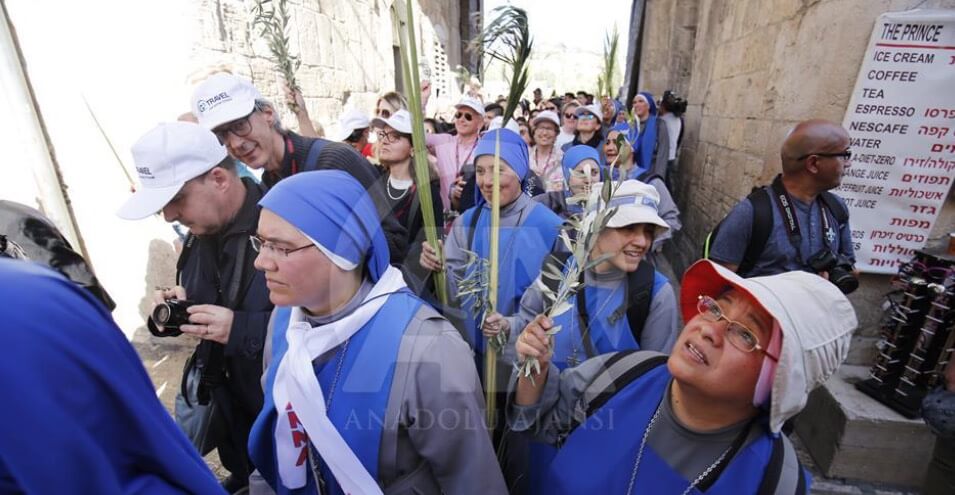
The Palestinian Christian population is shrinking at an alarming rate. The oldest Christian community in the world is being displaced elsewhere. And the cause of this exodus is Israel.
At the October 15 conference in Johannesburg, Christian leaders from Palestine to South Africa sounded this alarm. The title of their gathering was “The Holy Land: A Christian Palestinian Perspective.”
The major theme that emerged at the conference was the rapid decline in the number of Palestinian Christians in Palestine.
There are varying estimates about how many Palestinian Christians still live in Palestine today compared to the pre-1948 era when the State of Israel was established over Palestinian cities and villages. Regardless of the source of different studies, there is near consensus that the number of Palestinian Christian residents in Palestine has declined by nearly tenfold over the past 70 years.
A census conducted by the Palestinian Central Bureau of Statistics in 2017 found that 47,000 Palestinian Christians – referring to the occupied West Bank, East Jerusalem, and the Gaza Strip – live in Palestine. Ninety-eight percent of Palestinian Christians live in the West Bank – concentrated primarily in the cities of Ramallah, Bethlehem, and Jerusalem – while the remainder constitute a small Christian community of only 1,100 people in the besieged Gaza Strip.
The population crisis that had afflicted the Christian community decades ago is now coming to a head.
For example, 70 years ago, Bethlehem, the birthplace of Christ, was 86 percent Christian. The demographic situation of the city, however, has changed fundamentally, especially after Israel’s occupation of the West Bank in 1967, and the construction of the illegal apartheid wall, which began in 2002. Sections of the wall effectively separated Bethlehem from Jerusalem and isolated its residents from the rest of the West Bank.
The organization “Open Bethlehem,” explaining the devastating impact of the wall on the Palestinian city, stated: “The wall surrounds Bethlehem both east and west, continuing south of East Jerusalem. The land separated by the wall was annexed to settlements and closed off under various pretexts, leaving only 13 percent of the Bethlehem area accessible for Palestinian use.”
Many Palestinian Christians from Bethlehem have been driven from their historic city as a result of the increasingly severe siege. According to Vera Baboun, the city’s mayor, by 2016, Bethlehem’s Christian population had declined to 12 percent, merely 11,000 people.
The most optimistic estimate places the total number of Palestinian Christians in all occupied Palestine at less than two percent.
The connection between the decline of the Christian population in Palestine and Israeli occupation and apartheid can be beyond doubt, as it is evident to both Palestinian Christians and the Muslim population alike.
A study conducted by Dar Kalima University in the West Bank city of Beit Jala and published in December 2017, interviewed nearly a thousand Palestinians, half of them Christian and half Muslim. One of the main objectives of the research was to understand the reasons behind the emptying of the Christian population in Palestine.
The research concluded that “the pressure of Israeli occupation, continuous restrictions, discriminatory policies, arbitrary arrests, and land confiscation compound the sense of general helplessness among Palestinian Christians,” who find themselves in “a hopeless situation” in which “they no longer see a future for their children or for themselves.”
Claims that Palestinian Christians are leaving Palestine due to religious tensions between them and their Muslim brothers are unfounded and therefore irrelevant.
Gaza is another case in point. Only 2 percent of Palestinian Christians live in the impoverished and besieged Gaza Strip. Based on estimates from 1967, when Israel occupied Gaza, there were 2,300 Christians living in the Gaza Strip along with the rest of historical Palestine. But today, only 1,100 Christians still live in Gaza. Years of occupation, horrific wars, and relentless siege have brought such calamity upon a community whose historical roots stretch back two thousand years.
Like Gaza’s Muslims, these Christians are isolated from the rest of the world, including the holy cities in the West Bank. Every year, Gaza’s Christians must register to seek permission from the Israeli army to join Easter services in Jerusalem and Bethlehem. Last April, only 200 Christians were granted travel permission, but only on the condition that they be 55 years old or older and were not allowed to visit Jerusalem.
The Israeli human rights group Gisha (a human rights organization active in Israel) described the Israeli army’s decision as “a further violation of Palestinians’ fundamental rights to freedom of movement, freedom of religion, and family life,” and correctly accused Israel of attempting to “deepen the separation” between Gaza and the West Bank.
In fact, Israel’s goal goes beyond that. By separating Palestinian Christians from one another and from their holy cities (as its goal is also with Muslims), the Israeli state hopes to weaken the social-cultural ties that give Palestinians their collective identity.
Israel’s strategy is based on the idea that a combination of factors – severe economic hardships, perpetual siege and apartheid, severing collective and spiritual connections – will ultimately drive Christians from their Palestinian homeland.
Israel is eager to portray the “conflict” in Palestine in a way that presents it as a religious one, and in turn brands itself as a Jewish state besieged among a vast Muslim population in the Middle East. The continued existence of Palestinian Christians is a thorny issue within this Israeli agenda.
Unfortunately, however, Israel has succeeded in distorting the struggle in Palestine – from a political and human rights struggle against settler colonialism – into a religious conflict. It is equally regrettable that the most fervent supporters of Israel in the United States and elsewhere are religious Christians.
It must be understood that Palestinian Christians in Palestine are neither foreigners nor spectators. They have suffered equally, like their Muslim brothers, and through resistance, spirituality, deep attachment to the land, artistic participation, and scholarly development, they have played an important role in defining modern Palestinian identity.
Israel must not be allowed to exile the oldest Christian community in the world from the land of their forefathers, as this could add several notches to Israel’s deeply troubling agenda for racial supremacy.
Our understanding of the legendary Palestinian “sumud” – steadfastness – and our solidarity cannot be complete without recognizing the central role of Palestinian Christians in the narrative and modern identity of Palestine.
Source: Akhbareuz