Corona in Iran: 700,000 Vaccines and Promise of Mass Vaccination
The spokesman of Iran’s Food and Drug Organization has promised that public vaccination will be completed by the end of the Persian year 1400. This comes as only 700,000 vaccines from three countries—India, China, and Russia—have been distributed so far, with greater emphasis placed on domestic production.
Kianosh Jahanpoor, spokesman of the Food and Drug Organization, says that according to the plan of the National Vaccine Committee and the Ministry of Health, all Iranians will be vaccinated by the end of the Persian year. He expressed hope that with vaccine production in cooperation with partner countries, this plan could be realized even by the end of 2021.
Jahanpoor, who is also the public relations director of the Ministry of Health, made this promise and expressed optimism while the number of vaccines distributed through Iran’s health network stands at only 700,000 doses. These limited vaccines, sourced from China (Sinopharm), Russia (Sputnik), and India (Covaxin), have been used for medical personnel, the elderly, war veterans, and those dealing with infectious waste.
Jahanpoor said in a radio program that in the second phase of vaccination, people over 65 years old and patients with underlying conditions aged 16 to 64 will be prioritized for inoculation. He added that mass vaccination will reach its peak in summer with the entry of domestic vaccines into the market in the final weeks of spring: “In autumn and at the latest in winter, mass vaccination with herd immunity will end, and after this period we will announce exit from the epidemic and return to normal life.”
The Ministry of Health’s public relations director reiterated that the import of AstraZeneca vaccine has been made conditional on the final decision of the Ministry of Health, the Food and Drug Organization, and the National Vaccine Committee. This comes as the European Medicines Agency, three days earlier, deemed the resumption of this vaccine’s administration permissible.
AstraZeneca vaccine was supposed to be sent to Iran as part of the WHO’s COVAX program. This program is designed to deliver vaccines to countries that lack the financial capacity to purchase coronavirus vaccines. According to the WHO’s timeline, AstraZeneca imports to Iran were scheduled to come from South Korea during the spring season.
Iranian Vaccines in Queue to Enter the Market
The Food and Drug Organization’s spokesman also reported on the final stages of production of the joint Iran-Cuba vaccine and several domestically produced vaccines. He said the joint vaccine with Cuba is in the third phase of clinical trials, but simultaneously added that 100,000 doses of this vaccine have entered Iran: “As soon as the phase three reports of this vaccine are confirmed, mass production of it will begin in Iran and Cuba.”
Domestic vaccines have been named “Barkat,” “Fakhra,” and “Razi.” Jahanpoor said Barkat will reach the mass production phase in late spring. Fakhra, which is a product of a subsidiary company of the Ministry of Defense and is named in memory of Mohsen Fakhrizadeh, will, according to his statement, be available in late summer.
The mass production time for the Razi vaccine will also be in the autumn season. The public relations director of the Ministry of Health also reported on the production process of several other domestic vaccines, and this is despite none of these three vaccines having received approval from international authorities.
Red Zone Provinces, Nowruz Travelers
Health Ministry officials made promises of public immunization by the end of Persian year 1400 and mass production of domestic vaccines while Nowruz trips proceeded as before, with Gilan Province alone hosting 1.2 million travelers. Highway Police say Nowruz trips in 1400 increased 47 percent compared to last year.
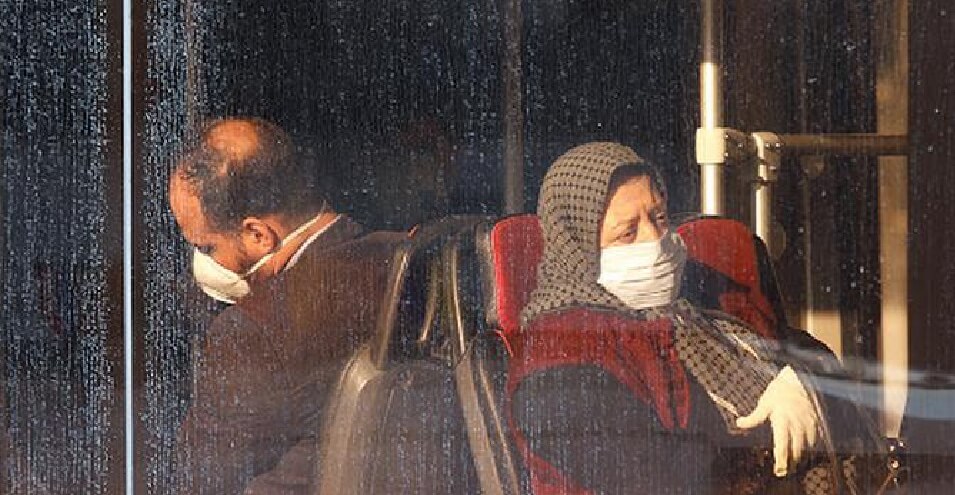
Many images have also been released of Nowruz travelers in different cities taking selfies or group commemorative photos without social distancing and without masks.
Alirezza Raisi, spokesman for the National Coronavirus Fighting Headquarters, warned on Monday, the second day of Farvardin, that the spread of the virus in different parts of Iran is on an upward trend. He reported an increase in hospitalized patients in Tehran and considered the provinces of Kurdistan, West Azerbaijan, and Bushehr on the brink of becoming red zones.
Simultaneously, the head of Iranshahr University of Medical Sciences reported 29 cases of infection with the English strain of coronavirus.
According to the latest statistics from Iran’s Ministry of Health, in the past 24 hours, 80 more patients have died from coronavirus in the country, and the total death toll has reached 61,877.
Source: DW