Coronavirus Crisis; 620 Medical Staff Infected in Only 2 Tehran Hospitals
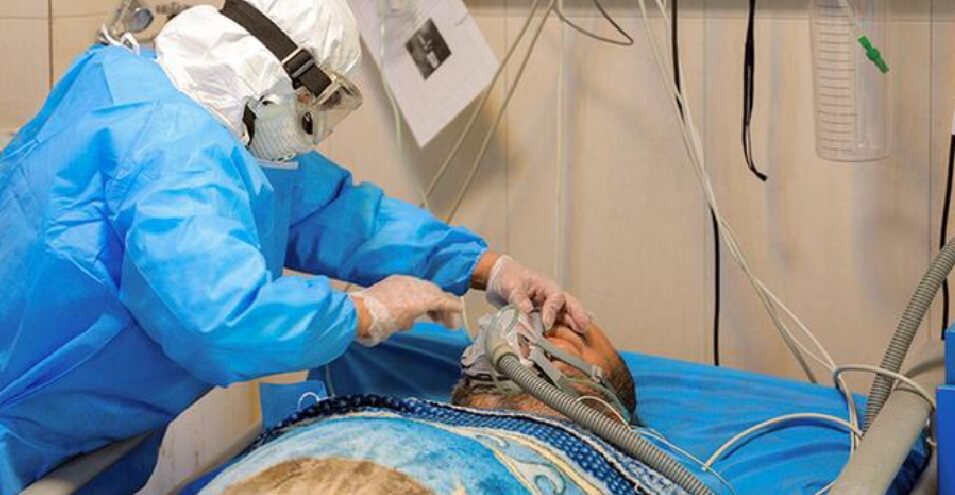
The death toll from coronavirus in Iran has surpassed 29,000 people, and Tehran’s hospitals are experiencing their most critical days. At Sina Hospital alone, 400 people—approximately one-third of its medical staff—have been infected with COVID-19 so far.
Warnings about the fatigue and exhaustion of medical staff in Iranian hospitals have been repeated for months, but apparently the situation in the metropolis of Tehran is more severe than in other regions.
The head of Iran’s Medical Board Organization warned on Tuesday, October 22, at a ceremony, referring to the exhaustion of medical staff, that treating coronavirus in intensive care units (ICU) is not possible, and instead prevention should be the focus.
According to ISNA news agency, Mohammad Reza Zafarvandi said at this ceremony: “Some decisions were not made professionally, such as schools being reopened with mandatory in-person attendance, or protocols being announced without mandatory compliance requirements.”
Health Minister’s Claims About Coronavirus Management
Simultaneously with these remarks, Health Minister Saeid Namaki claimed at a conference in the Oil Ministry building that Iran will “undoubtedly be among the world leaders in coronavirus management in the very near future.”
Despite this claim, the head of the Medical Board Organization accused officials of ignoring warnings and said: “Coronavirus is a global disease, but the death statistics among people and medical staff in the country are unacceptable, and this issue should have been addressed beforehand. Sufficient warnings were given but they were ignored.”
On Tuesday, Alireza Zali, commander of the Tehran Province Coronavirus Response Headquarters, and managers of two important capital hospitals presented statistics on cases and deaths related to coronavirus among medical staff, which contrary to the health minister’s remarks, increase concerns about the future of “coronavirus management.”
One-Third of Sina Hospital Employees Infected
Zali says 200 medical staff members who contracted COVID-19 have died so far. Mohammad Talebpour, head of Sina Hospital, also says that of this hospital’s employees, which number around 1,200 people, approximately one-third, or 400 people, have been infected with coronavirus.
Hossein Badakhshan, director of Modares Hospital in Tehran, also reported that 220 of this hospital’s staff members have been infected with coronavirus, and he says that since the beginning of Mehr month and the start of the third wave of coronavirus outbreak, the number of admissions and hospitalizations of coronavirus patients at the hospital has “suddenly and exponentially” increased.
He told ISNA: “All beds allocated to coronavirus patients, both in the regular ward and in the intensive care unit, are full, and we had even considered additional beds next to regular beds, and those are also full.”
The head of Sina Hospital also told ILNA that “because we have been at peak for a long time,” this hospital’s beds have always been full, and in fact “for about a month now, all of our beds are completely occupied.”
Death Toll Exceeds 29,000
This sharp increase in cases and hospitalizations in recent weeks is reflected in official statistics. According to the Health Ministry spokesperson, 4,108 new COVID-19 patients were identified in Iran in the 24 hours ending at noon on October 22.
Sima Sadat Lari says 254 COVID-19 patients died in the past 24 hours, and the death toll has increased to 29,079 people.
In the past 9 days, only 2 days had fewer than 4,000 new cases, and on the remaining days the number was higher. Such a trend has not been precedent in the nearly eight months since the formal confirmation of the coronavirus outbreak in Iran.
This unprecedented trend is also evident in death cases. In the past 10 days, only one day had fewer than 200 deaths, and during this period the record for deaths in one day has been broken multiple times.
Five-Fold Increase in Hospitalizations
The health minister says fifty days after the coronavirus outbreak in Iran, the death toll reached 30 people per day, but in subsequent waves “factors affected us to move from 30 daily deaths to three-digit deaths.”
He did not provide further explanation about these factors, but the head of the Medical Board Organization and the managers of Sina and Modares hospitals cite inadequate attention to prevention and lack of firm oversight of health protocol implementation as one of the factors in the sharp increase in cases and hospitalizations.
Moreover, an increase in the number of critically ill patients who need hospitalization and the filling of coronavirus patient reception capacity in most hospitals and clinics have confronted the healthcare system with serious challenges.
The head of Sina Hospital says that at the beginning of the coronavirus outbreak, 10 out of every 100 people who came to the hospital were critically ill, but now 50 out of the same number are critically ill and need hospitalization.
Warning of 600 to 700 Deaths Per Day
Talebpour, however, told ILNA that this does not necessarily mean the disease is becoming more severe, as currently those whose condition is not critical and who have better conditions “are unwilling to come to a hospital environment” and pursue treatment by visiting a doctor’s office.
He added, citing a Health Ministry estimate: “If the situation continues like this for another year and a half, we will have 600 to 700 deaths per day and a total of approximately 300,000 deaths due to coronavirus.”
Mohammad Talebpour says if people do not have “sublime will” and health systems are not strengthened, we will witness “extensive mortality,” and this could happen not only in Iran but in other countries as well.
The head of Sina Hospital emphasized that many countries that focused on health were more successful in controlling coronavirus than countries that focused on treatment.
He believes that in Iran too, with greater activity in the field of health, the spread of infection should be prevented, “otherwise if hospitals are even ten times larger, when the epidemic is not controlled, the situation will remain difficult.”
Source: DW