Coronavirus Vaccine in Iran is Scarce and Its Inoculation is Opaque and Favors Insiders
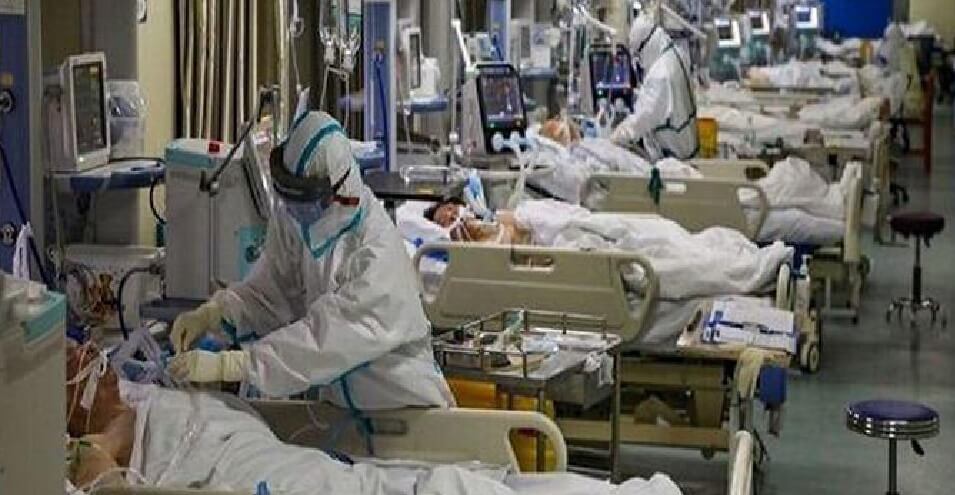
The Secretary-General of the Nursing Association says a small amount of coronavirus vaccine has been imported and its distribution is opaque, with preference given to “insiders.” Meanwhile, the situation in many cities is dire and employees of Behesht Zahra Cemetery in Tehran sometimes work in three shifts.
MohammadReza Sharifi Moghadam, Secretary-General of the Iran Nursing Association, criticized the Iranian Ministry of Health, telling the Rokna News Agency that coronavirus vaccine has been imported in small amounts and the conditions for distributing these vaccines have been inappropriate, and “we have repeatedly witnessed insiders and outsiders being favored when receiving vaccines.”
He emphasized that if officials “didn’t have sand in their shoes, they would present transparent vaccination statistics.”
Rokna News Agency in its report referred to official statistics from the Ministry of Health, Treatment and Medical Education, which show that in addition to 100,000 doses of the joint Iranian-Cuban vaccine that was imported to Iran for clinical trials, 1,665,000 doses of coronavirus vaccine have also “been delivered to Iran for inoculation of the target population.” However, according to the latest statistics and the recent statements of Iraj Harirchi, Deputy Minister of Health, “so far in the first phase, 590,000 people in Iran have been inoculated with coronavirus vaccine.”
The Secretary-General of the Iran Nursing Association said that if a transparent process existed for vaccination in Iran, “all information about vaccine recipients, including their professions, should have been recorded so that it could be precisely monitored which individuals in each occupational group received the coronavirus vaccine.” He criticized officials for not providing any clear statistics on this matter.
Death of Young Nurses
According to Sharifi Moghadam, approximately 700,000 people work in Iran’s health and medical care sector. This number includes health workers, nursing assistants, nurses, doctors, laboratory technicians, and people working in hospitals, clinics, health centers, nursing homes, and other health and medical care centers. He questioned why, out of nearly 1.7 million doses of vaccine imported into Iran, “30 percent of medical personnel have still not been vaccinated against coronavirus?”
According to him, since the beginning of the current year, seven nursing staff members in Mazandaran, Khuzestan, Hormozgan, Razavi Khorasan, and Kohgiluyeh and Boyer-Ahmad provinces have died from coronavirus, most of whom were young and worked mainly in the government sector. He told Rokna: “If the Ministry of Health had not delayed in providing coronavirus vaccine and distributing it to medical personnel, these people’s lives would not have been lost.”
He also criticized why in Iran, medical personnel, especially nurses who are in the frontline of dealing with coronavirus patients, were not prioritized in receiving the coronavirus vaccine, and said that this sector of medical personnel has received less than 50 percent of the coronavirus vaccine “and this issue shows that prioritization in vaccine distribution has not been observed.”
Hospital Shareholder Families Prioritized Over Nurses
Beyond the lack of transparency in vaccine distribution, in some hospitals, especially in the private sector, “many violations have occurred in distributing coronavirus vaccine,” and the announced priorities by the National Coronavirus Combating Headquarters have been ignored.
Sharifi Moghadam criticized weak oversight of vaccine distribution conditions, especially in private hospitals, and said: “It has been reported from several private sector hospitals in Tehran that part of the vaccine quota that was intended for medical personnel was inoculated to shareholders, hospital managers, their families, doctors’ secretaries, and family members of specialists.”
Chinese Vaccine for Nurses, Indian Vaccine for Doctors
Not only has preference been given to some in how vaccines are distributed, but differences have been made between nurses and doctors in the type and quality of vaccines received. The Secretary-General of the Iran Nursing Association said the situation in the government sector is not better for nurses than in the private sector, and referred to a government hospital in Hormozgan Province where some nurses “when they went to receive coronavirus vaccine, were given Chinese vaccine, but doctors received Indian vaccine.”
Trial of the Health Minister
Payam Tabatabai, a member of the Scientific Committee to Combat Coronavirus, told Rokna News Agency that by the end of Farvardin, all medical personnel throughout Iran will receive the first dose of coronavirus vaccine. The Secretary-General of the Iran Nursing Association considered the realization of this promise unlikely and at the same time emphasized that if “there was a will to properly provide and distribute coronavirus vaccine,” all members of the medical personnel would have been vaccinated much earlier.
In his view, the Ministry of Health “should have procured the vaccine from under every stone and ended the vaccination of medical personnel months ago.” For this reason, he also charges the Health Minister with “complicity in the deaths of medical personnel.”
He considered the government and the Ministry of Health’s failure in providing and distributing vaccine as a factor in the sacrifice of nurses in recent months, and mentioned Iran as one of the countries with the highest statistics globally in terms of deaths of nurses due to coronavirus.
He considered Saeed Namaki, the Health Minister, as “the cause of death of these nurses,” and said that even if nurses’ families do not file complaints against the minister, “he should still be tried.”
Death Toll from Coronavirus in Tehran Reaches Triple Digits
According to Sima Sadat Lari, spokesperson for the Ministry of Health, in the past 24 hours, 24,760 new COVID-19 patients have been identified in Iran, and in the same period, 291 patients have lost their lives.
Based on these statistics, the total number of coronavirus patients in Iran has reached 2,118,212 people. In total, 65,055 people have lost their lives due to this disease.
The situation in some cities, including Tehran, is very dire. Saeed Khal, Chief Executive of the Behesht Zahra Organization, announced that the number of deaths from coronavirus in Tehran in the past two days has reached triple digits and has reached the number 100. He told Islamic Republic of Iran Broadcasting: “My colleagues at the Behesht Zahra Organization are working in two and sometimes three shifts, and we have prepared ourselves in complete crisis readiness for the coming days.”
According to Saeed Khal, “throughout the 50-year history of Behesht Zahra, these conditions have never been repeated, and every day “750 people in the purification units, burial, personnel, computer site, transporting the deceased from across Tehran, and transporting the deceased to different cities of Iran” are on standby and active.”
Source: DW