Death of ‘Ibrahim Firouzi,’ Christian Citizen in Robat Karim
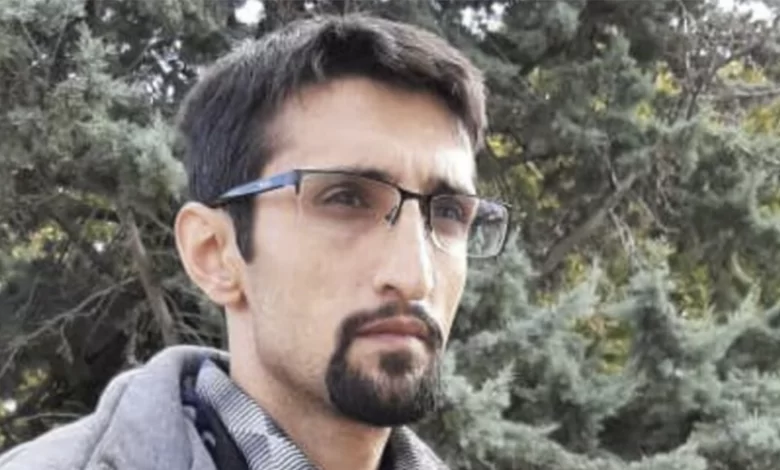
‘Ibrahim Firouzi,’ a Christian citizen residing in Robat Karim, has passed away.
Ibrahim Firouzi, a Christian citizen and former political prisoner who had converted from Islam to Christianity, passed away on Tuesday, the 1st of Esfand, and was buried on Thursday, the 3rd of Esfand, next to his mother’s grave.
Ibrahim Firouzi was arrested in December 2009 for ‘converting to Christianity’ and was sentenced to 10 months in prison in 2010. He was also arrested in March 2014 on charges of ‘Christian missionary activities.’ His arrest in March 2014 occurred after being sentenced in September 2013 by Branch 28 of Tehran’s Revolutionary Court, presided over by Judge Moghisseh, on charges of ‘missionary activities for Christianity against the system,’ ‘establishing and directing a deviant Christian evangelical organization,’ and ‘attempting to create a website for his religious activities,’ to one year imprisonment and two years exile to Sarbaaz city in Sistan and Baluchestan Province, one of Iran’s most deprived provinces. This unjust sentence was later confirmed by Tehran Province’s Court of Appeals.
In April 2015, while serving his sentence in prison, he was sentenced to five years in prison by Branch 28 of the Revolutionary Court, presided over by Judge Moghisseh, on charges of ‘forming a group with the intent to undermine national security,’ based on a separate case. This sentence was confirmed by the Court of Appeals in December 2016.
Ibrahim Firouzi, who was held as a political prisoner in Rajai Shahr Prison in Karaj, went on hunger strike in June 2017 in protest against unjust sentences issued for other Christian citizens detained in the political ward of Evin Prison, such as ‘Amin Afsharnaderi.’
Ibrahim Firouzi’s mother repeatedly attempted to secure her son’s release and made requests to authorities for the freeing of Christians, including her son, but unfortunately her efforts were unsuccessful. She passed away in November 2018 without seeing her son, and prison authorities prevented him from being granted leave following his mother’s death.
Ibrahim Firouzi, 38 years old, spent more than seven years in prison and internal exile due to his Christian faith and peaceful religious activity. Despite torture and harassment by regime officials, he remained steadfast in his belief and did not renounce his Christian faith. He repeatedly went on hunger strike while in prison and became physically very weak due to physical and psychological torture. His vision was even at risk and required assistance, but he was denied access to medical services and the right to leave. Despite these abuses and torture, Mr. Firouzi repeatedly wrote strongly critical letters in prison supporting other prisoners against authorities and officials.
In one of his letters, he protested the situation of ‘Behnam Ebrahimzadeh,’ a labor activist in prison, and criticized the structural injustice of the government. In that letter, he wrote: ‘My question is: Mr. Head of the Judiciary of the Islamic Republic, who has trampled human rights for years and made the observance of fairness and justice meaningless among government officials, can you teach those responsible for decision-making in prisons to observe justice?’
Ibrahim Firouzi was repeatedly arrested by regime forces, with the primary reason for his arrests being the distribution of the Bible through various means, both in printed and digital versions. Not only Ibrahim Firouzi, but many other Christians have had their Bibles seized by regime forces that raid their homes and home churches, which are then used as evidence of crime in court.
Mr. Firouzi was imprisoned and exiled on charges of ‘insulting sacred values’ and ‘propaganda against the system through the promotion of Christianity,’ without the presentation of valid documents or evidence. He also repeatedly defended civil movements in Iran and freedom of expression, from supporting truck drivers’ strikes to protesting internet shutdowns.
He was released from Rajai Shahr Prison in 2019 and exiled to Raask in Sistan and Baluchestan Province. Even during his exile, he was harassed and mistreated by the Ministry of Intelligence, about which Mr. Firouzi spoke in video messages, but despite these harassments, he defended and helped the citizens of Raask. By collecting public donations, he purchased shoes, backpacks, and school supplies for students who walked barefoot to school without sufficient facilities. He even collected financial aid to build sanitation facilities for schools in villages around Raask.
Ibrahim Firouzi repeatedly emphasized in his messages and writings his steadfastness in the Christian faith and, despite the regime’s severe pressure against him and his family, wrote: ‘Nothing, neither threats from the Ministry of Intelligence nor money and others, will keep me away from the love of Christ.’
According to people present at his funeral, Mr. Firouzi’s family attributed his death to a heart attack, but those around him and his friends found his death at age 38 suspicious. Despite being Christian, his relatives buried him according to Islamic customs in a Muslim cemetery and held a ceremony for him in a mosque, without considering that he was a Christian believer. ‘Precious in the sight of the Lord is the death of his faithful servants. Psalm 116:15’
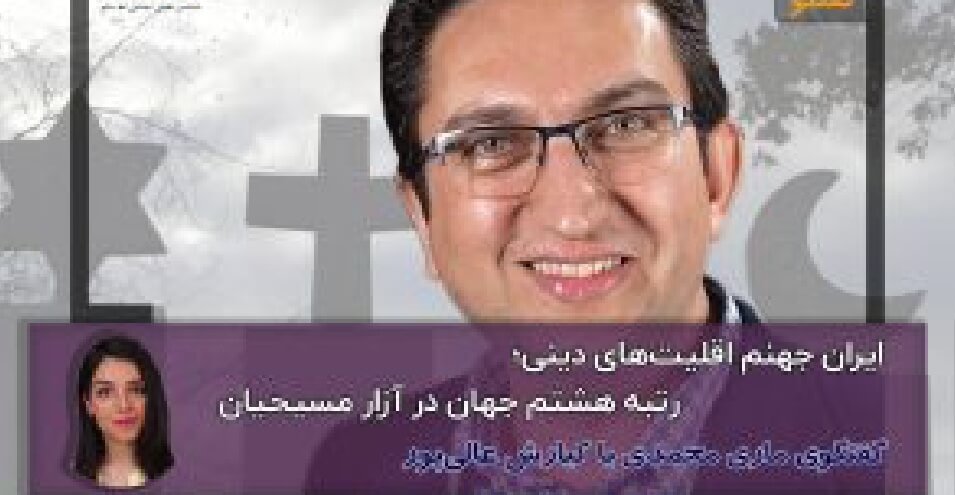
It should be noted that representatives from 33 countries’ parliaments in Europe and the United States, in a periodic session reviewing the state of human rights in Iran, criticized the violation of the rights of ethnic and religious minorities in Iran and have repeatedly condemned the Islamic Republic’s treatment of religious minorities and violation of their civil rights. Iran ranked ninth in the session reviewing the state of human rights globally under the title of ‘Christian-hating country.’