Death Sentence Issued for Mohammad Amin Mandani, Another Case in the Shadow of Post-War Suppression

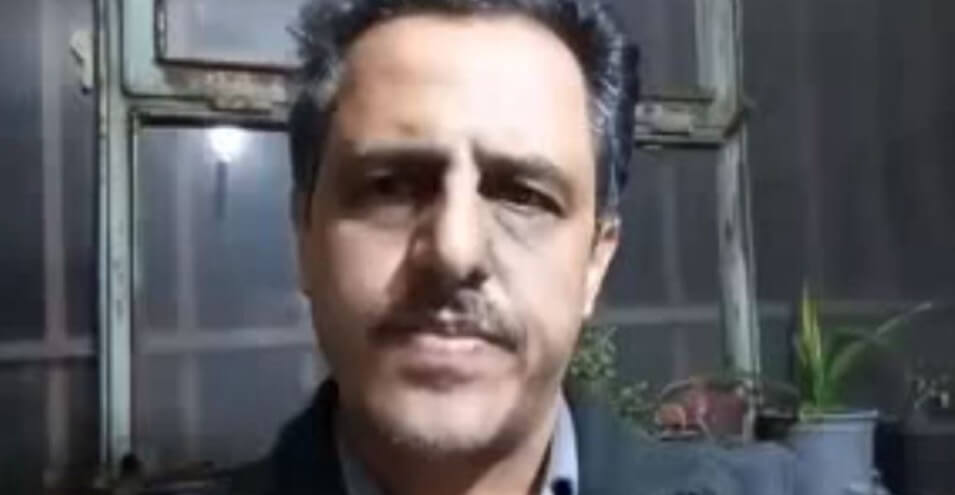
“Mohammad Amin Mandani,” a political prisoner held in Tehran’s Greater Prison, has been sentenced to death and 20 years imprisonment, even as details of his defense and the evidence cited by the court for issuing the death sentence have not been transparently published. The ruling from Branch 26 of Tehran’s Revolutionary Court, presided over by Judge Iman Afshari, was issued in a case related to “cooperation with hostile states,” with “transmission of location coordinates of certain facilities” cited among the charges against him.
Mohammad Amin Mandani, a political prisoner held in Tehran’s Greater Prison, now faces a sentence that could end his life. Branch 26 of Tehran’s Revolutionary Court, chaired by Judge Iman Afshari, has sentenced him to death on charges of “cooperation with hostile states” and to a total of 20 years imprisonment on charges including “assembly and conspiracy against national security.” The sentence was communicated to his lawyer on September 28, 2026.
According to information published about the case, one of the matters cited for attributing the charge of cooperation with hostile states was the transmission of location coordinates of certain facilities. Human rights reports have not provided clear details about the evidence cited by the court, Mandani’s defense arguments, and how his lawyer accessed the case file contents—a matter that has heightened concerns about compliance with fair trial standards.
Mandani was arrested at his home in March 2026, coinciding with security developments related to military conflicts. According to published reports, authorities, after searching his home and confiscating certain items including his mobile phone, transferred him to a detention facility in Tehran. After interrogation and initial legal proceedings, he was transferred to Evin Prison and later, without prior notice, to Tehran’s Greater Prison in June.
However, Mandani’s case is not an isolated file in Iran’s current judicial landscape. Human Rights Watch warned in a September report that Islamic Republic authorities executed at least 59 people on political and vague security charges between March 18 and the end of August 2026; 29 of them had been arrested in connection with recent protests. The organization has emphasized that many of these cases have been accompanied by extremely swift judicial proceedings and serious violations of the defendants’ rights.
Human Rights Watch also warned that in a number of cases, charges such as cooperation with “hostile states” have been used to impose capital punishment—charges that, particularly following recent military confrontations, have become a tool for intensifying security pressure on opponents and critics.
Concurrent with Mandani’s sentence, the Islamic Republic’s judicial apparatus has continued executing death sentences. Reuters reported that on October 5, Alireza Sepahi and Alireza Raeisi, two men arrested in connection with protests in Isfahan in January 2026, were executed. Islamic Republic authorities had leveled serious charges against them, and the death sentences had been confirmed by the Supreme Court before execution.
In these same days, the “Tuesdays Against Executions” campaign announced that at least 22 people were executed in Iran between September 29 and October 5, and protesting prisoners in 66 prisons across the country have entered the 141st week of this campaign. This figure was announced by the campaign itself and should therefore be considered a statistic reported by a human rights organization rather than an independent official statistic.
Regarding the newly issued death sentences, including Mohammad Amin Mandani’s sentence, the campaign stated: “These convictions must be immediately annulled, and the lives of all those sentenced to death, particularly political prisoners and arrested protesters, must be protected from the danger of execution.”
Continuing in the same statement, activists of this campaign have characterized execution as a tool for creating fear and silencing protests, emphasizing that “gallows” should not become a means of muting society.
The significance of Mandani’s case becomes clear at this point: the issue is not merely one prisoner’s fate, but rather how the Islamic Republic treats citizens who face serious charges in the tense security environment following military conflict—charges that, even if proven, should be examined in an independent, public, and fair court, not in proceedings where the details of evidence and defense arguments remain unclear to the public.
Under such circumstances, issuing a death sentence for a political prisoner, particularly when the details of his case and defense process remain murky, once again highlights concerns about capital punishment becoming a tool for suppression and public intimidation in Iran. What has happened to Mohammad Amin Mandani is part of a larger picture; a picture in which Iranian families not only face poverty, insecurity, and the consequences of war, but may also confront daily news of the arrest, imprisonment, or execution of a loved one.
For Mandani, the danger is not now merely a sentence on paper; the danger is the execution of that sentence. And for Iranian society, the continuation of such processes raises serious questions about the value of human life in the Islamic Republic’s judicial structure—a structure that, according to human rights organizations, has increasingly relied on capital punishment in recent years to deal with opponents and protesters.