Iran’s Parliament Criminalizes Interviews with “Hostile” Media
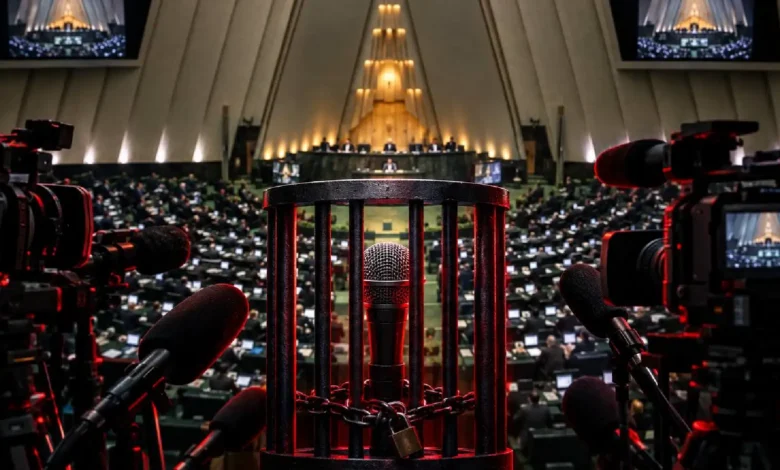
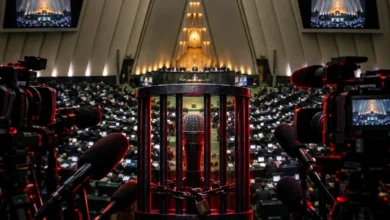
The Islamic Consultative Assembly (Parliament), continuing its review of a bill titled “Countering the Infiltration of Foreign Intelligence Services and Governments or Entities,” has expanded restrictions on freedom of speech and Iranians’ communication with media outlets. On Tuesday, October 5, representatives approved Article 22, which prohibits Iranian citizens from conducting interviews or engaging in dialogue with media outlets designated as “hostile” by the Ministry of Intelligence, imposing criminal penalties including imprisonment and flogging for violators. Simultaneously, transferring certain official unpublished information and statistics to “foreign agents” can result in imprisonment of five to ten years or more and permanent disqualification from holding office.
According to Article 22 as passed by Parliament, Iranian citizens cannot conduct interviews or engage in dialogue with media outlets or “media figures” that the Ministry of Intelligence has designated as “hostile” and publicly announced. Additionally, media outlets under the ownership, management, or budget of agents related to certain foreign governments are also subject to these restrictions. Violation of this prohibition, according to the text of the bill, will incur one or more Category Six penalties as defined in Article 19 of the Islamic Penal Code.
These penalties carry a significant scope and may include imprisonment of six months to two years, monetary fines, flogging of 31 to 74 lashes, and deprivation of social rights. Notably, the text of the article exempts officials of the Islamic Republic from this prohibition; meaning the restriction imposed on “Iranian citizens” does not apply to officials within the government structure.
Thus, a media interview that in many legal systems is defined within the framework of freedom of speech and access to information, can become the subject of a criminal case if it involves contact with a media outlet designated as “hostile” by the Ministry of Intelligence. This is one of the primary concerns regarding this bill, as the determination of whether a media outlet is considered “hostile” is entrusted to the Ministry of Intelligence according to the article’s text, and the term itself lacks a precise and clear definition in the bill. Critics have warned that such a vague definition could significantly expand the scope of the prohibition.
Alongside Article 22, Parliament has also approved Article 20 of this bill. According to this article, individuals who, through their employment, position, or legal mandate, or through professional contact with individuals in related positions, have access to unpublished official information, reports, data, or statistics of the country and provide them without authorization to “foreign agents” will face Category Four imprisonment and permanent disqualification from holding related office. Category Four imprisonment under the Islamic Penal Code is five to ten years or more.
More severe penalties are envisioned for classified information. According to a clause in Article 20, the disclosure, publication, or transfer of confidential or secret information to a foreign agent or national, if it causes damage or harm to national security or interests, may be subject to Category Three penalties.
This bill faced opposition from within the Islamic Republic since its initial approval. Masoud Pezeshkian’s government formally opposed it in September, stating that the bill’s text and review procedure have serious flaws. The President’s legal deputy had stated there is no legal vacuum to counter infiltration, and if a new law is needed, it should be prepared with the participation of the government, judiciary, and after examining various dimensions. The government also warned about creating restrictions on scientific activities, accelerating the migration of elites, and the negative repercussions of this bill.
Critics of the bill are concerned that the concept of “countering infiltration” extends beyond espionage and intelligence activities to include media, academic, professional, and civil communications of citizens.
Under such circumstances, Article 22 is of particular significance, as it subjects an Iranian citizen to criminal penalties not for transmitting classified information or conducting intelligence operations, but merely for engaging in dialogue with media that the government designates as “hostile.” This could further restrict Iran’s media space and make citizens, journalists, civil activists, researchers, and even families of victims and protesters more cautious or fearful of speaking with foreign media outlets.
In practice, such an approach could blur the line between “countering espionage” and “restricting information flow.” If a citizen discusses the country’s economic, social, human rights, or political situation with foreign media, determining whether this contact was merely media activity or constitutes “infiltration” will depend on how these regulations are interpreted and implemented.
However, it should be noted that Parliament’s recent bills are not yet the end of the legislative process and must go through subsequent legal procedures to become enforceable law. Therefore, what has been approved now is a parliamentary bill, not a law that necessarily has criminal enforceability from this moment.
A bill that was supposed to, according to its designers, counter “foreign infiltration,” has now reached a point where even a conversation between an Iranian citizen and a foreign media outlet can be subject to criminalization. While the Islamic Republic has long restricted or labeled independent and critical foreign media as “hostile,” entrusting the designation of this label to the Ministry of Intelligence and then linking it to imprisonment and flogging penalties has increased concerns about the future of freedom of speech and free access by Iranian citizens to information.
These bills ultimately send a clear message about the bill’s direction: countering what the government calls “infiltration” is no longer limited to intelligence activities and now encompasses media communications and information dissemination—a domain that, the more it becomes restricted, the less likely the voices of critics, protesters, families seeking justice, and Iranian civil society can be heard.