“Ayoub Mohammad Nabil”: A Refugee from Guardroom to “Moharebeh” and Death Sentence

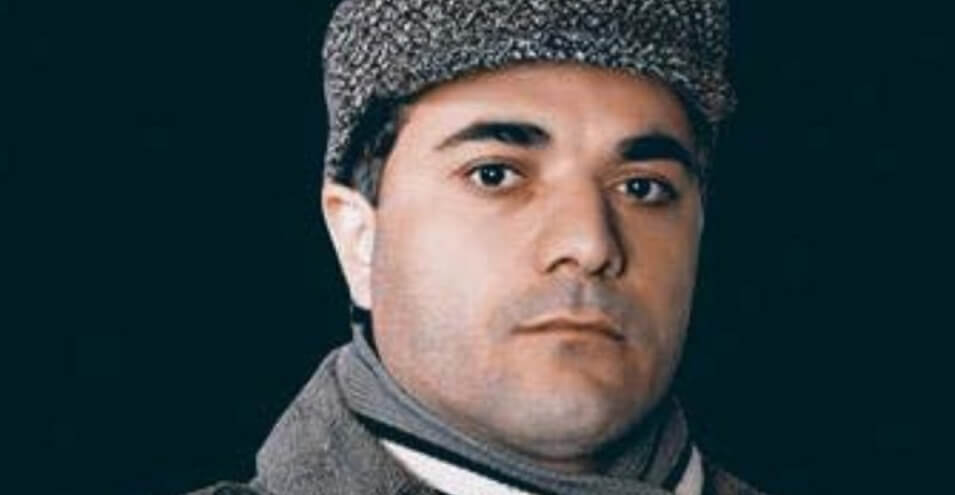
Ayoub Mohammad Nabil, a 28-year-old Iraqi Sunni Muslim citizen who was legally residing in Iran, now faces a death sentence in Lakan Prison in Rasht. The Revolutionary Court has charged him with “moharebeh” (waging war against the state) through espionage for proxy groups backed by Saudi Arabia. Nabil has rejected all charges and, according to human rights sources, has stated that after five months of detention at Rasht’s intelligence office, he was subjected to severe psychological torture, and the security charges against him were fabricated due to his religious identity and religious activities.
Ayoub Mohammad Nabil, a 28-year-old Iraqi citizen, is yet another foreign national in Iran facing a death sentence—a verdict issued by Branch One of Rasht’s Revolutionary Court on charges of “moharebeh” and in connection with allegations of espionage for proxy groups backed by Saudi Arabia. Nabil is currently being held in Rasht’s Central Prison, known as Lakan Prison.
The Iran Human Rights Organization, which has independently reviewed the case, reported that Nabil, a resident of Hadithah in Iraq, was arrested on August 26, 2025, by the Ministry of Intelligence forces in Fouman County. Prior to his arrest, he worked as a caretaker of a private villa. According to the report, he entered Iran legally with a passport and had no prior security issues before his detention.
Based on available information, Nabil was held for approximately five months in the detention facility of Rasht’s intelligence office before being transferred to Lakan Prison. The Iran Human Rights Organization, citing an informed source, has claimed that he was subjected to “severe psychological torture” during this period. Hengaw also published the same allegations regarding his detention period.
The primary charge against him is “moharebeh” through espionage for proxy groups backed by Saudi Arabia—a very serious charge that in the Islamic Republic’s judicial system can result in the death penalty. However, Nabil has denied all alleged connections and cooperation with Saudi Arabia or groups affiliated with it.
What makes this case even more sensitive is Nabil’s claim about the reason the case was opened against him. According to the Iran Human Rights Organization’s report, he stated that charges were brought against him because he is a Sunni Muslim with a beard who was active in teaching the Quran to local children and teenagers. He taught the Quran to children and teenagers in the guardroom of his workplace, and he believes this religious activity played a role in fabricating the security charges against him.
An informed source also told the Iran Human Rights Organization: “There was no evidence of his connection to political activities or Sunni-Wahhabi groups, yet the court condemned him to death.”
This claim, of course, has been made by a human rights source, and the complete case documents are not publicly available for independent review. This very lack of public information about the evidence in the case is one of the most significant points of ambiguity in Nabil’s case.
Ayoub Mohammad Nabil’s case cannot be examined separately from the broader circumstances of the Islamic Republic’s judicial system in 2026. Human Rights Watch reported in September 2026 that over a five-month period, from March 18 to the end of August, Islamic Republic officials announced 29 executions in connection with recent protests, and dozens more remain at risk of execution. The organization criticized the use of charges such as “moharebeh,” “corruption on earth,” “espionage,” and “operational activity on behalf of hostile states” in these cases.
Human Rights Watch also reported that in a large number of these cases, judicial proceedings have been accompanied by serious violations of fair trial guarantees, with security agency reports and confessions obtained during detention playing a role in issuing sentences.
This is particularly significant for Nabil’s case, as he too, according to human rights sources, was held for months in a security detention facility and has alleged psychological torture.
The United Nations also expressed concerns in Mordad 2026 in one of its communication reports regarding a law increasing penalties for espionage and cooperation with the “Zionist regime and hostile states”—a law that prescribes the death penalty for certain behaviors related to these charges.
Human Rights Watch had previously warned that Islamic Republic authorities increased the use of execution for security and espionage charges in the months following the onset of military confrontations.
Amnesty International also announced in May 2026 that Islamic Republic authorities, citing conditions they call a “state of war,” have increased mass arrests, expedited judicial proceedings, and politically motivated executions.
The organization reported that following the onset of military attacks in February 2026, over 6,000 people have been arrested in Iran, and at least 39 have been executed on political charges. Among the charges are espionage for the United States or Israel and “armed rebellion against the government.”
Amnesty International has also warned about the use of “forced confessions” and concerns regarding torture and mistreatment during detention.
In such circumstances, the case of an Iraqi Sunni citizen who claims the espionage charge against him was fabricated because of his religious identity and Quranic activities does not appear to be merely an ordinary judicial case; rather, it is part of a broader concern about how the Islamic Republic’s security and judicial apparatus treats defendants in security cases.
Ayoub Mohammad Nabil has three characteristics that make his case more sensitive: he is a foreign national, he is a Sunni Muslim, and he faces charges of espionage.
Human Rights Watch, in its annual report on Iran, also pointed to continued pressure on ethnic and religious minorities, noting that ethnic minorities, many of whom are Sunni Muslims, have in recent years been among those increasingly subjected to execution penalties.
However, regarding Nabil, one should not draw conclusions beyond the available information. No independent public document has been released proving that the court issued a death sentence solely because of his being Sunni. What exists is Nabil’s own account and human rights sources’ narratives about the case—narratives that suggest his religious activities and religious appearance played a role in fabricating the charges.
But the central issue remains: if a charge of espionage against a person results in a death penalty, the public must be able to know exactly what evidence exists against him and whether that evidence was examined in a fair and independent trial.
The Iran Human Rights Organization has stated that in 2026 alone, at least 15 people have been executed on charges related to espionage; 13 of them had been charged with espionage for Israel or the United States, and two Iraqi nationals were also executed on charges of espionage for an Arab country.
This statistic places Nabil’s case within a process that has intensified in Iran in recent months: the use of security and espionage charges to issue death sentences. In such circumstances, the distance between accusation, proof of guilt, and execution of the sentence becomes critically important. The death penalty is irreversible; if a case results in a death sentence through forced confession, incomplete evidence, or unfair trial, after the execution there is no possibility of remedying the wrong done to the victim.
Now Ayoub Mohammad Nabil sits in Lakan Prison in Rasht awaiting the outcome of a case whose full details are not available to the public. Human rights reports say he has denied the allegations related to Saudi Arabia, spoken of psychological torture during his detention, and claimed that his religious identity and Quranic activities were used against him in this case.
Nabil’s case once again raises the question: in the Islamic Republic’s judicial structure, when a security case results in a death sentence, to what extent do the accused have access to a lawyer, independent review of evidence, ability to challenge charges, and a truly fair trial?
For a man who, prior to his arrest, according to human rights sources, was legally residing in Iran and working as a caretaker of a private villa, a security charge can now cost him his life. Ayoub Mohammad is still alive, but he is now on the list of those sentenced to death, and every day could be a decisive day for him.