Death Toll from Iran Protests Reaches 15; 13 Killed on Sunday
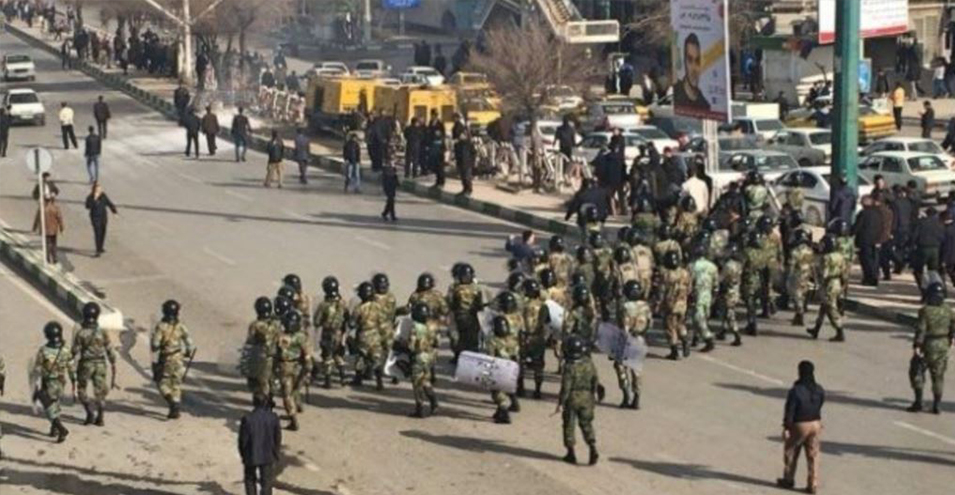
One day after Sunday’s protest gatherings, Iran’s state television announced that the protests on that day left 13 dead in various regions of Iran.
Iran’s television news network on Monday, December 11, while announcing this news, attributed the deaths to the cities of Tuyserkan, Dorud, Izeh, and Shahin Shahr.
The Associated Press news agency, while publishing the same report from Iran’s state television, wrote that some officials stated that some armed individuals in one of the cities intended to seize a police station, which led to clashes with security forces.
In this regard, Mashalah Nemati, the governor of Dorud county in Lorestan province, reported the deaths of two people in Sunday’s incidents in that city. He told Iran’s domestic media that during Sunday’s protest gatherings, a fire truck that went to extinguish a fire at a bank was forcibly taken by protesters as it was returning. According to him, this vehicle then collided with a middle-aged man and a teenage boy, both of whom were killed.
Hedayatollah Khademei, the representative of Izeh county in Khuzestan province, also told the ILNA news agency that residents of the county, like some other cities, gathered in protest on Sunday against economic problems, which unfortunately resulted in the deaths of two people and the injury of several in this county.
He added that it is still unclear whether shooting was carried out by authorities or by protesters, since according to him some residents of this city possess firearms. However, later, the governor of this city announced that one of the two people who were shot was injured.
Based on the television report, three people were also killed in Sunday night incidents in Shahin Shahr city in Isfahan province. An updated report from Iran’s television news network added that six people were also killed in gatherings in Tuyserkan city in Hamadan province. Hours later, Saeid Shahrokhi, the political-security deputy of Hamadan’s governor, reported in a conversation with ISNA the deaths of three people during protests and unrest in Tuyserkan city.
The deaths of 13 people in Sunday’s incidents came as two people were killed and six injured in Saturday’s protests in Dorud city. Thus, nationwide protests in Iran over four days resulted in a total of 15 deaths and several injuries.
Sunday’s incidents occurred while on that day Iran’s President promised greater efforts by the government to solve the people’s economic problems in his statements. However, protesters in various cities, regardless of these statements, continued their gatherings.
While Iran’s President sought to calm protesters four days later, his statements had no effect on the course of the protests, and people’s gatherings continued on the fourth day of protests.
Hassan Rouhani spoke on Sunday, December 10, at a cabinet session about the recent protests in Iran at a time when his statements were broadcast by Iran’s official television in a recorded manner, not live, and with a few hours’ delay.
Mr. Rouhani in these remarks, without referring to police’s harsh treatment of people and the killing and injuring of several citizens, recognized protest as a people’s right but emphasized that it should not lead to destruction. He also said that solving some economic problems takes time.
However, Iran’s President’s initial reaction to recent developments had no effect on the continuation of protests, and Sunday’s gathering process continued.
Videos sent to Voice of America and images posted on social networks showed clashes between police forces and protesters in Iran’s cities.
Sunday evening gatherings on December 10 at Ferdowsi Square in Tehran and various areas of Revolution Street led to the involvement of police water cannons. Another video showed protesters on Vali-e-Asr Street in Tehran clashing with police and overturning a police vehicle.
Other images showed clashes between police and even shootings in Tuyserkan city in Hamadan province. News that social network users sent to Voice of America also reported police confrontations with gatherings of protesters in the cities of Isfahan, Shahin Shahr, and Shahr-e Reza.
Images sent to Voice of America also showed the holding of gatherings and marches in Chabahar city in Sistan and Baluchestan province.
In these images, protesters chant “Independence, freedom, Iranian Republic” and “The nation begs, the leader thinks he is God”.
Other images showed that protesters on Sunday also marched in the cities of Sanandaj, Bahar, Arak, and Rasht.
A protest gathering was also held in front of the city administration of Maragheh in East Azerbaijan.
On Sunday, with the escalation of protests, Pavel Durov, the manager of the Telegram messenger, announced that this application has been blocked from within Iran by the government. Shortly after, the Deputy Interior Minister confirmed that the government was “forced to temporarily impose restrictions” on Telegram and Instagram.
Timeline of Widespread Protests in Iran
Starting from Thursday, December 7, protests began in Iran’s cities. Initially, these protests had economic slogans but gradually spread from Mashhad to Kermanshah and other Iranian cities. In widespread protests in Iran’s large and small cities, protesting people chanted slogans against the system and the leader of the Islamic Republic.
The U.S. government issued statements in support of the Iranian people and their demands from the second day of these protests. Prominent faces from the U.S. Congress also announced that the United States should stand with the Iranian people.
In protests in recent days, people from religious cities such as Qom also chanted slogans against Khamenei and the Islamic Republic’s government.
Reports were transmitted from Lorestan about the killing of protesters.
Angry and furious protesters attacked some government buildings including governorates, courts, and offices of some Friday prayer leaders.
Opponents of the Islamic Republic have welcomed the widespread protests by the Iranian people. Farah Pahlavi expressed hope that the Iranian people will be victorious in their protests. Prince Reza Pahlavi and Maryam Rajavi, prominent figures opposed to the Islamic Republic outside Iran, have also supported these protests.
Source: Voice of America