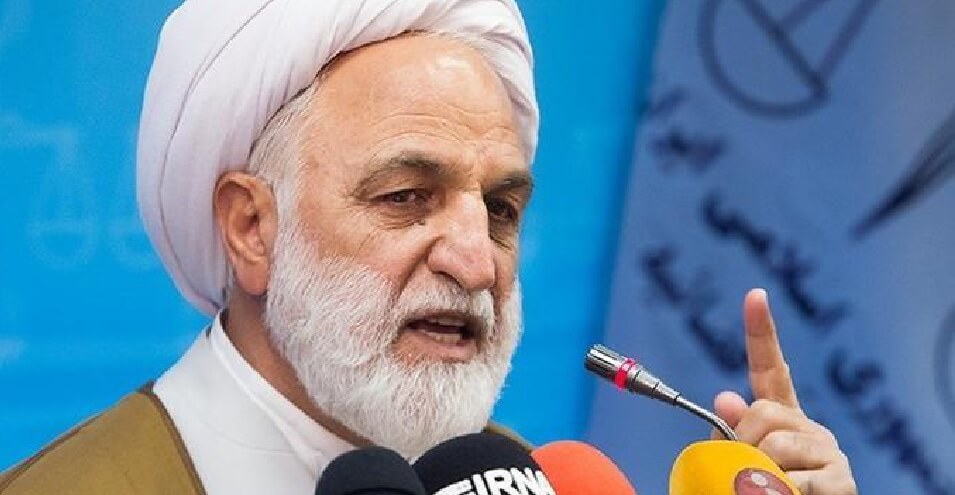
Deputy Minister of Justice: Families Sell Their Children into Marriage for One Million Tomans
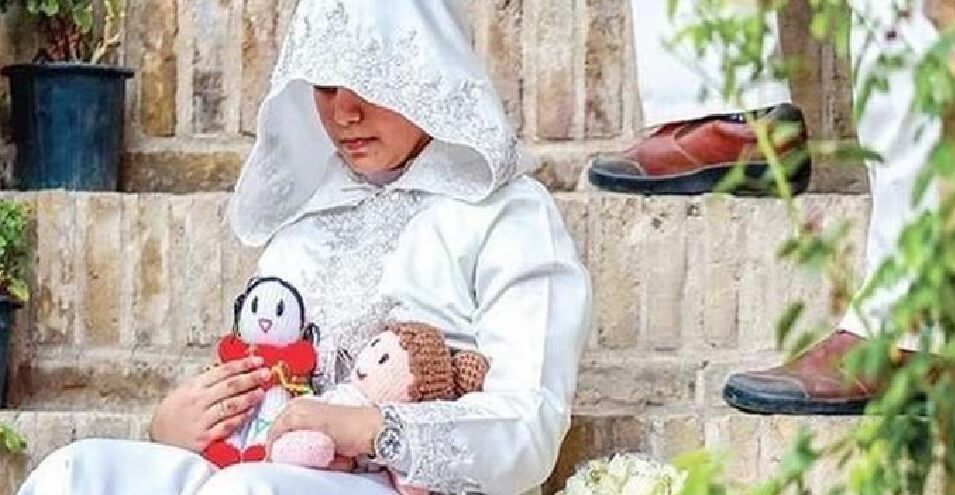
The human rights deputy of the Justice Ministry said Iran is being questioned in international forums regarding child marriage. He described official statistics as merely reflecting registered marriages and stated that the actual rate of child marriage is much higher than the official rate.
Mahmoud Abbasi, associate professor at Shahid Beheshti University of Tehran and human rights deputy of the Justice Ministry, on Sunday, September 7, identified two main causes of child marriage as “cultural poverty” and “economic poverty” in an interview with ISNA news agency. He said that due to “severe economic poverty,” families give their children into marriage for as little as one million tomans.
Abbasi, emphasizing that in criminology when a crime or social abnormality occurs, the officially announced rate is at least one-third of the actual rate, added that the situation is the same in the field of child marriage.
The secretary of the national reference for the Convention on the Rights of the Child described official statistics as merely reflecting registered marriages and said some families, without formal registration, marry off their daughters before age 13 in religious ceremonies, and after turning 13, citing the fact that this ceremony is entirely religious, resort to court to obtain marriage permission, effectively placing the court before a fait accompli to issue a marriage ruling.
Abbasi attributed the reason for failing to register another section of these marriages to “concern about consequences, being deemed criminal, and fear of being blamed.”
Child Marriage Does Not End Despite Criminalization
In another part of the ISNA interview, the human rights deputy of the Justice Ministry alluded to a question raised during his trip as head of the Iranian delegation to the UN Committee on the Rights of the Child to report on the Islamic Republic’s five-year record to the organization. He says that during this trip, as Iran’s representative, he was criticized due to the “current effect” of early marriages, because despite criminalization and punishment of perpetrators, including parents and notary offices, marriage remains in force.
Continuing his remarks on this matter, he called for the activation of jurisprudents in this field and said they should “prevent child marriage by examining issues, offering opinions, and presenting solutions.”
Abbasi, while confirming that the condition of the child’s interest is not observed in issuing marriage rulings in some courts, said that to prevent arbitrary decision-making in this regard, training sessions have been held, including for judges, families, and forensic medicine specialists, but there is still a long way to go to reach the desired result. He also referred to determining puberty solely based on physical maturity by forensic medicine in some provinces and considered this criterion insufficient.
What Happened to the Child Marriage Ban Bill?
According to Article 1041 of the Civil Code, “marriage of a girl before reaching 13 full solar years of age and a boy before reaching 15 full solar years of age is contingent upon the guardian’s permission on condition of observing the child’s interest as determined by the competent court.” Many experts seeking to combat forced child marriage advocate for raising the minimum marriage age.
In an effort to achieve this goal (banning marriage of girls under 16 and boys under 18 years old), in 1397 (2018) with the “child marriage ban” bill, efforts were made in the tenth parliament on this issue, which faced opposition from critics and, under the pretext of further review, came to nothing.
According to reports conducted in two provinces, Golestan and Razavi Khorasan, and according to Iran’s Statistical Center report, the marriage of girls aged 10 to 14 in the first quarter of last year was 7,323 cases, which with a 23 percent growth reached 9,058 cases in the summer of 1399. This is only the registered figure. Many child marriages are not registered.
Some opponents of child marriage ban believe that banning child marriage is contrary to the country’s general population policies and also contrary to religious law.
Source: DW