Destruction of Rev. Husein Soudmand’s Grave; The First Priest Executed for Apostasy
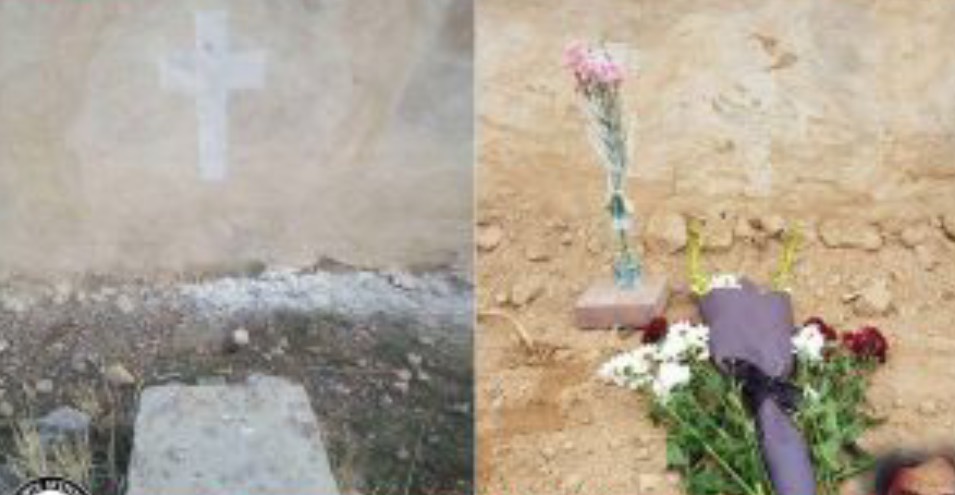
The grave of Husein Soudmand was destroyed in November this year on the twenty-ninth anniversary of his execution. Soudmand’s body was buried on the outskirts of Behesht-e Reza cemetery in Mashhad after his execution, and throughout all these years, only an unmarked concrete surface marked his burial site. However, in November this year, this location was buried under approximately half a meter of soil. It appears this destruction was intended to erase all traces of Rev. Soudmand’s burial. Husein Soudmand, a pastor of the Assemblies of God congregation in Mashhad, was executed on December 3, 1990, on charges of apostasy.
According to HRANA, the news agency of the Human Rights Activists in Iran, Rev. Husein Soudmand’s burial site was destroyed in November this year on the twenty-ninth anniversary of his execution.
Husein Soudmand’s body was buried on the outskirts of Behesht-e Reza cemetery in Mashhad in a desolate area. Throughout all these years, only an unmarked concrete surface marked his grave, which was also destroyed in November this year. Now the grave surface has been buried under approximately half a meter of soil, and the cross symbol on the wall has also faded. It appears this destruction was carried out to eliminate all traces of Rev. Soudmand’s burial site.
The destruction and desecration of graves belonging to religious minorities and political opponents of the Islamic Republic is a long-standing practice.
In October 1990, Husein Soudmand returned to Vakil Abad Prison in Mashhad after completing a few weeks of leave. On December 3, 1990, without prior notice and without the opportunity to meet his family before execution, he was executed in the prison yard of Vakil Abad Prison in Mashhad. The death certificate listed the cause of death as “asphyxiation by rope.” There is no information regarding the trial or how the sentence was issued for this pastor.
One week after the execution, individuals who identified themselves as officials from the Ministry of Intelligence visited Soudmand’s family home, informed them of the execution on charges of “apostasy,” and provided them with the burial location. Soudmand’s family never succeeded in seeing his body; they were only shown an unmarked stone as his burial site. They were also never permitted to place a gravestone on his grave throughout these years. Additionally, the charges against him were never formally announced to his family.
Arin Soudmand, the daughter of Rev. Husein Soudmand, was interviewed in the latest issue of “Khat-e Solh” (Peace Line) magazine. In this interview, regarding the pressures and security harassment against her father, she said: “We had a two-story villa with a basement in Mashhad. My father converted this basement into a church with permission from the Islamic Republic. This church, called ‘Assemblies of God of Mashhad,’ was established by my father in a completely legal manner and with authorization. We placed a sign reading ‘Assemblies of God of Mashhad’ above the door of the house. After Khomeini’s death, they revoked the permission from my father, closed the church, and removed the sign from the door. Then my father was constantly detained. Our phone calls were monitored. Once when my father came home on leave from prison, he told all of us not to say anything because they knew about our most private conversations, even very private matters between him and my wife. They had placed surveillance in our home. When my father was martyred, without our permission, they sold the telephone line that was registered under the name of Assemblies of God of Mashhad, and our telephone was completely cut off, and we were not allowed to buy or have a telephone.”
Ms. Soudmand later told “Khat-e Solh”: “I don’t remember the date of my father’s first arrest. But I remember that after Khomeini’s death, my father’s detention became very serious and the pressure increased. Almost after the fortieth day ceremony following Khomeini’s death, my father was arrested and released repeatedly, and the authorities were very upset that the church had not held a ceremony for the fortieth day of Khomeini’s death. Ultimately, they forced my father to hold a ceremony for Khomeini’s year. But my father’s last return to prison after completing his leave was in early or mid-October 1990, and he never came back.”
Seyyed Husein Soudmand Radkani was born on July 1, 1940, in Mashhad. During his teenage years and military service, he converted to Christianity. He continued his studies in this field and eventually began working formally as a pastor in the church. He was also involved in charitable work and serving people with disabilities. Husein Soudmand went to Isfahan to serve in the “Christopher” organization for the blind. There he met “Mahtab Naroosh,” and this acquaintance resulted in marriage and four children named Ramtin (born 1974), Rashin (born 1978), Arin, and Aria (born 1981).
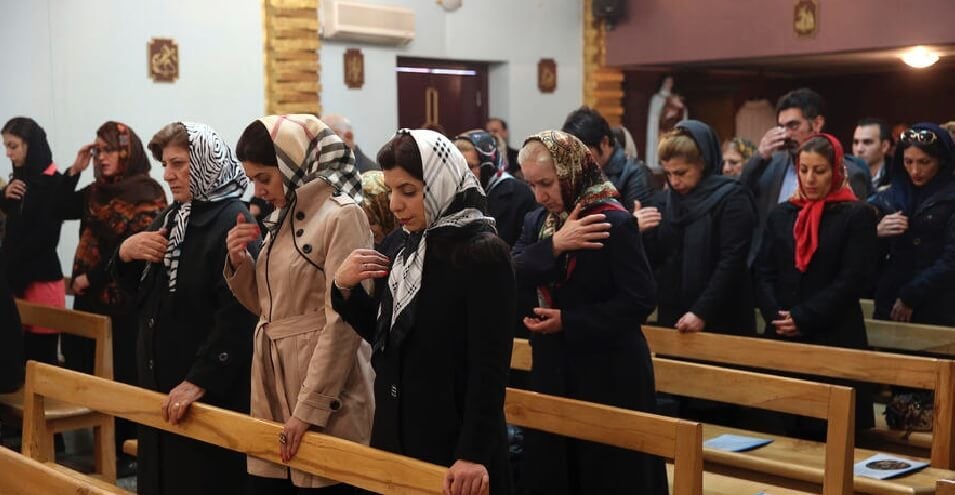
It should be noted that although according to law, Christians are recognized as a religious minority, security agencies pursue the issue of Muslims converting to Christianity with particular sensitivity and use coercive measures against activists in this field.
Treatment of Christians in Iran occurs despite the fact that according to Article 18 of the Universal Declaration of Human Rights and Article 18 of the International Covenant on Civil and Political Rights, everyone has the right to freedom of thought, conscience, and religion, and the freedom to change religion, as well as the freedom to express these beliefs, either individually or in association with others, and either publicly or in private.
Source: HRANA