Do Civil Disobedience Acts Give Fresh Blood to Justice-Seeking Movements and People’s Protest Actions Against Oppression and Discrimination?
The definition and explanation of the concept of civil disobedience has been a subject of considerable debate and discussion among activists and observers of civil society in Iran.
Civil disobedience can be said to refer to actions undertaken by citizens in the course of openly and declaredly defying laws, decrees, or orders issued or established by the government that serve the interests of power while opposing the interests of citizens. Given such a definition, how and through what channels is it possible to elaborate and expand civil disobedience in Iranian society? How can we examine and evaluate instances of civil disobedience among different individuals and groups in society? How have the past experiences of Iranian citizens and civil society under the banner of civil disobedience influenced the development of this concept? Can experiences of civil disobedience in Iran be compared with historical examples worldwide? Revisiting some important historical periods in recent decades where aspects of civil disobedience are clearly evident can help explain this concept within the context of Iranian society. Undoubtedly, many examples of civil disobedience have occurred throughout the past decades in Iranian society or among groups of civil activists. Forms of civil disobedience that, through years of persistence and insistence by society, have largely prevented the government from implementing laws enacted against the will of citizens—such as public reaction to the satellite ban law or women’s resistance and defiance of mandatory hijab law. Perhaps it can be said that today various forms of civil disobedience have gained greater legitimacy among society and public opinion, and as protest movements seek to strengthen their bonds, the capacity of citizens to join various methods and tactics of civil disobedience has also increased.
Civil Disobedience That Led to Widespread Protests
The conflict between the interests of Iranian citizens and many laws or government decrees that have negatively affected citizens’ lives has manifested in various forms throughout several decades of Islamic Republic governance in Iran, consequently leading to numerous instances of social reaction, defiance, and resistance against these laws and orders. This issue—protesting anti-freedom laws or government neglect of citizens’ legal rights—has transformed into unprecedented widespread protests at several important historical junctures: the protests of impoverished and marginalized people in 1992 in Mashhad, the December 2017 and November 2019 protests that occurred in many Iranian cities, as well as recent strikes and protests by teachers and retirees in Iranian cities.
Although analysis of these protests in political literature has rarely been viewed through the lens of civil disobedience, it is possible to examine these protests from this perspective by identifying their connections to legal matters. In fact, each of these mentioned protests is rooted in conflict over legal matters—either in reaction to the enactment and implementation of a series of laws, orders, and decisions, or to the non-implementation of laws that serve citizens’ interests.
On June 9, 1992, when municipality personnel used bulldozers to demolish homes of a number of marginalized residents in Mashhad, citing Article 100 of the Municipality Law (concerning the demolition of unauthorized structures) in the “Tallab neighborhood” area on “Tabatabai Boulevard,” two children from this poor and marginalized district were killed, which prompted residents to carry the body of one child toward the city center. During the clashes, a school-age child who was heading home from school was killed by security forces’ gunfire. The protest movement of Mashhad residents quickly reached the city center and the Mashhad governorate. Residents of other Mashhad neighborhoods joined the Tallab district residents. Protesters took over two police stations and effectively put the city under protesters’ control. The protesting people then headed toward the municipality—the institution that protesters believed had initiated the crisis.
One can view the narrative of Mashhad’s widespread protests from a different perspective: a large group of poor people in the margins of Mashhad who had been enduring severe economic pressure and discrimination had engaged in an act of civil disobedience regardless of construction laws. In a sense, when these citizens saw that the government and executive bodies were ineffective in implementing laws to eliminate economic discrimination and provide housing (Article 3 of the Constitution), and that stricter laws (such as municipality construction regulations) had made conditions more complicated, they decided to begin building homes and shelter for themselves, albeit with minimal resources. In response, however, government forces, oblivious to this form of civil disobedience and without considering themselves obligated to provide basic rights to the people, dealt with them in the most brutal manner possible.
The Mashhad uprising was suppressed after three days (or according to some accounts, two days) of clashes between protesters and security forces from neighboring Khorasan provinces who had come to Mashhad. There are no precise figures on the number of detainees. Some cite over 800 arrested protesters, while others mention 300. The only official figure concerns the execution of four protesters, news of which was published in contemporary Iranian newspapers.
From this perspective, one can also examine the December 2017 and November 2019 protests. The main spark for the December 2017 popular protests ignited in Mashhad, where a group of people who had lost their investments in a financial institution held a gathering to protest the unclear status of their capital. In fact, these protesters’ demands can be reread with reference to Article 9 of Section 3 of the Constitution, which obligates the state to “eliminate unjust discriminations and create fair opportunities for all in all material and spiritual domains.” The flame of protest gatherings quickly ignited in many Iranian cities, and in a sense, this civil disobedience led to one of the most serious and widespread popular protests. Although the issue of financial institutions and related laws was not the primary reason for the spread of protests, there is no doubt about the connection of these protests to the implementation or non-implementation of constitutional principles.
The widespread November 2019 protests can also be examined from this perspective. In reality, the basis of the November 2019 protests—which undoubtedly led to the most severe suppression of protests in the past century—was the government’s sudden decision and decree concerning fuel price increases in Iran. This decision, or government decree as it were, faced public reaction and ultimately the most severe suppression and violence by the government.
The protests and strikes of teachers in the final years of the 2010s Solar calendar can also be examined from this perspective. Teachers’ strikes in classrooms and the continuation and spread of street protests were in fact a clear civil disobedience against the process of approving teacher ranking laws in the Islamic Consultative Assembly. A matter that is equally true of retirees’ protests—that is, protest against the conditions under which the law to equalize retirees’ benefits was approved, and certainly the ineffectiveness of the executive and government system in protecting citizens’ capital in retirement funds.
In all the mentioned examples and certainly other forms of civil disobedience among various communities and groups in society, such as workers and employees of oil companies, truck drivers, or livestock and crop farmers, and even shopkeepers, the issue transforms into a form of disobedience in the face of a law or government decision, and after usually violent encounters with government forces, the space for the voice of civil disobedience (in the form of protest or strike) becomes constrained and costly.
The necessity of examining some movements and protests among different segments from the perspective of civil disobedience and paying attention to widespread people’s protests’ confrontation with issues of discrimination and law is important because it creates stronger bonds among protests and strikes and increases movements’ ability to utilize common methods of civil disobedience. A matter that undoubtedly increases the impact of civil disobedience and popular protests and compels the government to react.
In fact, it must be said that many of these historical events and widespread protests and strikes marked important and influential periods in the course of the justice-seeking movement, which continue to be known—perhaps mistakenly—only as “economic protests.”
Other Forms of Civil Disobedience
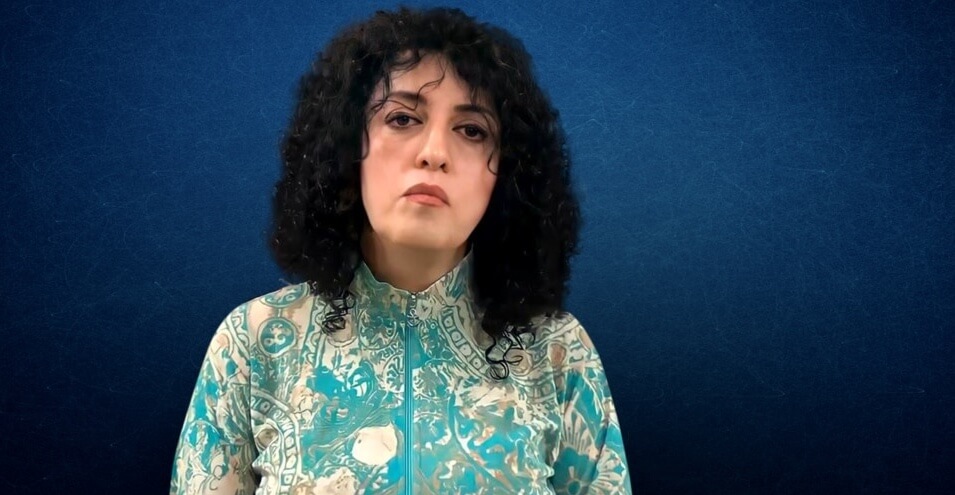
One of the most important instances of civil disobedience in recent years has been certain actions by individual or small groups of civil and political activists. In recent weeks, one example of such action was seen in the declaration of decision by two civil activists, Narges Mohammadi and Hossein Ronaghi, to defy court orders and forced imprisonment. These two civil activists declared that they would refuse to go to prison. Narges Mohammadi wrote on her Instagram page that she would use every tool for civil disobedience and as long as there are no problems with her bail, she would resist going to prison.
Hossein Ronaghi also tweeted that “two days ago I received notice to execute one of my sentences with a five-day deadline until March 20 to report myself for execution. But a judiciary that is the arm of suppression and whose only asset is injustice—its orders are not binding. I will not report myself anywhere.”
At that time, Saeed Dehgan, a human rights lawyer and member of the International Union of Lawyers, in line with these civil activists’ declaration of defiance of going to prison and their civil disobedience, wrote on his Twitter page: “This method, which is becoming widespread, is in fact the philosophy of new natural rights that emphasizes non-compliance with immoral and inhumane laws.”
Although this form of civil disobedience may not involve a large number of individuals, paying attention to it and giving it legitimacy can confront a larger society of citizens with the meaning of civil disobedience and its various forms. In a sense, if we imagine that all political and civil activists who are supposed to report to prison refrain from doing so, the civil disobedience movement would gain identity in this aspect as well.
It can be said that this form of civil disobedience, whose individual dimension is more visible, is also seen in other parts of society, although perhaps it does not receive as much attention. For example, in recent years there have always been artists and writers who, in protest of restrictive laws regarding the creation and publication of their works, have defied going through legal procedures at the Ministry of Culture and Guidance.
However, one of the forms of civil disobedience where perhaps individual instances exceed collective instances (widespread protest or strike) is the issue of mandatory hijab and its continuous process by women of Iranian society. The rise of the Girls of Revolution Street movement as a serious movement based on civil disobedience actually began with an individual action, but gradually made it so difficult for the government that it had to alter the location that was reminiscent of this civil disobedience (the electrical box that Girls of Revolution Street activists stood on).
Perhaps it can be said that the dimensions of civil disobedience in the protest movement against mandatory hijab have always been more advanced than other protest movements based on civil disobedience, in that it has always stood against an entirely discriminatory and pervasive law and despite heavy costs, not only has not retreated but has become bolder. The connection of the hijab issue to other discriminations imposed on Iranian women over more than forty years has elevated the use of civil disobedience methods in these cases. A recent example of this was the incidents at Mashhad Stadium and the matter of women’s prohibition from attending sports venues, after which military forces sprayed pepper spray at women who had purchased tickets and were waiting to enter the stadium, and violently dispersed them. Following this incident, a flood of reactions followed from many sides, and among them, national football team players took positions against the treatment by police forces and the ban on women entering sports venues. Even in this context, some former national team players declared that as long as women’s entry into sports venues is not possible, they will not watch matches in any Iranian stadium.
These approaches, which have the potential to transform into actions toward civil disobedience, show that in current conditions, the grounds for civil disobedience, particularly regarding discrimination against women, are very much prepared.
Civil Disobedience in Iran and Global Examples
Undoubtedly, the cultural, social, political conditions, and the government’s response in each region determine the nature and form of civil disobedience. Aside from cultural and social characteristics, what is significant in Iran since the establishment of the Islamic Republic system is the government’s overt opposition to the formation and identity development of civil society and parties. A matter that has not only emptied the issue of civil disobedience in Iran of its partisan and political dimensions and aspects. In a sense, the forms of civil disobedience we see in Iran are more spontaneous and emerging from assemblies, groups, and segments of society rather than from political parties and civil organizations. For this reason, perhaps comparing various forms of civil disobedience in some countries where parties, organizations, and unions are powerful with Iranian society seems somewhat difficult. Nevertheless, some forms of civil disobedience in other parts of the world and at different historical periods can find similar instances in today’s Iranian society.
Looking at the course of struggles based on civil disobedience in many countries that ultimately succeeded in freeing themselves from the yoke of rulers and anti-citizen laws, we find that the process of victory through civil disobedience is a lengthy and costly process. Especially since the Islamic Republic government has shown that in response to civil disobedience methods, it quickly chooses the most brutal possible way and resorts to suppression in all its dimensions.
What we learn from studying various forms of civil disobedience in different societies is understanding that all these movements based on civil disobedience sought to use all aspects and capacities, including shared cultural and social grounds, to increase the extent and scope of their disobedience’s impact. For example, adopting methods such as “boycotting” stores in South Africa during the apartheid era that only served “white people.” In fact, this form of disobedience has a serious and overt connection with the daily life of all citizens. A form of civil disobedience that focuses on broadening and enlarging movements and protests, in fact uses civil disobedience for greater unity and not merely for dialogue with the government or response to law. One can find many examples of it in civil struggles based on civil disobedience or civil resistance in countries under communist systems in the early 1990s.
Perhaps one of the most famous of these movements occurred in the Baltic region and especially in Estonia between 1987 and 1991. A movement called the Singing Revolution aimed at independence of Baltic countries and especially Estonia from Soviet rule. The important point of this movement was emphasis on cultural aspects and especially ancient and national festivals and collective singing by Estonian citizens, which during years of Soviet rule had been banned and restricted. Gradually, however, Estonian citizens who desired independence took advantage of the opportunity of holding national festivals to show their desire for independence, and they continuously became larger and stronger until Soviet forces were forced to use tanks to counter this movement. Although ultimately Estonia became independent and the Singing Revolution ended. One of the notable points regarding this movement based on civil disobedience is the use of cultural and ceremonial grounds. A point that has found clear instances in recent years in Iranian society, and in fact many cultural and national ceremonies such as Nowruz or commemorations of Cyrus Day or other ceremonies connected to national culture and tradition have, because the government seeks to undermine them, been transformed into grounds for showing their disobedience.
Source: Iran Human Rights Campaign