Dollar Price Surges Again Amid Meaningful Silence from Central Bank of Iran
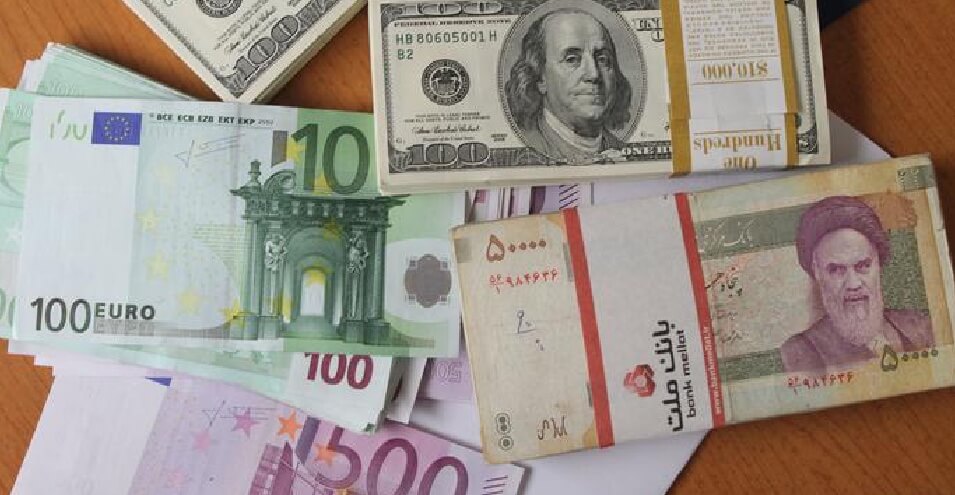
The second half of the Persian year began with an increase in the dollar price. The dollar rate has once again entered the 28,000 toman channel. Coin prices have also risen. The increase in foreign exchange rates in Iran has been accompanied by passivity and silence from the Central Bank.
The upward trend of the dollar’s value in Iran began on the first day of Mehr and has continued in recent days. On Wednesday, the 7th of Mehr (September 29), the dollar price crossed the 28,000 toman mark.
According to statistics released by Iranian media, with the exception of one day in Shahrivar of the current year, such an increase in buying and selling dollars and euros in Iran’s foreign exchange market has been unprecedented over the past 11 months.
At first glance, two important factors can be attributed to the increase in the dollar price. First, the Taliban’s seizure of power in Afghanistan has reduced the possibility of meeting Iran’s market demand for dollars.
Assessments indicate that from the fall of Kabul until today, the dollar price in Iran’s market has increased from 24,000 toman to 28,000 toman.
On the other hand, the interruption in nuclear negotiations has cast a shadow over the existing optimism in the foreign exchange market regarding reaching an agreement and lifting sanctions.
From this perspective, one can point to the effects of French Foreign Minister Jean-Yves Le Drian’s speech at the United Nations. He had emphasized that time is not in favor of the Islamic Republic and the longer time passes, the less possibility there is of finding a solution to Iran’s nuclear dispute and reviving the JCPOA.
On the other hand, the U.S. government is well aware that as long as the Islamic Republic has the ability to sell oil to China, the scope of the impact of economic pressure from sanctions is reduced.
In this regard, the U.S. government has begun negotiations with China to prevent imports of crude oil from Iran. This issue has also had a negative impact on market uncertainty regarding the inflow of foreign exchange and the prosperity of trade.
Central Bank: Silent Observer or Hidden Player?
The economic group of the newspaper “Etemaad” has sat down to listen to Albert Baghozian, an economic expert. Baghozian sees the cause of the dollar price increase, apart from the two factors mentioned above, in the monetary policy of the Central Bank.
In any case, to answer the question of where to look for the reason for the increase in the dollar’s exchange rate against the toman—in the government or the market—this economist believes that the Central Bank took this action to compensate for the budget deficit.
Baghozian addressed the silence and passivity of the Central Bank and said: “Recently, the Central Bank has had no reaction in this regard and has said nothing about managing this market, and complete silence prevails in the country’s foreign exchange sector, which is not a good sign at all.”
He, who works in the field of banking and financial issues, believes that the increase in the dollar rate to 28,000 toman or to 30,000 toman is not particularly important for the Central Bank.
Baghozian continued: “But whether the government can meet its budget deficit through this method is important for this institution. However, in my opinion, the dirtiest way to finance the government’s budget deficit is through this increase in exchange rates, because its consequences are significant and result in the inflation of all goods.”
Raisi’s Red Line
Ibrahim Raisi, the head of the thirteenth government, recently claimed that inflation is a red line for his administration. He had warned officials to avoid any action that would contribute to increasing inflation.
The aforementioned economic expert, however, presents a different picture of the situation. He says: “Unfortunately, it must be said that the increase in the dollar rate is in the direction of increasing the inflation rate, and during this period, no positive steps have been taken toward decreasing or even stabilizing prices.”
The increase in the dollar price has caused the increase in coin prices. What is interesting is that the price of gold in global markets not only did not increase in recent days, but has even decreased slightly.
In a situation where in global markets the price of gold per ounce had fallen below 1,750 dollars, the price of a coin on Wednesday, the 7th of Mehr, reached more than 12 million tomans.
In its analysis, the newspaper “Donya-ye Eqtesad” attributes the tendency to buy coins at prices exceeding 12 million tomans solely to the fact that buyers are optimistic about the continued upward trend of the dollar price in Iran’s foreign exchange market.
Market of Reformists, Market of Principalists
Finally, the newspaper “Jomhouri-ye Eslami” addressed the approach of Raisi’s and Rouhani’s governments toward foreign exchange market fluctuations in an article titled “What name should we give to the 28,000 toman dollar?”
The author of this article wrote: “The market is neither principalist nor reformist nor moderate nor anything else. The market is a market, with a sensitive pulse that feels and even perceives everything sooner!”
This newspaper wrote that the coming and going of people has no effect on market conditions and people’s livelihoods: “The market goes its own way, and society follows the same rule.”
What the author is implying is that foreign exchange market fluctuations are determined in the market itself. This claim is only true if the silence and passivity of the Central Bank in response to the sudden increase in the dollar price is not related to the Raisi government’s effort to finance the budget deficit from this source and is the result of something else.
The Rouhani government, the Central Bank during his tenure, and Ishaq Jahangiri and his deputy had earned large revenues by creating “Jahangiri dollars” and playing with dollar prices in the foreign exchange market. Now it appears that Raisi has adopted the same policy.
Source: DW