Dust and Sand with “Domestic Origin” Forces Tehran and Several Provinces to Shut Down
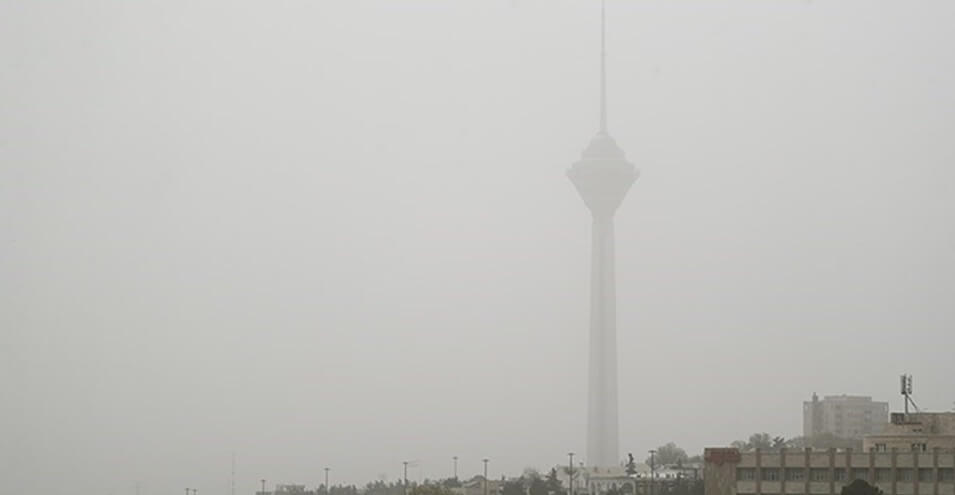
Following the intensification of air pollution, offices, schools, and universities in Tehran and Alborz provinces, government offices in four cities in Khuzestan province, as well as educational, sports, and manufacturing activities in Isfahan province announced closures on Monday, July 3 (Tir 13).
Maziyar Ghollami, deputy head of the Tehran Meteorological Department, while stating that dust pollution on today and tomorrow (Tir 13 and 14) will persist in Tehran, said: “The dust affecting Tehran has a domestic origin and is the result of severe and very severe winds in the deserts of Qazvin and Alborz provinces.”
This comes as many dust storms in western Iran were previously attributed to “foreign” origins, stemming from the arid deserts of Iraq.
Abed Maleki, deputy governor of Tehran, announced on Sunday evening that due to the intensification and spread of dust across Tehran province, all offices, kindergartens, schools, universities, and scientific centers in Tehran province, except for Firouzkouh and Damavand cities, would be closed on Monday.
He said that end-of-semester exams at some universities would also be subject to this closure, but the Islamic Azad University of Tehran announced that, except for Firouzkouh and Damavand cities, student exams would be held on Monday according to the previous schedule.
Also, according to the deputy governor of Tehran, banks and the stock exchange in Tehran would continue operations on Monday.
Meanwhile, Amir Javidpour, deputy governor of Alborz, announced the closure of all offices, banks, scientific, and educational centers in the province on Monday due to “air quality deterioration” and said: “This condition will continue for several days to come.”
The Human Resources Deputy of the Judiciary announced that judicial and administrative units of the judiciary in Tehran and Alborz provinces, except for Damavand and Firouzkouh cities, would be closed on Monday.
Also, based on a decision by the Tehran Air Pollution Emergency Committee, outdoor sports activities in Tehran province, except for Firouzkouh and Damavand cities, are prohibited on Monday.
The concentration of air pollutants in Tehran and Rey city peaked on Sunday evening and reached a dangerous level, exceeding 300.
However, the Tehran Air Quality Control Company announced on Monday morning that the capital’s air quality is in the “unhealthy for sensitive groups” category.
Under these circumstances, Yahya Saleh Tabari, head of Tehran’s Emergency Center, said that given the level of air pollution in Tehran, the Emergency Center’s fleet would be stationed in the city’s main squares.
In Khuzestan province as well, Mohammad Javad Ashrafieh, secretary of the air pollution emergency committee in the province, said that offices and executive agencies in four cities—Dezful, Andimeshk, Shush, and Karkheh—are closed on Monday.
Simultaneously with these closures, offices and executive agencies in 12 cities of Khuzestan province, including Ahvaz, began operations with a two-hour delay on Monday.
In Mashhad, although the city’s air has been described as “unhealthy” for the eighth consecutive day, no announcements have been made regarding possible closures of offices, schools, or other activities in the city.
This is while, according to reports from Iranian media, a comparison of air pollutant concentrations in Mashhad indicates that on Monday compared to Sunday, the concentration of all pollutants has increased.
Also, in North Khorasan province, Hossein Herati, deputy head of the province’s Department of Environment Protection, described Monday’s air in Bojnord, the capital of North Khorasan, as “dangerous” for all groups and said: “Only the air pollution monitoring station in the province’s capital shows an index of 500.”
In Yazd province as well, according to the state news agency IRNA, severe air pollution in Yazd city on Monday morning was so intense that citizens who had left their homes to go to work were caught off guard.
IRNA wrote that this surprise was because “there was no proper notification about today’s air conditions.”
Source: Radio Farda