East: Tens of Millions of Doses of Iranian Corona Vaccine Stockpiling; No Foreign Customers Either
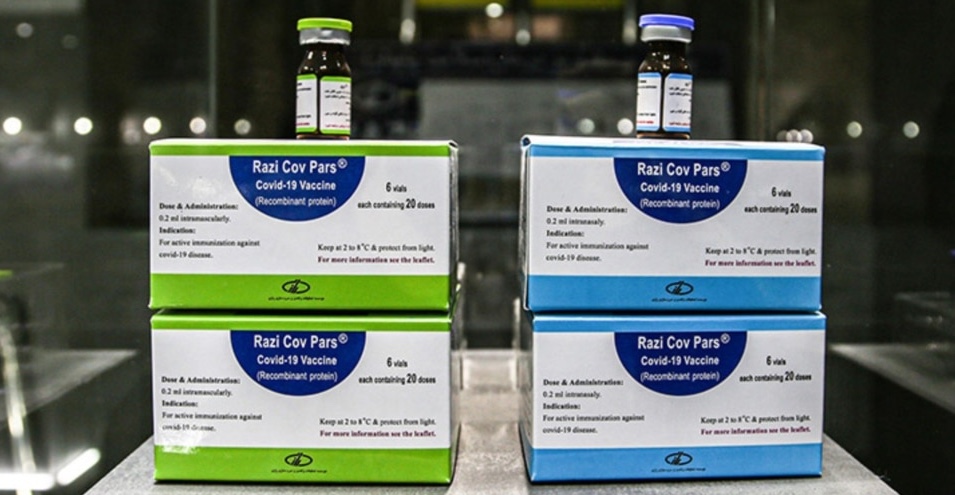
The Tehran edition of the newspaper “Shargh” reported on Monday, the 5th of Ordibehesht, about the stockpiling of millions of doses of vaccines produced by domestic Iranian companies, whose expiration dates are approaching and which have neither domestic buyers nor foreign customers.
According to this report, Sinagen Company has six million doses, Pasteur three million, Razi four million, Nura 2.5 million, and OctaVirgo three million doses of vaccine remaining on their hands with expiration dates approaching.
Shargh continues that two vaccine manufacturers, Fakhravac and Osve, did not provide information about vaccines stockpiled in their warehouses, but all seven vaccine manufacturers are now complaining and have recently appeared at a meeting of the Drug and Food Committee of the Parliament Health Commission and have opened up criticism of the government: “They say there is neither a domestic market demanding their vaccines nor an export market for them.”
The government itself has also announced a reserve of 50 million doses of domestically produced vaccine and no need to purchase vaccines.
The complaints of domestic vaccine manufacturers about stockpiling their products and the lack of foreign customers come at a time when none of these companies have received international certification for their produced vaccines, and even Iraq does not accept vaccines produced by them from Iranian travelers.
Managers of vaccine-producing companies also said on the third of Ordibehesht in a meeting with parliament representatives that due to lack of government support, the expiration date of their vaccines is running out.
Shargh newspaper continues that these seven manufacturers say if the government does not purchase their vaccines, they will be “left in the lurch,” and the government should support them.
This report adds that this is the story of seven vaccine manufacturers for which the government delayed vaccination for about seven months.
The delayed action to import vaccines under the pretext of domestic production over the past year contributed to repeated surges of COVID-19 disease at several time periods in the country and a significant increase in the number of infected and deceased.
Iran’s Ministry of Health claimed in September 1400 that the country would become a “hub” for corona vaccine exports in the region; however, so far no country has shown interest in purchasing Iranian vaccines.
On the other hand, the presence of this large number of injectable vaccines in the warehouses of Iranian companies and approaching the end of their expiration dates comes at a time when different countries have moved towards the production of inhalable vaccines.
The large volume of imported vaccines and domestically produced vaccines that have no customers comes at a time when corona statistics in the country are declining and as a result, the inclination to vaccine injection among Iranian citizens has also decreased.
According to the announcement of the Ministry of Health, so far approximately 64 million people have received the first dose, approximately 57 million people have received the second dose, and approximately 27 million people have received the third dose of corona vaccine.
Recently, Hossein Safavi, head of the currency savings trust fund of the Ministry of Health, said that the total amount of contracts with domestic vaccine manufacturers was 8,656 billion tomans and the amount of the Ministry of Health’s debt to them is 5,300 billion tomans.
Haleh Hamedifarr, CEO of Sinagen Company and producer of corona vaccine, told “Shargh” that although the parliament and government ordered them to produce 18 million doses of vaccine and they purchased raw materials to produce this number of vaccines, ultimately the government refused to take delivery of this number of vaccines, and currently six million doses of vaccine remain in their warehouses.
This manufacturer also speaks about the challenge of exporting Iranian vaccines, saying that the world market is saturated with vaccines that have World Health Organization certification, and Iranian vaccine, which does not have international certification, has a more difficult path ahead.
Source: Radio Farda