End Torture, Repression of Minorities, and Harassment of Human Rights Defenders
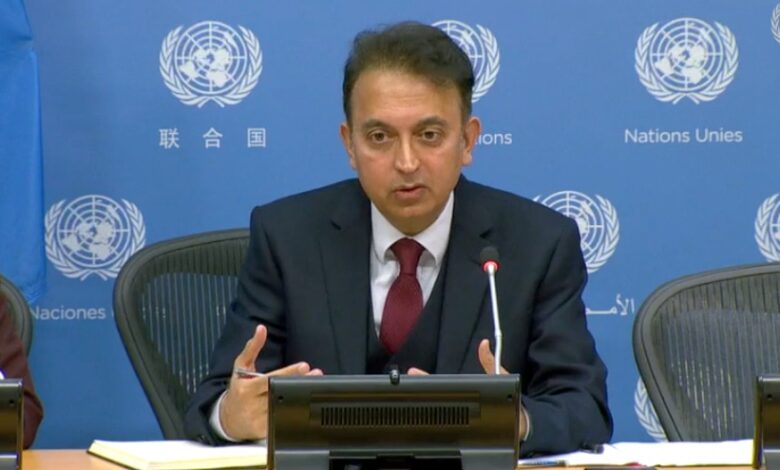
“Javaid Rehman” addressed the Islamic Republic saying: End torture and repression of minorities and harassment of human rights defenders.
Javaid Rehman, a law professor, expert and special rapporteur of the United Nations on human rights in Iran, expressed concern in his latest report about the increase in execution sentences in 2023, the continued repression of women, harassment of human rights defenders and journalists, torture of prisoners, and severe discrimination against minorities including Christians in Iran.
Javaid Rehman prepared a report for the fifty-fifth session of the Human Rights Council, in which, in addition to referencing reports by human rights organizations regarding human rights violations in Iran, he also referred to repressive forces who, after the death of Mahsa Amini, severely suppressed protesters and carried out killings of innocent people including children and women, as well as the use of sexual violence against detainees.
In preparing the aforementioned report, he held discussions with civil and human rights organizations, victims of government repression, and families of Ukrainian victims whose plane was shot down by IRGC missiles in various countries. He expressed regret that despite repeated requests, he has never been granted access to the Islamic Republic of Iran.
Mr. Rehman wrote in his report, while expressing concern about discrimination against minorities including religious, sectarian, ethnic, and linguistic minorities, which include Bahá’ís and Christians, particularly those who have converted from Islam to Christianity: “Members of minorities have been victims of structural discrimination and have often been subjected to systematic harassment and persecution. In many cases, Christian Bibles have been confiscated and used as evidence of crime against these citizens in court. In the past year, many people have been imprisoned, tortured, or executed for exercising their rights to freedom of expression, opinion, and peaceful activity.”
Javaid Rehman, referring to the report of the organization “Article 18” and three international Christian organizations regarding the situation of Christians in Iran released in February, added: “According to reports by these four Christian organizations, the Islamic Republic government has regularly violated international covenants and treaties, including the International Covenant on Civil and Political Rights, of which Iran has been a signatory, and has trampled upon the fundamental and basic rights of prisoners.”
The UN rapporteur, referring to “Youssef Mehrdad” and “Seyyed Sadroldin Fazli Zarei,” two prisoners of conscience who were convicted of “insulting the Prophet” through posts on cyberspace and were executed in May 2023, wrote: “Although apostasy in Iran carries the death penalty, the Islamic Republic of Iran has never codified apostasy as a crime in law and instead, relying on the constitution of the Islamic Republic, namely the Islamic Penal Code, has authorized the implementation of religious penalties. Christian converts have repeatedly been accused of apostasy, and Hossein Soodmand, the leader of the Jama’at-e Rabbani church in Mashhad, is the only Christian convert formally executed on this charge.
Since there is no permission to change religion from Islam in Iran, Christian converts face the risk of apostasy and blasphemy charges, which carry the death penalty. Christian converts and many others who are arrested and detained are subjected to harassment and persecution.”
Mr. Rehman wrote in his report that arrested Christians have been charged with “propaganda against the system,” “propaganda of Zionist evangelical Christianity,” or “running and managing house churches,” and the right to freedom of thought or opinion of these citizens, which is among their fundamental rights, is violated, while according to Article 18 of the International Covenant on Civil and Political Rights, it is guaranteed for Iranians, and Iran is also one of the signatories to it.
This law professor, in his recommendations to the Iranian government, called for equal rights for all citizens and an end to discriminatory laws against people for various reasons including ethnicity, gender, and religion. He also called for an end to torture, the release of detainees and arbitrary arrests including dual nationals, journalists, human rights defenders, and women’s rights advocates. He requested that the government release all individuals who have been detained for exercising their rights regarding freedom of thought, expression, association, and peaceful assembly.