Human Rights Watch: Internet Shutdown in Iran Violates International Law
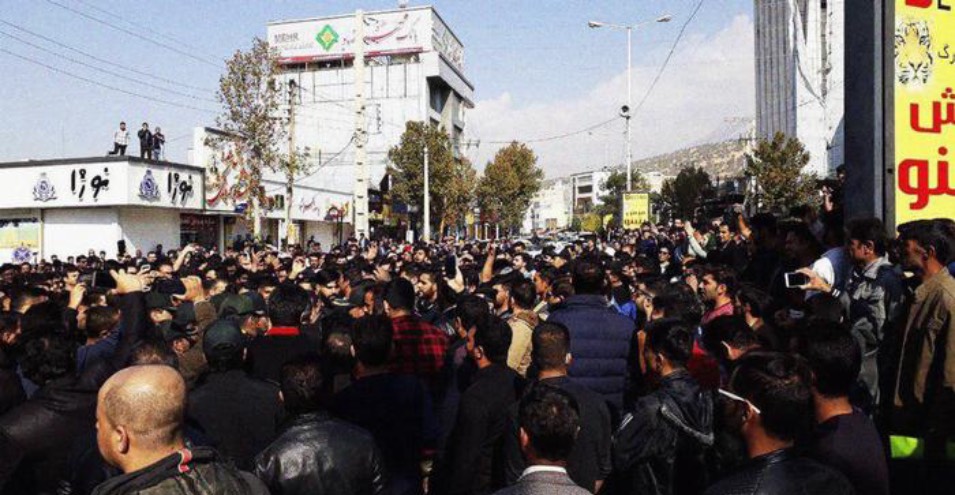
Human Rights Watch, citing international law, stated that military forces are only authorized to use firearms in certain cases and must immediately inform the prosecutor’s office.
Human Rights Watch condemned the continued suppression of protesters and internet shutdown in Iran through a statement. The organization’s office in Beirut, in a statement released Tuesday evening, November 28, wrote that Iranian security forces used “excessive force” in dealing with protests.
The human rights organization, citing international law, wrote on this matter: “According to international human rights standards, law enforcement officials should only use force in very necessary circumstances, and only to the extent necessary to achieve a legitimate police objective. These forces should only use tear gas when necessary to prevent further bodily harm. When possible, they should warn before firing. They, especially in closed environments or in case of firing at close range or in the presence of vulnerable groups such as children, should examine the potential effects of using tear gas. During violent protests, the use of tear gas must be proportionate to the severity of the offenses and serve a legitimate law enforcement objective, and should preferably be used alongside other non-lethal methods. The intentional use of deadly force is only permitted when it is absolutely necessary to protect people’s lives.”
During the so-called “Yellow Vests” protests in France where protesters violently attacked historical sites and damaged them, French police only used tear gas and water cannons.
Human Rights Watch, in the continuation of its statement, referred to the United Nations’ basic principles regarding the use of firearms by law enforcement and wrote: “The United Nations’ basic principles on the use of force and firearms by law enforcement officials require authorities to quickly report and investigate all cases of deaths or injuries from firearms used by law enforcement through an independent judicial or administrative process.”
This is while six days after the start of protests in Iran and despite Amnesty International reporting that at least 106 people have lost their lives during these protests, only the deaths of three people have been confirmed by Iranian authorities.
Mohammad Mahmoudi-Abadi, acting governor of Sirjan, confirmed the death of one protester on Friday night, November 24, the first day of protests over the increase in gasoline prices.
Mahmoudi-Abadi told ISNA news agency “the reason for this person’s death is still unclear whether they were shot or not” and “the forensic medicine of Sirjan county is investigating this matter.”
The acting governor of Sirjan also confirmed that security forces in Sirjan opened fire but added that law enforcement only had “permission to fire warning shots” and “none of the security forces had orders to fire directly.”
On Saturday, November 25, Masoud Morsel-Pour, governor of Shahriar, told FARS news agency that some, according to him “rioters,” attempted to enter the Chahardangi Basij base and following the resistance of Basij forces, one person was killed and seven others were injured.
Asadollah Abbasi, a parliamentary representative, also told Entekhab news agency that Mahmoud Shah-Neshin, representative of Shahriar, in a closed-door session in parliament about protests related to the increase in gasoline prices, said “in their area one person died from stone throwing that was initially said to be from a bullet but later it became clear that this person was hit by a stone, went into a coma and lost his life.”
Videos that were being released before the internet shutdown in Iran showed direct shooting by law enforcement at protesters. Those who were able to communicate with the outside world in these past few days confirmed that law enforcement directly shot at protesters.
“The government must guarantee internet access”
Human Rights Watch, in another section of its statement, referred to the complete internet shutdown in Iran and considered it a violation of international law.
The internet in Iran has been completely shut down since sunset on Saturday, November 25. Human Rights Watch wrote on this: “According to international human rights law, Iran is committed to ensuring that internet restrictions comply with the law and are a proportionate response to specific security concerns. Authorities should not use broad and indiscriminate shutdowns to restrict information flow or damage citizens’ ability to express political opinions and freely assemble.”
Michael Page, Deputy Director of Human Rights Watch’s Middle East section, said on this: “By cutting off Iranians from global internet access, authorities hope to hide their bloody crackdown against their own people from the rest of the world.”
He added: “International bodies should pressure Iran to immediately restore internet access and investigate the violations.”
The internet shutdown in Iran has been opposed by many media, civil, and political activists, and currently a petition initiated by Shirin Ebadi has been published online to collect signatures in protest and send it to UN Secretary-General António Guterres.
Source: DW