Europe, IRGC and the Dangerous Game of ‘Political Terrorism’
Tehran’s tense reactions to the IRGC’s placement on the European Union’s terrorist list have revealed the political deadlock and legitimacy crisis.
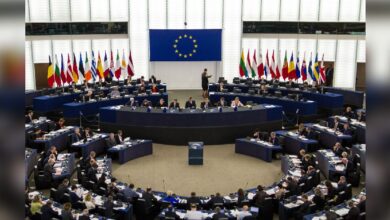
The European Union officially placed the Islamic Revolutionary Guard Corps (IRGC) on the list of “terrorist” organizations on Thursday, January 29, 2026, an unprecedented decision that has triggered a wave of harsh and threatening reactions from officials of the Islamic Republic of Iran.
The European Union, after weeks of discussion regarding the IRGC’s role in suppressing domestic protests in Iran, reached a final decision and described this move as part of a broad sanctions package against officials and institutions accused of human rights violations. The decision includes financial sanctions, travel bans, and the listing of 247 individuals and 50 entities related to the IRGC and Iranian security forces on the sanctions list.
“Kaja Kallas,” the European Union’s foreign policy chief, stated in a statement: “Any regime that kills thousands of its own people is on the path to decline” and added that this decision sends a clear message to those who hold the tools of repression.
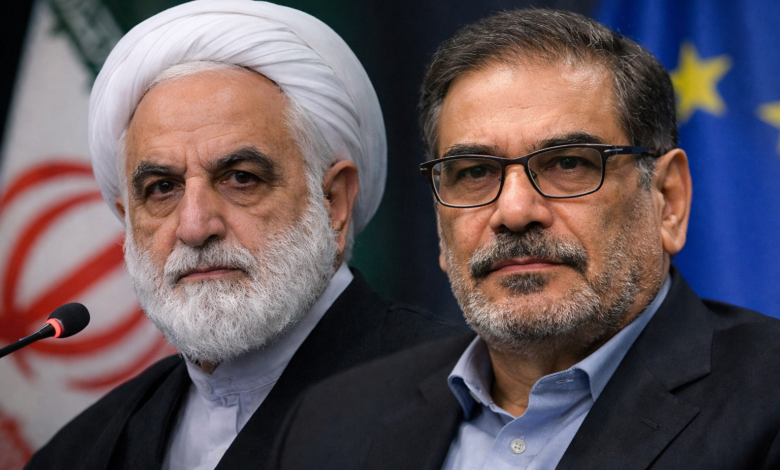
“Gholam Hossein Mohseni-Eje,” Iran’s head of the judiciary, in an official response, described this decision as “a hostile act” and warned: “The European Union will face the consequences and repercussions of this folly.” He added: “Designating an official institution of a United Nations member state as terrorist contradicts the rules of international law.”
In addition to Eje’s reaction, other responses from officials at the military and political levels of the Islamic Republic have been severe:
- “Ali Shamkhani,” a member of the National Security Council, wrote on the social network X: “The West does not define terrorism, it consumes it” and claimed that Western support for wars and oppressive regimes demonstrates the distortion of the concept of terrorism.
- Iran’s Ministry of Defense called Europe’s decision “a vindictive, hasty, and desperate reaction” and, while rejecting any accusations against the IRGC, announced that an official part of the government structure cannot be considered terrorist.
- The Islamic Republic’s Council for the Coordination of Islamic Propaganda and the Army also described this action in statements as “lacking legal basis” and a sign of Europe’s deep animosity toward Iran.
Iranian domestic news agencies, citing informed sources, have reported several operational options against the European Union, including transferring the protection of European diplomatic centers to the IRGC, special inspections of European merchant ships by the IRGC Navy, and even inspecting European diplomats at airports without regard to diplomatic protocols.
Meanwhile, some foreign media outlets have reported that Iran intends to designate the armed forces of European Union member states as “terrorists,” a move that could escalate tensions into a more dangerous phase.
The European Union’s decision has been made after years of discussion and dispute. Previously, several countries such as the United States, Canada, and Australia had placed the IRGC on the list of terrorist groups, but 27 European countries had not supported such labeling in recent years due to diplomatic considerations.
Ultimately, the recent decision is described as part of a global response to the brutal suppression of domestic protests in Iran, protests that, according to reports from human rights organizations and international media, have resulted in the deaths of thousands of unarmed protesters.