European Parliament Seeks to Sanction Iranian Government Officials Over ‘Human Rights Violations’
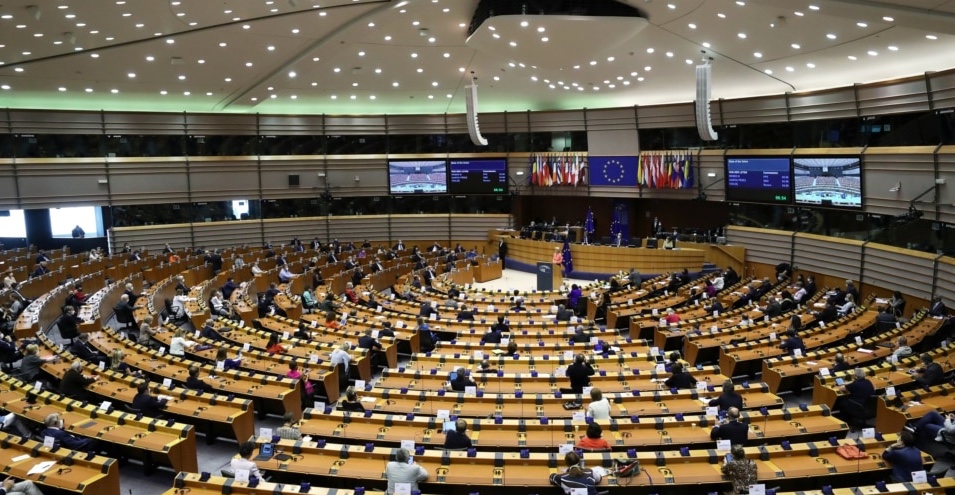
Less than four weeks before Ibrahim Raisi takes office as president of the Islamic Republic of Iran, the European Parliament has launched a new effort to impose sanctions on him and other senior Iranian government officials for alleged “human rights violations.”
The European Parliament approved a resolution on this matter in its Wednesday, July 7 session.
The resolution calls for the implementation of targeted sanctions against senior officials of the Islamic Republic of Iran who have been involved in the detention and imprisonment of citizens of European Union member states.
The resolution asks the European Council to consider imposing additional smart sanctions, including the freezing of suspected assets of Islamic Republic officials and all entities related to the “arbitrary detention” of EU citizens.
The resolution recommended that the European Council, if necessary, use current EU human rights sanctions laws known as the “Magnitsky Act” against Iranian officials involved in the detention and punishment of European citizens.
Charlie Weimers, a Swedish representative in the European Parliament, wrote on his Twitter page on Thursday, July 8, that the institution will take action to pressure Ibrahim Raisi for “crimes against humanity.”
Weimers, one of the most prominent Swedish parliamentarians opposed to the Iranian government, added that the accusations against Ibrahim Raisi include “murder, disappearance of persons, and torture.”
European countries including France, Britain, and Germany, who are currently engaged in nuclear negotiations with Iran in Vienna with the aim of bringing the United States back to the JCPOA, have previously shown little willingness to sanction the Iranian government and its leaders in connection with human rights violations.
However, following Ibrahim Raisi’s announcement of victory in Iran’s recent “elections,” a number of European countries, including Germany and France, have expressed concern about the possibility of further deterioration of human rights conditions for the Iranian people.
Members of the European Parliament in their recent resolution also referred to the fate of Dr. Ahmadreza Jalali.
Dr. Jalali, a physician and crisis management expert and guest professor at universities in several European countries, was arrested and sentenced to death several months after Iran and world powers reached the JCPOA, during a business trip from Sweden to Iran. The European Parliament’s new resolution described his trial process as “cruel.”
Iran has accused Mr. Jalali of spying for Israel and revealing sensitive information from Iran’s nuclear program and disclosing the names of at least 30 Iranian nuclear scientists to Mossad; a “confession” that Dr. Jalali and his family have emphasized was extracted from him under horrific torture.
The European Parliament resolution also expressed concern about the fate of Jamshid Sharmahd, a political opponent of the Islamic Republic of Iran and a member of the Cyrus the Great National Council who was the director of “Thunder Radio.”
Mr. Sharmahd, an Iranian-German citizen, had lived in America for a decade. He was kidnapped by the Islamic Republic of Iran during a trip to the region eleven months ago and brought to Tehran.
Members of the European Parliament emphasized in their resolution that at least 12 other citizens of European Union countries have been “arbitrarily” detained by the Iranian government.
The resolution states that the aforementioned citizens were detained under poor conditions by Iran, do not have the right to a fair trial, and have been denied access to legal advice and visits from consular officials and human rights organizations.
Members of the European Parliament have called for the unconditional release of all dual European-Iranian citizens held in detention.
Source: Radio Farda