European Union Condemns Eight-Year Prison Sentence and Flogging of Narges Mohammadi
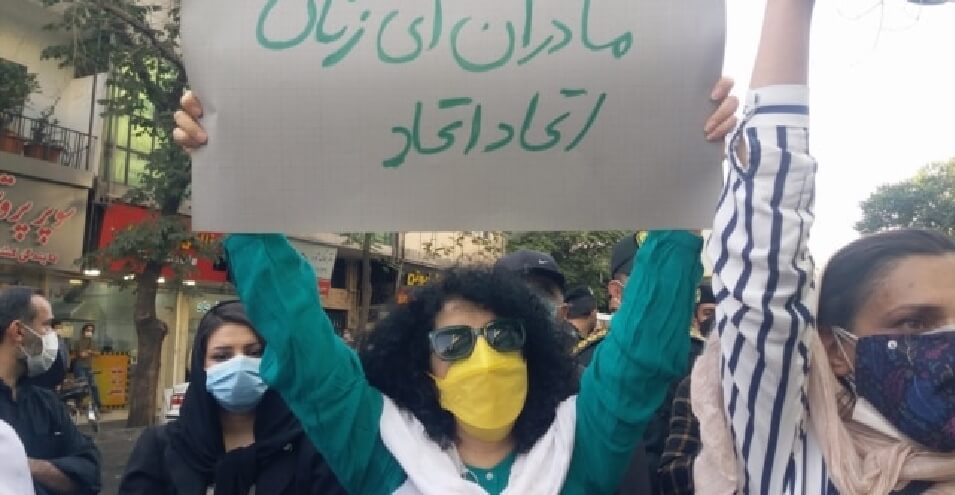
The European Union condemned the eight-year prison sentence and 74 lashes imposed by Branch 26 of Tehran’s Revolutionary Court on Narges Mohammadi, a human rights activist, and expressed concern about her deteriorating health condition.
A European Union spokesperson said on Sunday, January 31, that the EU calls on Iran to abide by its human rights commitments under international law and to immediately release Ms. Mohammadi given her worsening health condition.
The European Union stated that the implementation of the court ruling against Ms. Mohammadi is contrary to international human rights principles and the rule of law.
The French Embassy in Iran also issued a statement on Sunday, announcing that Delphine Borione, the French Ambassador for Human Rights, along with Luise Amtsberg, the German Commissioner for Human Rights and Humanitarian Assistance, expressed regret over the prison and flogging sentence imposed on Ms. Mohammadi and stated that Narges Mohammadi’s peaceful campaign for women’s rights and the improvement of human rights conditions in Iran, particularly aimed at abolishing the death penalty, cannot constitute criminal offenses.
They stated: “We are deeply concerned that her detention in Qarchak Prison has led to deterioration of her health condition. We call on Iran to abide by its international commitments and immediately release Narges Mohammadi.”
Based on the ruling issued by Branch 26 of Tehran’s Revolutionary Court, Narges Mohammadi has been sentenced to eight years and two months in prison, 74 lashes, two years of exile from Tehran (prohibition from residing in Tehran), two years of prohibition from political and social activities in institutions and parties, two years of prohibition from presence and activities on social networks, telecommunications (interviews), and mobile phone recording.
Among the charges leveled against Ms. Mohammadi in this case are “assembly and conspiracy against national security” and “action against national security and disruption of public order.”
However, on January 27, Ms. Mohammadi sent a letter from Qarchak Prison stating that she has been convicted because of her “nomination for the Nobel Peace Prize” and considered the proceedings in this case to be “lacking legal merit.”
Human Rights Watch also stated on January 28, referring to the new ruling issued to Narges Mohammadi, a human rights activist, on December 15, that issuing such a ruling “demonstrates the commitment of the Islamic Republic’s authorities to destroying any popular human rights efforts.”
Ms. Mohammadi was last arrested on November 16 during a security force raid on a mourning ceremony at the tomb of Ibrahim Ketabdar, one of those killed in November 2019. After 64 days of solitary confinement in the security ward 209 of Evin Prison, she was transferred to Qarchak Prison in Varamin in late December.
Over the years, this human rights activist has, in addition to enduring interrogations and multiple arrests by the Islamic Republic’s security forces, been deprived of the right to have a passport, leave the country, and visit her two children who live in France.
International human rights organizations, including Amnesty International, have repeatedly emphasized that Narges Mohammadi has been imprisoned solely because of her “peaceful” activities in defending human rights and have called for her immediate release.
Source: Radio Farda