Falahatinejad: US Aim is to Push Iran to Extremism
According to Falahatinejad, Iran should not withdraw from any international treaty because the US, by intensifying sanctions, is seeking such pretexts. Mohammad Javad Zarif last week called Iran’s withdrawal from the Nuclear Non-Proliferation Treaty one of Iran’s options.
The head of the National Security and Foreign Policy Commission of the Islamic Consultative Assembly, referring to the intensification of Washington’s sanctions against Tehran, says the US has so far imposed “eight thousand types of sanctions against the Islamic Republic,” which is unprecedented in the history of US relations with other countries. He added that the US has only not “entered a military phase” with Iran.
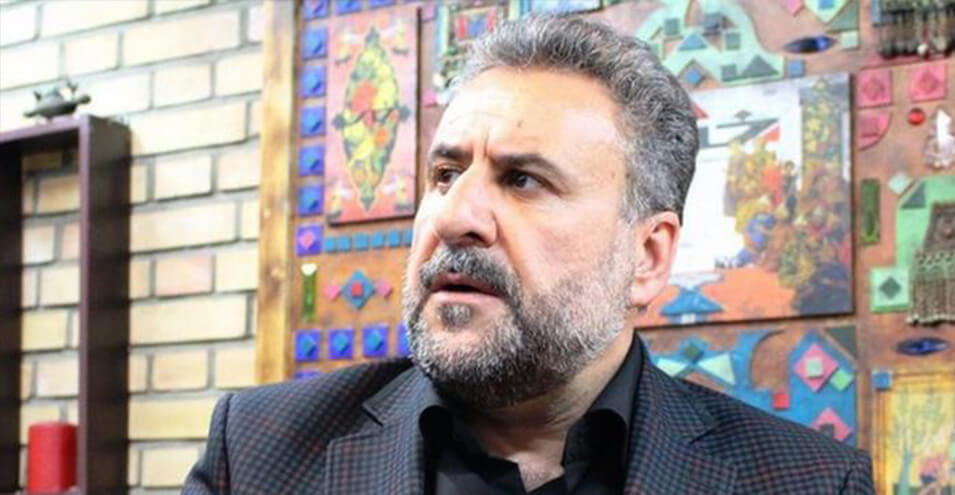
Hashmatollah Falahatinejad on Sunday, May 5, stating that Iran should not define all its foreign relations with America, told the ISNA news agency that Washington’s goal from the new nuclear sanctions against Tehran is to push the Islamic Republic toward extreme measures.
The US government, on Saturday, continuing actions aimed at imposing “maximum pressure” on the Islamic Republic, refrained from extending some of the nuclear cooperation waivers with Iran.
The non-renewed waivers include the transfer of excess heavy water to Oman and the exchange of enriched uranium for yellowcake. On this basis, five parties to the nuclear agreement with Iran that still adhere to this agreement (China, Russia, Britain, France, and Germany) may face difficulties in cooperation with Tehran in these two fields from May 4.
Federica Mogherini, the EU’s foreign policy chief, and the foreign ministers of Britain, France, and Germany, by issuing a statement, “deeply” expressed regret at Washington’s action and the non-extension of waivers for eight major buyers of Iranian oil.
In this statement, while emphasizing the importance of the nuclear agreement and the Joint Comprehensive Plan of Action (JCPOA) in regional stability and security, it was stated that the three European countries remain committed to this agreement.
Making the Continuation of Enrichment Difficult
The JCPOA, as the implementing program of the nuclear agreement, set Iran’s enriched uranium stockpile at a maximum of 300 kilograms. With the US’s recent decision, Iran either has to stop uranium enrichment or will in practice be forced to violate the JCPOA.
Such a situation could lead to the severance of Iran’s cooperation with the International Atomic Energy Agency and the termination of the implementation of the provisions of the Nuclear Non-Proliferation Treaty (NPT), which some Iranian officials have neither explicitly nor implicitly ruled out as a possibility.
Falahatinejad warned about the consequences of such decisions and told ISNA: “The US’s effort through new nuclear sanctions is to force Iran to withdraw from the Agency and the NPT so that Iran’s case falls under Chapter 7 of the UN Charter, therefore, we should not enter an extreme phase.”
Withdrawal from the NPT; A Threat or America’s Desire?
Mohammad Javad Zarif, Iran’s foreign minister, a week earlier, after returning from a trip to New York, said that in confronting US sanctions against the Islamic Republic, “one of the options” is withdrawal from the NPT. He told the IRINN news agency: “The Islamic Republic’s options are multiple. The country’s officials are reviewing them.”
Chapter Seven of the UN Charter, which Falahatinejad referred to, stipulates that against countries that fall under a Security Council resolution under this chapter, both the sanction option and the military option can be used.
The head of the National Security and Foreign Policy Commission of the Parliament, given the dangers of this situation, recommended that Iran should remain committed to international treaties and make use of their capacity: “Using international mechanisms means that we benefit from mechanisms without America. Such capacity exists for Iran that we can bring our level back to the negotiating power before the JCPOA. In this regard, there is no reason for us to enter an extreme phase. The Islamic Republic of Iran should not formally withdraw from any treaty because America is seeking such a pretext.”
He says one of the solutions available to Iran is to negotiate with the International Atomic Energy Agency and the five countries still committed to the nuclear agreement for uranium enrichment at “20 percent and higher.”
Continuation of Russia’s Cooperation with Iran
The nuclear agreement and JCPOA have obligated the Islamic Republic to maintain uranium enrichment levels below 4 percent. On this basis, the possibility of the Agency’s approval, as the body overseeing the implementation of the JCPOA and other parties to the agreement, with enrichment above 20 percent seems highly unlikely.
Moreover, the Islamic Republic, with the US’s recent decision not to renew waivers for cooperation with that country in the field of exchanging enriched uranium for yellowcake, has found itself in a complicated and difficult situation. Nevertheless, Iran’s parliament speaker, Ali Larijani, announced that the country will continue uranium enrichment.
Apparently, Tehran also has Russia’s support in this regard. Sergey Ryabkov, Russia’s deputy foreign minister, announced on Saturday that despite the new US sanctions, Moscow will continue nuclear cooperation with Tehran.
Source: DW