Family’s Lawyer Demands Right of Reply for Seyyed Amami on State Television
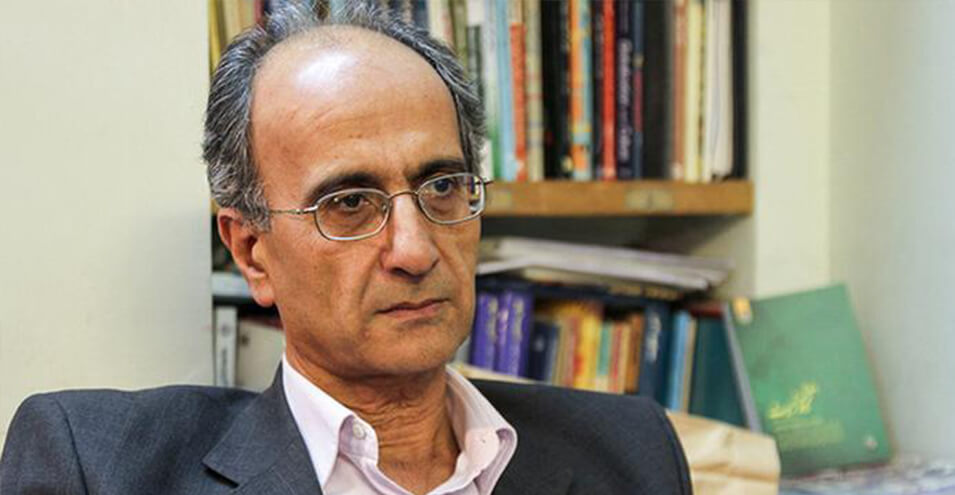
One year after the death of Kavous Seyyed Amami, one of the accused in the environmental activists case in prison, the lawyer of this university professor’s family has called for his family’s appearance on Iranian state television to respond to the allegations in this case.
Iranian media today, on the 17th of Bahman, published a letter from Payam Darfshan, the defense lawyer for Kavous Seyyed Amami’s family, addressed to the prosecutor of branch 9 of the Cultural and Media Prosecutor’s Office, in which it was requested that Mr. Seyyed Amami’s family be able to appear on television to respond to the allegations and issues raised by IRIB.
Mr. Darfshan’s letter refers to Article 22 of the Constitution and Article 30 of the supplementary by-laws of IRIB, based on which “legal rights” for responding to issues raised by its networks would be possible.
Kavous Seyyed Amami was arrested in early Bahman 96 along with seven other environmental activists on charges of “espionage.” On the 19th of Bahman of the same year, and according to judicial authorities’ claims, he “committed suicide” in Evin Prison.
This university professor’s family does not confirm this.
Iranian state television at that time broadcast images from the place where Mr. Seyyed Amami was held, which it was claimed were taken minutes before the “suicide.”
Right to Reply to False Content
This lawyer has added in his letter: “As stated in Article 30 of the supplementary by-laws of the IRIB organization, if the broadcast programs contain content consisting of insult, libel, or falsehoods against any person, or if statements of persons are distorted in any way, the complainant can submit their objection in writing to IRIB, and if the organization accepts the objection, it must broadcast their response fairly within 24 hours, for at least twice the duration of the original content in the same program and time slot and on the same network free of charge.”
At that same time, Iran’s government television and conservative media, in various interviews with individuals whom they called defense and security experts, leveled accusations against Mr. Seyyed Amami.
Mr. Darfshan’s reference to presenting information as “false, insulting, and libelous” could relate to the content of some of these very interviews and the raising of accusations such as espionage and “sale of information” as well as claims such as “mental illness and depression” and tendency toward suicide.
According to Mr. Darfshan, if IRIB and the opposing party do not reach an agreement, the complainant can refer the matter to the Oversight Council of IRIB as the authority to determine the occurrence of insult and libel, and this council is obligated to address the issue as soon as possible.
“Espionage” in the Restricted Zone
Previously, Mr. Darfshan filed a complaint with the Cultural and Media Prosecutor’s Office against Ali Asgarī, the head and deputy of Iranian Radio and Television and also the director of Channel Two, as well as the producers of the documentary “Restricted Zone.”
The documentary “Restricted Zone,” according to Iranian judicial authorities’ claims, showed details of Mr. Seyyed Amami’s “espionage” under the guise of environmental activities. Conservative media close to the Islamic Revolutionary Guard Corps also repeated in their reports the claim that Mr. Seyyed Amami was able to penetrate the most sensitive areas of the country and transfer information to foreigners.
The accusation against Mr. Seyyed Amami and seven detained environmental activists was announced as espionage from the beginning, but Iranian media reported, citing some government officials, that they had no evidence of these activists being spies.
Mahmoud Sadeqi, a member of the Iranian parliament, also wrote on his Twitter page that the National Security Council, headed by the president, also did not identify the activities of environmental activists as espionage.
However, the Tehran prosecutor announced the charge against these environmental activists as espionage and said: “These individuals, under the guise of implementing scientific and environmental projects, were engaged in collecting classified information of the country in strategic sectors.”
Abbas Jafari Dowlatābādi attributed the cause of what he called Mr. Seyyed Amami’s “suicide” to “confessions” of others against this researcher and Mr. Seyyed Amami’s own confessions, which “unfortunately” caused him to commit suicide in prison.
Pending Requests for Right of Reply
The request of Kavous Seyyed Amami’s family lawyer for his family’s appearance on television and response to allegations is not the first of its kind. Previously, Ahmad Montazeri, the son of Hosseinali Montazeri, objected to the broadcast of the documentary “Deputy” and called for appearance on a television program and the right of reply.
The documentary “Deputy,” which was met with reactions, examined the life and activities of Mr. Montazeri and was broadcast at various times on channels three and documentary television. Many considered this documentary to be false.
The complaint and request of Mir-Hossein Mousavi, one of the candidates in the 2009 elections, to respond to the allegations of his rival in radio and television debates, is also among the requests that have not been met by IRIB.
Such requests are always rejected by television authorities. The Supreme Council for Oversight of IRIB has been informed of these requests, but has not given airtime to the applicants or their families to respond to the issues and allegations.
Many active civil and human rights organizations and families of victims of serial killings, 2009 unrest events, and labor strikes emphasize the accountability of IRIB. The head of Iranian Radio and Television and members of the Supreme Council for Oversight of IRIB are appointed by the Supreme Leader of the Islamic Republic.
Source: DW