Female activists in Iran call for Khamenei’s resignation
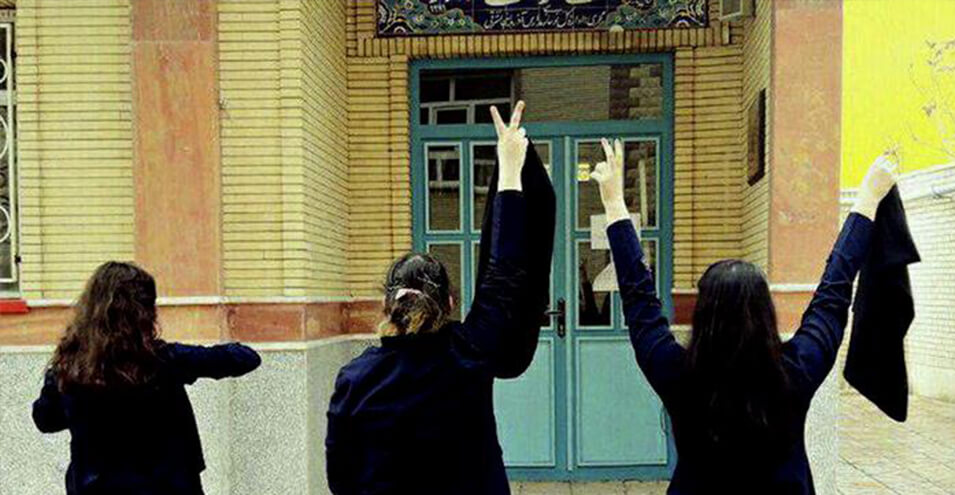
A group of women activists and civil society campaigners inside Iran have issued a statement calling for the departure of the Supreme Leader and a transition away from the Islamic Republic. One of the signatories speaks with Deutsche Welle about the concrete grounds for making this demand and the reception it has received.
Fourteen civil activists and women’s rights advocates inside the country have issued a statement calling for a transition away from the Islamic Republic and the resignation of its Supreme Leader, Ayatollah Khamenei.
The statement, addressed to “fellow citizens,” references what women in Iran have endured over the past 40 years, stating: “Forty years of rule under absolute guardianship of the jurist has resulted in the dehumanizing elimination of half the country’s population ‘with all their capacities and abilities’ from equal civil rights and human dignity.”
The signatories assert that “many of our basic and human rights as Iranian women have been stripped away, and our feminine identity has come under the guardianship of absolute rule and patriarchal masculinity and culture. Anyone who has protested this gender-based discrimination has faced insult, humiliation, beatings, imprisonment, and in some cases torture and execution!”
These women are calling for “a secular, democratic government while preserving Iran’s territorial integrity.” A government “capable of guaranteeing the rights of women in society.”
While emphasizing their commitment to continuing their struggle through civil means without violence until their full demands are met, they have asked people to join and support them—support that they believe could “transform into a comprehensive, nationwide movement…”
Giti Pourfazel, a lawyer and one of the statement’s signatories, responded to Deutsche Welle’s questions about the statement. The first question was how hopeful they are that people or even significant segments of women will support this call and mobilize in its favor.
In response, she points to Iran’s current conditions, describing it as an unstable and bankrupt situation—economically, politically, and socially. Ms. Pourfazel believes this discontent will resurface on a broader scale and says: “The situation in Iran is on the verge of explosion. The discontent is so deep that it could ignite with just one spark at any moment.”
Two months ago, 14 civil and political activists issued a statement asking the leader of the Islamic Republic to step down. Referencing their statement, Giti Pourfazel says: “After that, we decided to issue our own statement and explicitly demand our claims: that the leader should resign. Because he has been unable to move the country forward as it should be and satisfy the people. One of the most important issues is that the country needs experienced politicians who know how to take steps that create fewer problems for people.”
Giti Pourfazel believes that society’s explosive movement could happen very quickly and that Iranian society has now reached a stage where it can stand behind the demand for Ayatollah Khamenei’s resignation.”
Wide reception of the statement on social media
She also references the fate of countries around Iran that continued policies of repression and now find themselves in very dire security, economic, and social situations. These activists hope that Iran’s policymakers, looking at the region, will refrain from driving Iran toward the brink of collapse.
Regarding reactions in Iran to this statement, Ms. Pourfazel says it has received much support in cyberspace and believes that “cyberspace reveals the depths of the spirit within Iranian society, because it is a place where people can speak freely without fear of repression.”
The final question from Deutsche Welle, which might be the first question many readers of this statement would ask, is whether they are concerned about the consequences of the statement they have released, whether they are afraid. She says: “We are familiar with the oppression of this repressive government. We have been enduring it for 40 years. We have grown accustomed to the violence perpetrated against us.”
From Giti Pourfazel’s perspective, it is a bitter reality that “prisons in Iran are perpetually full, and as one group is released, another takes their place.” Yet this has a clear meaning: “If a country has reached this point, know that its patience has run out.” Her hope, and likely that of other signatories, is that if their lives and security are threatened, society will not remain silent.
Source: DW