Female Prison Guard Reveals the Secret of Sex Traffickers
Sohila.Sh. FCI News Agency: An informed source, in conversation with FCI News Agency, has revealed a secret that strengthens the likelihood of involvement by some Iranian judicial and security officials in trafficking girls and young women from the country to other lands.
About three months ago, the U.S. State Department in a report titled “Human Trafficking 2017” claimed that organized groups have targeted Iranian youth for sexual trafficking.
In response to this report, coinciding with June 19, Bahram Qassemi, spokesman for the Ministry of Foreign Affairs of the Islamic Republic, accused the United States government of preparing and publishing these reports with the aim of tarnishing the image of the Islamic Republic of Iran.
With Iran’s placement in the third tier of this report, it was announced that in this country, laws to combat human trafficking do not even meet minimum standards, and these minimal standards are not properly enforced due to government policies and widespread corruption in various levels of the Islamic Republic.
Complicity of Prison Officials and Trafficking Gang Members
Now an informed source, in conversation with FCI News Agency, has claimed that members of human trafficking gangs for Iranian girls and young women are operating in Iranian prisons and courts, using various tricks to target sex trafficking victims and vulnerable individuals.
This middle-aged female prison guard at a central prison in one of the country’s major cities does not want her name to be revealed. In this conversation, she described the tragic fate of runaway girls whose families have abandoned them.
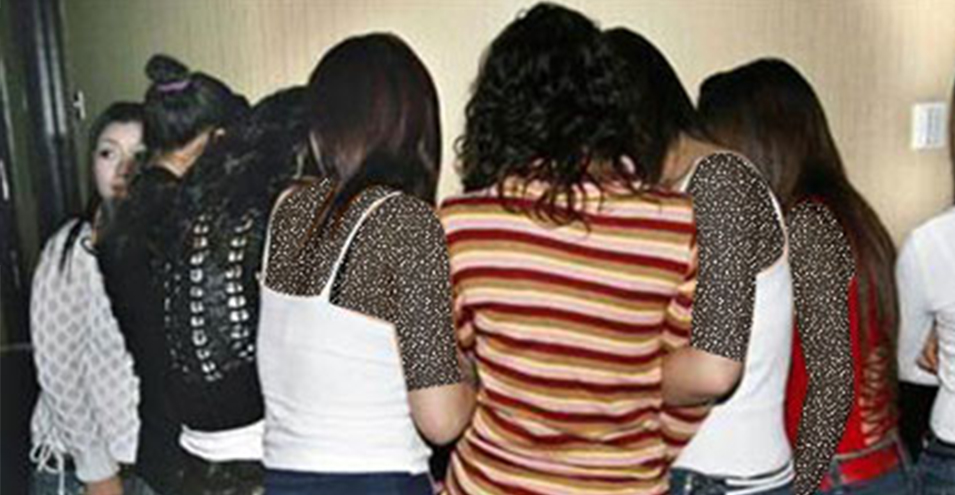
She added in conversation with FCI News Agency: “These young girls, after several prison records and with no supporters and left without shelter, become easy prey for traffickers. They can easily be taken out of the country with the promise of living in the West without any legal guardian involvement. Of course, many young runaway girls become victims of human trafficking gangs at their first arrest and before a court verdict is issued, and they end up in foreign brothels. “
This female prison guard attributes the inability to properly classify inmates and the lack of adequate and standard space in prisons as factors that establish relationships between individuals with criminal records who are leaders of corruption and prostitution gangs in the country’s prisons.
She continues: “These women with criminal records, some of whom have been prison guests for up to ten years, have their own comings and goings. They receive substantial amounts of money and spread colorful tables in their cells. This makes them attractive to runaway and underage girls, and they easily lure them. To the point that these girls are immediately handed over to trafficking gang members upon release. I witnessed cases where they waited for these girls at the prison gate, and I could not prevent it at all. Only because they had been threatened and promised. Unfortunately, the situation in our country is such that the families of these girls, to preserve honor, pray to God that they never return home so they can tell acquaintances that our daughter suddenly died or married abroad in exile. For this reason, no one pursues the disappearance of these girls. In the meantime, influential prison officials also give way to these leaders of corruption and prostitution gangs. Many times I witnessed that several imprisoned women with financial crimes, stopped this criminal activity and protested, but with the coordination of prison guards, they received severe beatings from their cellmates in the women’s ward.”
This woman uncovers another dire situation that reveals the existence of corruption in the judicial system. She continues: “In some cases, these young runaway girls disappear after appearing in their first court hearing. I even witnessed a judge in a case acquitting the girls and taking them along, and there was no more news of them.”
In the opinion of this prison guard, who has held this responsibility for over two decades, this group of women and girls, due to the lack of any shelter and family and legal support, resort to any means to improve their situation and can easily be deceived with promises of such a life.
She also recounts other bitter memories related to the uncertain fate of illegitimate children born in prison who have no identified father, and the family of the runaway girl is unwilling to accept the newborn.
Under legal conditions, such children should be handed over to the welfare organization, but according to this prison guard, the involvement of human trafficking gang members in legal centers, including prisons, creates opportunities for the abuse and sale of these newborns, to be sold to foreign buyers at exorbitant prices during adolescence.
This Iranian woman, based on the memories of friends and colleagues in other major cities of the country, claims that similar incidents occur in other central prisons and have been ongoing for years, without any officials taking legal action.
Long-Term Planning for Human Trafficking in Iran
A sociologist who recently worked at the Center for Social Harms at Shiraz Welfare also emphasized in conversation with FCI News Agency that official authorities in Iran ignore incidents that demonstrate the growth of trafficking of Iranian women, girls, and children, and by doing so, potentially fuel the profit of officials from this route.
He believes that the activities of human trafficking gangs in Iran are pursued with long-term planning. According to this expert, buying newborns from addicted women, neglecting to improve the capacity of shelters for unattended newborns and runaway girls in welfare, and releasing collected street children after one or two days into centers of corruption are part of this planning that easily identifies victims for traffickers.
This sociologist, citing official welfare statistics in Tehran, speaks of the increase in the number of runaway girls in the capital, and that annually about 15 percent of girls aged 14 to 18 in our country run away from home.
The annual report of the U.S. State Department also indicates the growing trend of Iranian women and girls being brought through organized groups for forced sexual services to Dubai, neighboring countries, and even Iraqi Kurdistan.
In the opinion of this sociologist, the authorities of the Islamic Republic do not even pay attention to the fact that Iran in the past five years has been a destination and source of sexual trafficking of men, women, and children, and the age of girls targeted by trafficking gangs in Iran has reached 13 to 17 years. While ignoring these harsh realities imposes irreparable costs on Iran and Iranians, which perhaps no Islamic Republic official has devised a remedy to eliminate these costs and does not consider themselves responsible, because these costs will only be a burden on Iranians.
Predicting Danger with Rough Estimates
Of course, the current situation in our country was easy to predict beforehand.
Mostafa Janghanbeglo, a harm analyst, predicted in 2015 that from 2016 onwards, the unfortunate phenomenon of runaway girls in Iran would experience uncontrollable growth, which would create the conditions for vast profits to fall into the pockets of sex traffickers.
According to Salamat News, Janghanbeglo said in this regard: “In the past two decades, the ratio of female crime to male crime was 4 percent, but now it is close to 11 percent. On the other hand, street children of the 1975-1985 decade born in the 1955 decade experienced puberty during the runaway girl phenomenon; in the years 2000-2003, 22,000 children were collected from the streets who will reach puberty in 2016 and are exposed to harms due to a chaotic social sphere. Moreover, we should now have 20 million school-age children, but according to official statistics from the Ministry of Education, about 13 million people attend school. A simple question is where are the other 7 million? These children work and live on streets, some of whom are runaway girls. Therefore, by examining this information, it is predictable that from 2016 onwards, social harms, especially runaway girls, in Iran will increase.”
Officials’ Scattered Statements and Confirmation of Danger
Unfortunately, in the current situation, Iranian authorities continue to resist accepting reality and, in response to any reporting that points to and confirms undeniable facts, resort to labels such as “foreign enemy and global arrogance.”
For this reason, they are unwilling to respect international laws in this regard and make effective efforts to uncover human trafficking networks and sexual trafficking networks. Of course, there is also the possibility that this resistance to reality is aimed at keeping hidden hands safe in the growing phenomenon of trafficking of women and girls in Iran.
This is while the realities existing throughout our country are easily observable. The scattering of male and female street children and the increasing trend of runaway girls are part of these realities. However, officials easily pass by these issues and occasionally speak of promises and threats to address these conditions.
In the meantime, occasionally some officials announce statistics or vaguely warn, which lacks the necessary follow-up and impact and is ignored by other officials.
It is worth examining one of the official statistics to demonstrate this negligence. According to the latest statistics, the capital of the Islamic Republic has nearly 20,000 homeless people, of which close to 3,000 are women, and 90 percent of them were pregnant at the time of data collection. Unofficial statistics also indicate that the average age of cardboard-dwelling women in Tehran has reached 18 years. Meanwhile, we have seen that the only secure reception center for cardboard-dwelling women in Tehran has a capacity of only 150 people. The latest statistics also indicate that there are at least 20,000 street children in Tehran who have been left to their own devices. All of these are considered easy prey for sexual traffickers. This situation also prevails in most major cities of the country, particularly Mashhad and Shiraz, where local and provincial media unfortunately do not dare to announce statistics in this regard.
According to Jahan Sanat publication, the head of the State Enforcing Security Organization recently also informed of the situation of human trafficking and ultimately the degradation of humanity in this process, namely the trafficking of young Iranian women and girls to neighboring countries.
In these circumstances, reality is not hidden from view. The growth of profiteering and corruption among some institutions and agencies of the Islamic Republic system threatens unattended, unguarded, or poorly guarded young women and girls, and even helpless children in Iran, even as these victims have no legal status.
On this basis, one of the serious problems of sexual trafficking victims in Iran is now legal treatment and the imposition of various punishments that affect them.
Because labels such as runaway, illicit relations, and even defaming the name of the Islamic Republic and harming this sacred system on the international stage affect these victims and entail various punishments accordingly. This is where this group of victims does not even have the courage and motivation necessary to pursue their human and legal rights. Meanwhile, a small group of these victims, after their “expiration date” passes, have the chance to re-enter their homeland. But they too, due to the lack of supportive and legal centers, are forced to waive their human and legal rights to the injustice that has befallen them and continue to live unwanted lives in centers of corruption.