Following Lavasan’s Bastis Hills, Land Grabbing in Qazvin’s “Haft Sang” Becomes Headline News
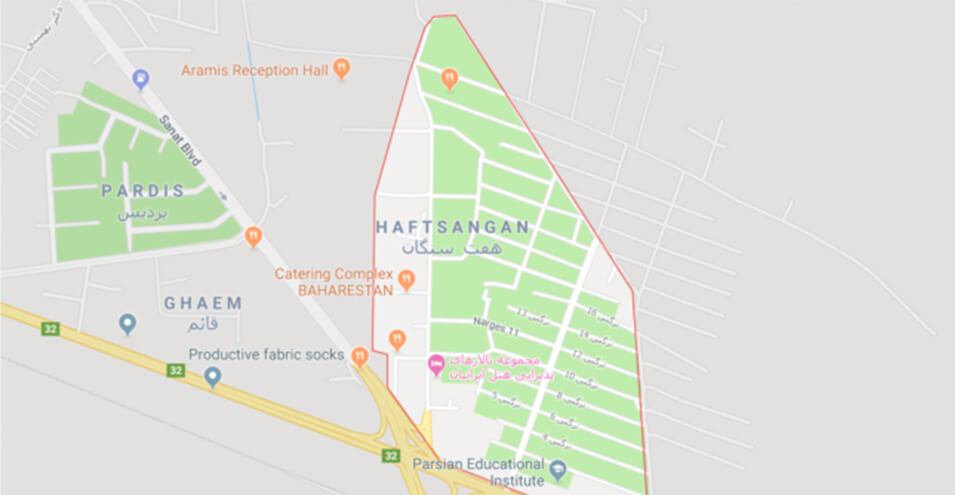
Following reports of land grabbing and unauthorized construction in Lavasan neighborhoods, including Bastis Hills, this time news is emerging about land grabbing in Haft Sang, Qazvin.
Naser Seraj, Head of Iran’s State Inspection Organization, said on Wednesday, August 2, that the inspection organization has intervened in illegal and billion-toman constructions at Bastis Hills in Lavasan and Haft Sang in Qazvin.
However, this official did not disclose details of these land grabbing cases and said that due to “confidentiality,” they cannot be disclosed before the court hearing and the finality of the ruling.
The lands in the Haft Sang area covered approximately 25 hectares, divided into 119 plots, and based on evidence and documents, most of them had agricultural use at the time of transaction.
Alef news site, citing a report by the Transparency and Justice Monitor submitted to the judiciary on June 30 of this year, wrote that Qazvin Municipality in 2014 “completely illegally” issued “building permits” for Haft Sang lands that had agricultural use.
According to this report, the Ministry of Jihad Agriculture in 2015, after warning the perpetrators of illegal land use change, filed a complaint with Qazvin’s judiciary, seeking to prevent the change of use of these lands.
Nevertheless, IRNA reported that these lands were illegally sold in 2015 through an auction with residential use.
Mehr News Agency also reported on this matter, stating that the judiciary intervened in the case of these lands in 2006. However, after several years, the Haft Sang case has still not been resolved, and ultimately the chief justice of Qazvin’s judiciary announced that the Haft Sang case is being reviewed in the civil servants’ court.
Previously, the issue of villa development in Lavasan neighborhoods, including Bastis Hills, had also been controversial.
Corruption and land grabbing, whose traces can also be seen with those close to the Islamic Republic’s government, had precedent before. Systematic corruption is among the topics that Iranian parliamentarians have repeatedly raised. Although in recent months courts to review economic corruption have been established, they have not yet been able to deter the volume of these corruptions in Iran’s government.
The United States has repeatedly condemned institutional financial corruption and the plundering of Iran’s natural resources by regime affiliates and considered them among the main factors in Iran’s economic and financial problems.
Although the villa development story in Kalak and Bastis Hills neighborhoods in Lavasan began several years ago, the scandals of violations in these villa developments erupted in late 2018.
According to published reports and documents, despite the opposition of the Supreme Council of Urbanism to the change of land use from agricultural to residential, with the intervention of Amoli Larijani and Nategh Nouri, these land use changes took place.
Source: Voice of America