Forcing Victims to Silence, One of the Obstacles to Implementing Justice Regarding the Past
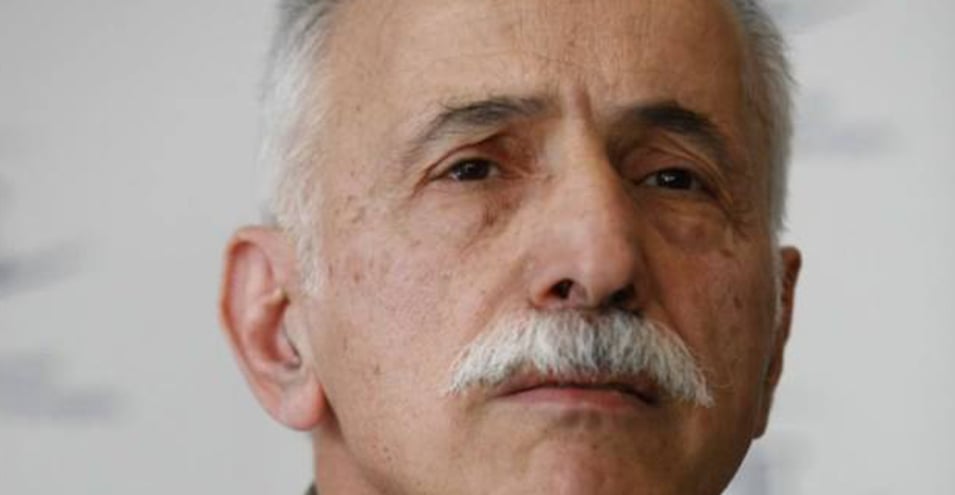
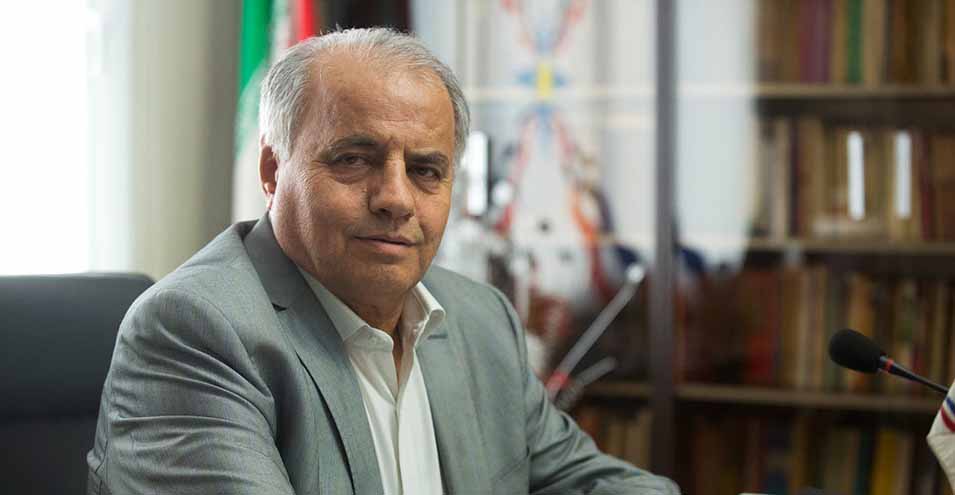
“Aso” in conversation with Abdolkarim Lahiji, former and honorary head of the “International Federation of Human Rights Societies”
In this conversation, human rights lawyer and founder of the “Society for the Defense of Human Rights in Iran” addresses the conditions for achieving transitional justice and the obstacles to using international mechanisms. According to him, legal pursuit of cases such as executions in the 1980s through UN bodies is conditional on the complaint and petition of victims, and for pursuing such cases, there must be a private plaintiff.
Aso: Are the principles emphasized in transitional justice, such as the right to know the truth, the right to access to justice, reparations, and guarantees of non-repetition, only applicable during the transition to democracy, or can they be invoked to implement justice even before the transition period?
Abdolkarim Lahiji: Transitional justice, or judging during the transition period, means that after developments leading to a change of government or government policies, what mechanisms should exist so that victims of human rights and freedoms violations can access justice and claim and receive their rights. But the issue is not only the type of government; rather, the main issue is the conditions that must be met in order to give the proceedings the title of justice during the transition period and not make it merely formal. For this reason, for example, in some countries like Morocco, we see that a truth commission was established by the king’s order and began to work, but they mostly tried to examine cases that did not provoke much government anger, and many victims are still awaiting further developments because fundamental change has not occurred and the structure of government has not changed. It is true that the movement towards democracy in Morocco has begun, but in terms of addressing grievances and securing the rights of all victims, the measures taken are still not in a way that we can say that transitional justice has truly been achieved.
In fact, it is a process that may take years and decades for these four basic principles to be realized, and when we say knowing the truth, it means the whole truth is determined.
In fact, for the full realization of these four basic principles of transitional justice, there must be an independent and systematic judiciary so that if the government or a government official violates people’s rights, they can lodge a complaint against the state through independent institutions and seek justice. Laws must also change, and laws must be enacted that recognize people’s fundamental rights and freedoms and provide criminal guarantees for perpetrators of human rights violations.
Are there international laws before such changes occur that can force a government like Iran to confront the past, and can they be used in international courts to examine previous cases of human rights violations?
A.L.: The International Criminal Court tries individuals who commit these crimes, not states and governments. Moreover, it only applies to countries that have accepted the court’s statute, but many countries, including the United States, Russia, Israel, and Iran, have not yet accepted this statute. Of course, there is one exception: the UN Security Council can ask the International Criminal Court to investigate a crime that occurred in a country, like the case of Libya in the months before Gaddafi’s fall or the case of Muhammad Bashir, President of Sudan, who went to the International Criminal Court at the request of the Security Council. There is no other international court to investigate cases like the massacre of 67 in Iran. However, the UN Human Rights Council has periodic reviews that regularly examine human rights violations in all countries. There are also mechanisms such as the UN special rapporteur on a particular country and subject matter rapporteurs of the UN that can be contacted. Nevertheless, even when the UN Human Rights Council issues a resolution on human rights violations in a country, it can only recommend to the violating country and pressure it to reconsider its actions, and in fact, these resolutions have no enforcement mechanism.
Over the past three decades, to what extent have Iranian activists used these UN mechanisms to address gross violations of human rights in the past, including the execution of political prisoners and violations of Bahá’í rights?
A.L.: As a human rights activist, I do not consider myself authorized to open a case for someone at the UN and pursue the matter unless a victim’s family member or the victim of human rights violations contacts me and declares their consent.
Given the closure and suppression of human rights institutions in the years immediately after the revolution, unfortunately for many years there was no institution left to defend human rights in Iran. In later years, several human rights defense institutions were formed outside of Iran, but given the Iran-Iraq War and the severing of relations between Iran and the international community, it was a very difficult period. Furthermore, there were no mass media in their current form, the internet, or even fax, and as human rights activists, we had to obtain news from inside Iran and place it at the disposal of Iran’s special rapporteur. In the final years of Rafsanjani’s and Khatami’s presidencies, continuing these efforts, special rapporteurs and subject matter rapporteurs went to Iran and reported.
Yes, these things happened, but all of them have paid attention to and continue to focus on human rights violations that are currently occurring. Can we use UN mechanisms in a way that allows us to address violations of human rights in the past?
A.L.: It is not the case that only information was provided and these institutions and mechanisms were not used. Part of the developments that occurred in the situation of human rights in Iran during the Rafsanjani and Khatami periods was the result of the activities of activists and their connection with UN institutions and UN rapporteurs.
But were you able to apply the same method, for example, regarding the executions of the 1960s, so that some UN rapporteurs would also address these issues in their reports?
A.L.: We have given the list of the executed to UN special rapporteurs in different periods and the rapporteur on arbitrary executions, but the problem we had and still have regarding the massacre of 67 in Iran is that many families, especially those in Iran, are not willing to put their names to a complaint due to the conditions of repression and oppression prevailing in Iran. Of course, this has happened outside of Iran, and at least we in the Society for the Defense of Human Rights in the last 15 years have given the names of 30 to 40 executed people to the relevant institutions because, you know, for pursuing this matter, there must be a private plaintiff.
But human rights institutions can also pursue this matter themselves, and in some cases, including the UN working group on enforced disappearances, it is not necessary that the family necessarily be involved. If a human rights institution has reliable information about the case in question, it can register and pursue it, and it is also acceptable on the part of the committee.
A.L.: Here it is not just a matter of rights, but also ethics. Even in the case of detention, you know that in Iran many families, due to the pressure, suffocation, and intimidation that exists, do not want in the first days and weeks to see the detention of one of their family members raised in news media or reported to the international community. Unfortunately, this situation exists, and it is the same for victims and the executed.
In these cases, when international action is taken through the UN, it is transmitted to the Iranian government and a response is requested from Iran. Many families have been repeatedly threatened that if they take action, their pension rights will be cut off or they will be threatened with dismissal from their workplace, and no one is willing to accept this risk. As a human rights activist, I do not consider myself authorized to open a case for someone at the UN and pursue the matter unless a victim’s family member or the victim of human rights violations contacts me and declares their consent. In fact, the duty of a human rights activist is not to settle accounts with the government or form an investigation group that only wants to bring out the statistics of the dead. Therefore, until the complainant, as a victim or survivor of a victim, does not request it, nothing can be done. The right to know the truth, which we emphasize, first belongs to the victims themselves and then to the people, society, history, and the effects and results of these investigations and proceedings during the transition period.
But couldn’t human rights activists go to the families themselves, since families might not even be aware of these mechanisms?
A.L.: No, we cannot say that families do not know now. These complaints must come from anonymous and collective complaints on behalf of families and become public complaints. Otherwise, the rapporteur or UN body does not take it into account. Unfortunately, these conditions have not yet been created. Throughout all these years, political groups also wanted to use this issue as a pretext, and whenever a loud voice was raised, it was from political groups, and human rights organizations cannot get involved in such matters. I still maintain that as long as victims or survivors of victims do not complain, I, as a human rights activist and lawyer, do not allow myself to get involved in such matters. This procedure has existed in human rights organizations in other countries and also in countries that pursued transitional justice. In any case, everyone has a system, and we have acted and will act in this way, and this framework and method of work has been ours over the past three decades.
Source: LDDHI