Gender Stereotypes and Physical Inactivity Among Women in Iran
November 25 is the International Day for the Elimination of Violence Against Women, a day to commemorate the violence women face because of their gender. Banafsheh Jamali, a women’s rights activist, has examined one of the lesser-seen forms of violence against women in Iran.
According to reported statistics, one out of every three women experiences some form of violence during her lifetime. A shocking figure that has prompted many countries to establish strict protective laws to reduce violence against women.
However, the situation in Iran is different. Laws in Iran not only fail to protect women from gender-based violence they face at home, in workplaces, or other public spaces, but in many cases actively promote violence against women. Women in Iran face structural and systematic violence from childhood. Violence that deprives them of access to their most basic human needs from an early age.
Stop! Girls Don’t Run
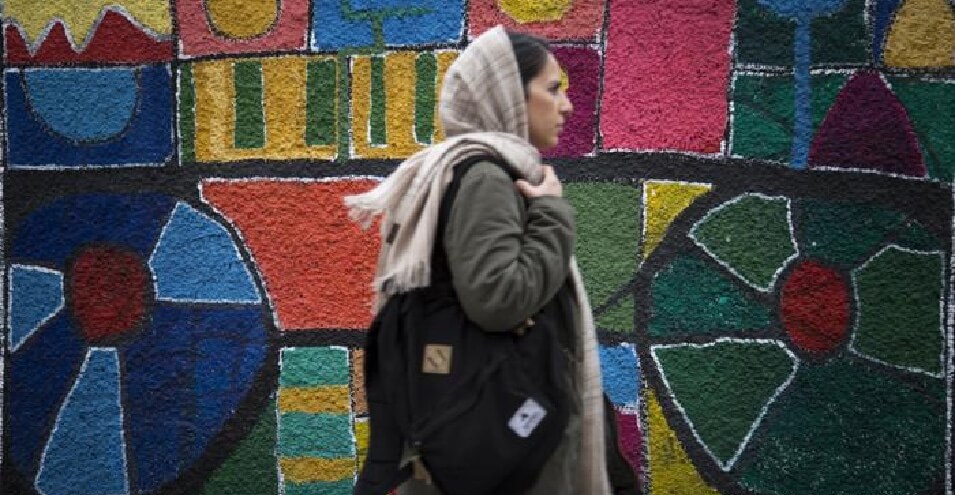
High walls, so high that when they raise their heads with their small frames, there is no sign of the clear blue sky they saw in storybooks, only walls. Walls with iron railings meant to prevent any non-mahram gaze from reaching them. Little girls play in the small schoolyard, and in the middle of their childhood games, they hear the school superintendent’s voice over the loudspeaker, calling out one of them from time to time in a harsh and commanding tone: Maryam, fix your headscarf, Romina, button up your coat, Zahra, cover your hair with your headscarf.
Our memories as women are filled with bitter and sometimes painful experiences we faced in girls’ schools. Little girls who, because of their gender in Iran, face double and structural violence. Girls who learn from childhood, in Iran’s education system and in those small yards with high walls, about limited mobility and immobility.
Physical Inactivity More Common in Girls Than Boys
A study conducted by the World Health Organization on 1.6 million people from 146 countries worldwide shows that physical inactivity among adolescents is a global concern. According to this report, more than 80 percent of adolescents aged 11-17 do not follow the World Health Organization’s recommendation of at least one hour of physical activity per day. According to this report, physical inactivity is more prevalent in girls than boys. According to the organization, girls’ inactivity in this study was 85 percent and boys’ inactivity was 78 percent. In many countries, girls after the age of ten show less inclination toward physical activities compared to earlier years. Some reports indicate a decline in girls’ physical activity during adolescence of up to 83 percent.
Many gender specialists attribute this change in behavior to gender roles and behavioral expectations from each gender. In fact, adolescent girls may view some sports more than younger girls as male sports. Despite all efforts made to change gender perspectives on sports in today’s world, sport is still not considered a feminine activity in many beliefs and cultures, and many girls learn this behavioral pattern and gender stereotype from childhood and enter adulthood with the belief that sports is a male domain.
Gender stereotypes regarding sports are more pronounced in countries like Iran where women face structural limitations. Girls who, from the moment they enter school and due to mandatory hijab and wearing headscarves and long, loose coats, and being confined to closed spaces, practically have no opportunity for movement and physical activity.
Women’s Limited Access to Public Spaces
In Iran, many sports—such as cycling—which require presence in public spaces are prohibited for women. The prohibition on women cycling in Iran is so serious that even girls cannot use bicycles to go to school. This is common in many countries and promotes physical activity in students who otherwise spend long periods sitting motionless at school desks.
Mohammad Taqi Naghdali, representative of Khomeini Shahr in the Islamic Consultative Assembly, opposed women’s cycling, calling it unlawful and forbidden in public spaces, and urged that women’s cycling be moved to covered places such as women-only parks to make it a reasonable activity.
These prohibitions and limitations on sports facilities for women and girls have caused significant physical and psychological harm. So much so that according to the social deputy of Iran’s Welfare Organization, over the past 15 years, due to lack of space and movement, girls’ vital capacities and health have declined by 11 percent.
A form of child abuse that, by restricting girls’ sports spaces to small, closed environments, has actually deprived them of the opportunity to develop and maintain physical and mental health from childhood. Girls who learn not to exercise and physical inactivity during school years, a lifestyle that also extends into their adulthood. According to statistics released by Afshin Molaei, head of the General Sports Federation, the rate of physical inactivity and lack of exercise among women in Iran has reached an alarming 64 percent. Molaei, calling this figure concerning, says: “If within a four-year period we cannot operationalize general sports among women and girls in the country, within the next decade we will only face a population of sick women.”
Research shows that helping to create an active lifestyle for girls during adolescence significantly contributes to the continuation of this pattern into their adulthood. Inactive girls in the future will become inactive women who suffer from serious diseases. Physical inactivity in girls causes hormonal disorders and will lead to osteoporosis and decreased muscle strength. Menstrual disorders are also reported as other consequences of physical inactivity in girls. High blood pressure, type 2 diabetes, breast cancer, ovarian cancer, and cervical cancer are among the other diseases that physically inactive children will face in adulthood.
Physical Poverty Among Women in Iran Has Reached Elementary School Age
Dr. Farzaneh Turkan, a specialist in physical medicine and founder of Tehran’s Sports Medicine Association, the first institution for sports medicine, referring to research conducted on girls’ sports, says: “Regarding Iranian women, we face a problem where 60 percent of our women face physical poverty from pre-adolescence; that is, physical poverty in our women has started from elementary school age. This situation continues and persists until youth and middle age, leading to diseases that require treatment and spending money on.”
According to this medical specialist and based on conducted research, the age of puberty in girls in Iran has become very low, reaching elementary school age, that is 9 and 10 years old. According to the aforementioned research, the age of puberty in girls who exercised was higher than the age of puberty in girls who did not exercise.
Despite all warnings from health experts about the consequences of physical inactivity among women and girls in Iran, it does not appear that these warnings have caused any change in the Iranian government’s policies regarding women’s sports. Based on the government’s perspective that wants to confine women within the home, most sports clubs in Iran have allocated morning and afternoon hours to women, while afternoon and evening hours—when employed women and school-age adolescent girls can attend—are practically reserved for men. This exclusion of women and girls from public spaces is an approach that the Iranian government has pursued for years through its macro and micro policies. Policies that teach little girls from childhood that sports in Iran is a male domain, with only a small share of it, and even that, reserved for them in some major cities and for a specific class.
Source: DW