Greece Increases Pressure on NGOs Assisting Refugees
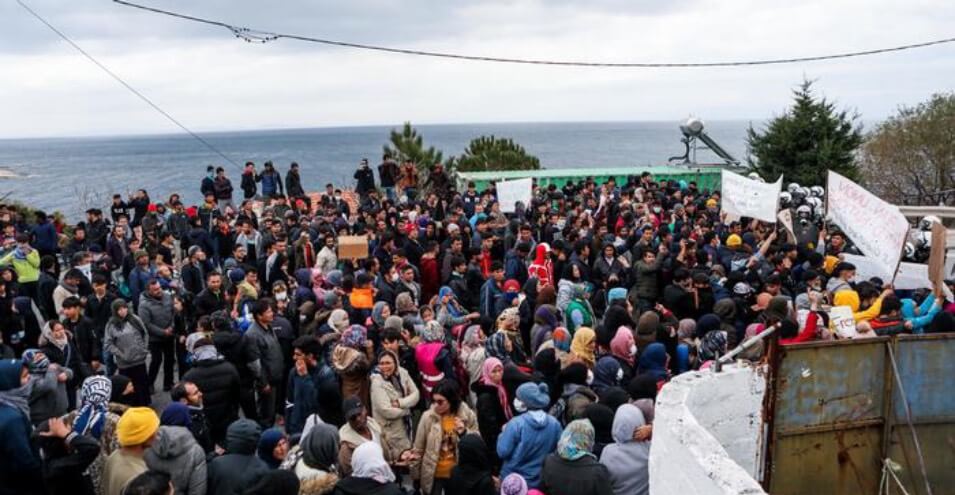
More than 42,000 refugees are living in inhumane conditions on Greek islands. Civil society organizations are working to assist refugees in efforts to improve their living conditions. The Greek government has imposed stricter regulations for humanitarian aid workers to continue their operations.
The Greek government has approved more difficult regulations for humanitarian aid workers of non-governmental organizations (NGOs) to continue their operations on the Aegean islands.
On Thursday, February 6, Giorgos Koumoutsakos, deputy minister of migration for the Greek government, stated that the new regulations are based on special provisions passed by parliament in an urgent session on Tuesday.
Koumoutsakos said that some NGOs are exploiting the large number of refugees on Greek islands to receive direct financial aid from the European Union. In a radio interview, he compared these civil society organizations to “mushrooms” that have sprung up overnight and are “profiting from these conditions”.
The European Union has suspended its financial assistance to civil society organizations that provide aid to refugees on the Aegean islands since the summer of 2017.
In its complaint about the European Union’s financial support to NGOs, the Greek government stated that non-governmental organizations “obstruct the government’s central planning for assisting refugees” and treat Greece “like a developing country” that is unable to care for refugees itself. For this reason, Greece had requested that the European Union provide financial aid directly to the Greek government.
NGOs: Government Failed to Create Proper Conditions
Two and a half years after the European Union cut financial aid to civil society organizations, the Greek government, despite receiving direct assistance, has still failed to improve the difficult and inhumane living conditions of refugees.
For example, in parts of the refugee camp on the island of Samos, in an area where refugees had set up tents, there were no toilets. Eventually, the non-governmental organization “Dirty” built toilets for the refugees. Civil society organizations also manage the refugee sanitation system. Currently, 42,000 refugees are living in difficult conditions on these islands.
The difficult situation in refugee camps has been repeatedly criticized by NGOs. In many cases, refugees have been left to fend for themselves. Now the conservative government of Kyriakos Mitsotakis wants to create greater difficulties for civil society activists of NGOs by passing and implementing new laws. These regulations include creating obstacles for humanitarian aid workers and imposing stricter regulations on refugee laws and faster detention and deportation of refugees.
The islands of Lesbos, Samos, and Chios are among the islands that have hosted the most foreign refugees. On these islands, thousands of Syrian, Iraqi, Afghan, and Iranian refugees are waiting for their asylum cases to be processed. According to refugees and local authorities, other refugee camps and settlements have no capacity for new refugees. Mayors of islands in the northern Aegean have been warning of a crisis for months.
Under the 2016 agreement between the European Union and Turkey, EU member states are permitted to return all refugees who arrive in EU member countries via Turkey back to that country. However, the process of assessing the refugee status of these individuals and returning them to Turkey is being pursued with considerable delay.
Last Monday, more than 2,000 refugees marched in protest of the extremely difficult living conditions in the Lesbos island camp. These refugees want to migrate to other European countries from Greece as soon as possible.
Source: DW