Greek Island Residents Protest Government’s Refugee Policy
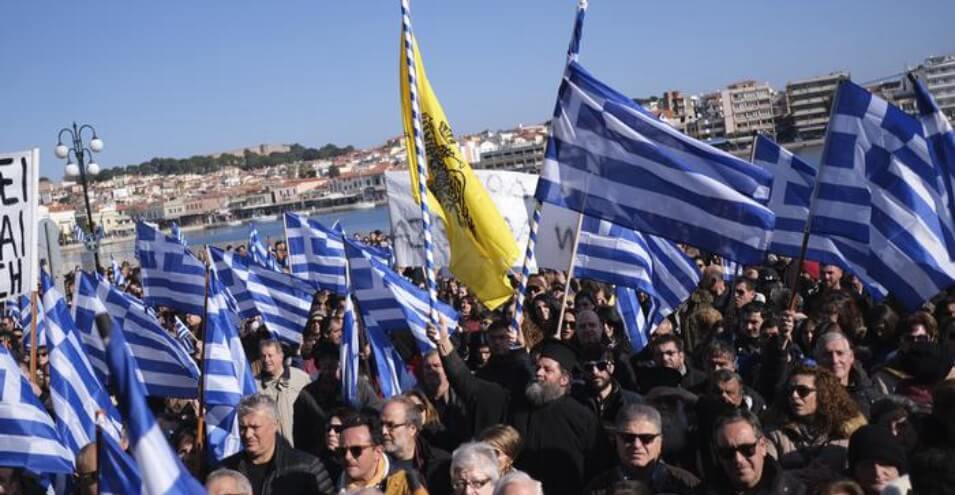
Residents of three Greek islands—Lesbos, Samos, and Chios—have launched public protests against Greece’s immigration policy. More than 42,000 refugees have been housed on these islands, and protesters are demanding that these refugees be relocated to mainland Greece.
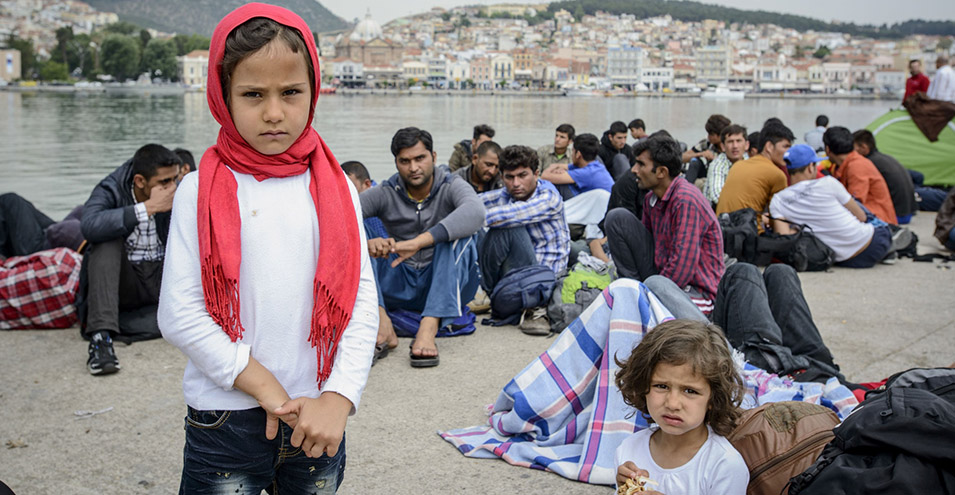
Lesbos, Samos, and Chios are three famous Greek islands that have accommodated the largest number of foreign refugees. These islands serve as the gateway for refugees entering European soil. Thousands of Syrian, Iraqi, Afghan, and Iranian refugees who have arrived on these islands are currently awaiting resolution of their asylum cases. According to refugees and local authorities, the camps and refugee facilities no longer have capacity for new arrivals.
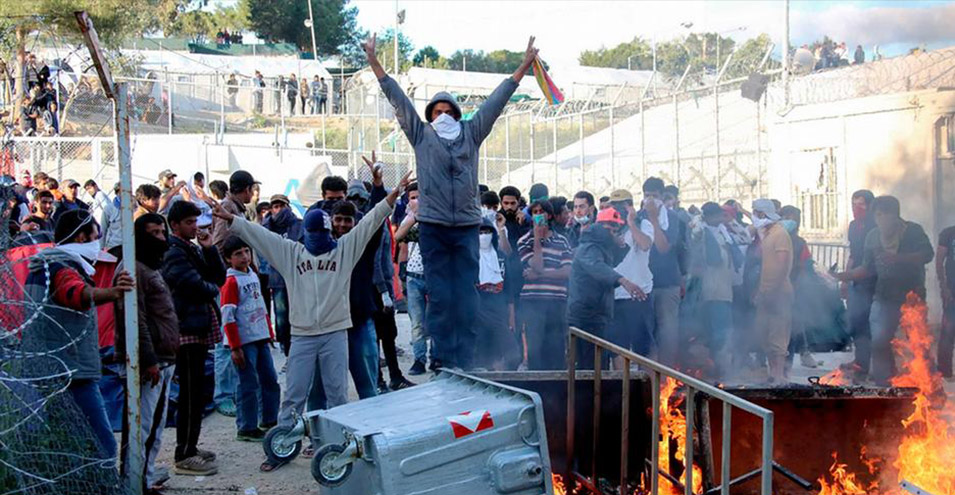
Greek protesters on Wednesday, January 22 (February 2 in the Persian calendar), demanded that the Greek government immediately relocate refugees residing in refugee camps to other parts of Greece.
Greek islands have effectively been paralyzed, with police officers, municipal employees, and government and non-governmental institution staff participating in a general strike. Shops have also closed in protest of Greece’s immigration policy.
A 72-year-old man who participated in the public demonstrations told France’s news agency that protesters are demanding the government dispatch refugees arriving on Greek islands to different regions of the country and that European nations take responsibility for accepting these refugees.
One of the protesters’ placards reads that the “Moria” camp on the island of Lesbos should be closed. This camp houses 19,000 refugees, despite being constructed to accommodate only 2,840 people.
The Moria camp on the Greek island of Lesbos more closely resembles a prison with strict security measures and minimal facilities: high walls, long rows of barbed wire, watchtowers, and large numbers of police and security forces.
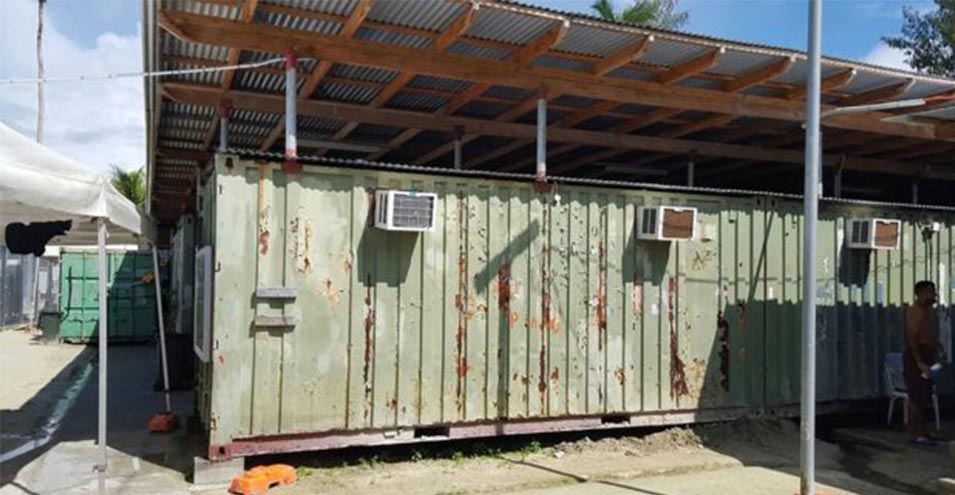
Inside this camp, refugees are forced to live in tents without heating facilities and use dirty bathrooms and toilets. Outside the camp, refugees remain stranded, lacking even these basic “amenities.”
Similar conditions exist on other Greek islands. Human rights activists have stated that the conditions for refugees in these camps are unbearable.
Last November, the Greek government decided to establish refugee camps on most of the country’s islands, including Lesbos, Samos, Kos, and Leros.
A total of 42,000 refugees have been housed on Greek islands, and refugee camps have repeatedly been sites of clashes between refugees.
Greece is the primary destination for refugees seeking to enter the European Union. According to a United Nations report, 55,000 refugees have entered Greece by sea and 14,000 have crossed Turkey’s land border. Most refugees have fled to Greece due to war and poverty.
Georgios Stantzos, the mayor of Vathy on the island of Lesbos, demands that human rights be respected and states that the island cannot tolerate accommodating such a large number of refugees.
The number of refugees in camps on the islands of Samos, Lesbos, Chios, Kos, and Leros is increasing daily. The presence of this number of refugees following the European Union’s agreement with Turkey is unprecedented.
Under the 2016 agreement between the European Union and Turkey, EU member states are authorized to return all refugees who arrive in EU member countries via Turkey back to that country. However, the process of addressing the refugee status of these individuals and the procedure for returning them to Turkey is being pursued with considerable delays.
Source: DW