Hamayoun Sameh’s Warning to Iran’s Jews: “Distance Yourselves from Israeli Media”
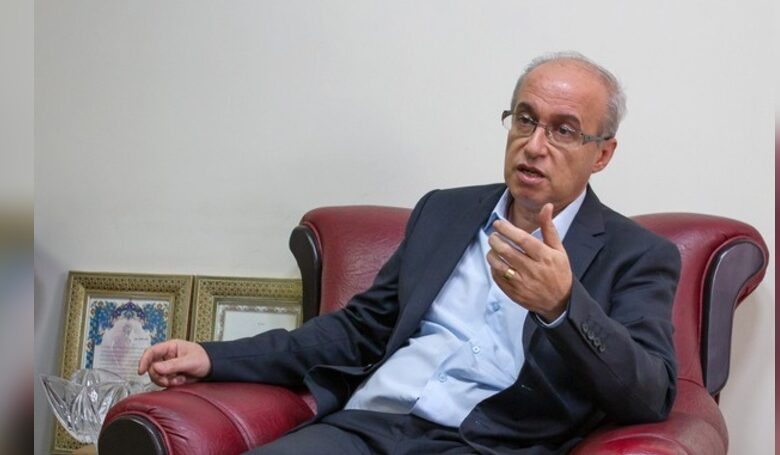
Hamayoun Sameh’s warning to Iran’s Jews to distance themselves from Israeli media demonstrates that religious minorities in Iran remain under pressure, even when their only language is that of prayer.
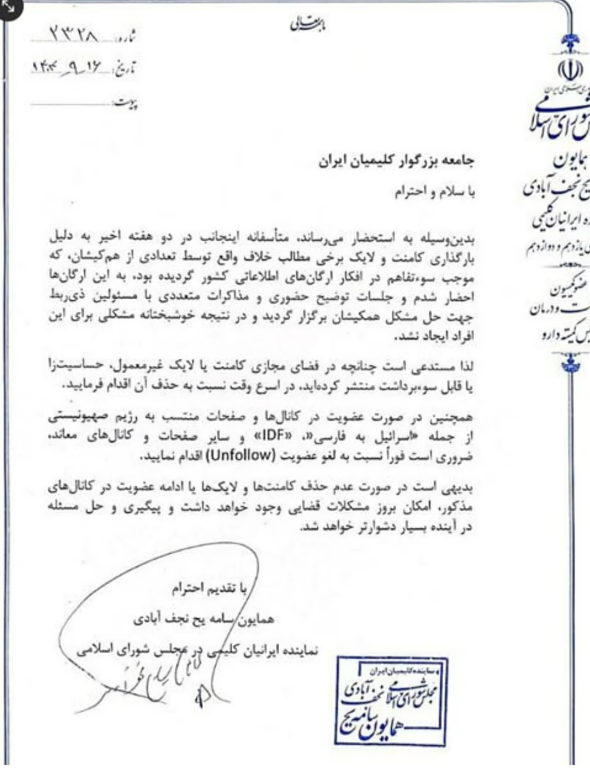
Hamayoun Sameh, representative of the Jewish community (Kalamian) in the Islamic Consultative Assembly, recently issued an open letter to his co-religionists, asking them to unfollow channels and pages belonging to the Israeli regime and Israeli social media platforms, and to delete any “likes” or “comments” they may have previously posted about “inaccurate or sensitive” content. He acknowledged that following these activities, he himself has been summoned by security agencies.
In his letter, he stated: “If you have sent unusual, sensitive, or misleading opinions or likes, please delete them as soon as possible.” He further emphasized that continuing membership in channels affiliated with the Zionist regime could lead to legal prosecution.
This latest warning must be viewed in the context of the ongoing suppression of religious minorities in Iran. Reports indicate that following tensions with Israel, Iranian security agencies have summoned or detained dozens of members of the Jewish community in cities such as Tehran and Shiraz.
Some Jewish citizens have even refrained from going to the streets, work, praying in synagogues, or attending gatherings due to fear of mob violence following political criticism or tensions with Israel.
All of this demonstrates a situation in which religious minorities suffer damage not only from the government, but also from social fate and public anxiety; a religious minority with a history spanning thousands of years in Iran, yet today facing a wave of suspicion and security and social pressure.
Iran, according to its official law, has accepted the presence of religious minorities such as Christians and Jews. The Jewish and Christian communities of Iran have had representatives in parliament for years; yet this legitimate and recognized minority today faces pressure to redefine its place in media, cyberspace, and public life through “self-censorship” and abstention from simple actions. Hamayoun Sameh’s warning to Jews to delete likes and comments, or to leave Israeli channels, is in fact an acceptance of the reality that even citizenship, history, identity, or official law are dispensable in the face of security and politics.
This incident (the warning to Iran’s Jews) should not be limited merely to the Jewish community. This process is a warning for all religious and ethnic minorities in Iran; when the government and security agencies, under the guise of “national security,” engage in controlling media, communications, and the freedom of expression of religious citizens, no Christian, Bahai, Zoroastrian, or Jew is safe from insecurity.
Such a policy is not only a violation of individual rights, but also a profound sign of structural distrust of religious and cultural diversity in society, and its ugliness is compounded when minorities have legal recognition and representation in parliament.
Freedom of expression, the right to communicate, freedom of religion and belief, and even the right to hold political opinions should not be privileges, but should be rights for all. Yet the fact that even official law and a parliamentary representative cannot defend the Jewish minority is an alarm bell regarding the fate of all minorities in Iran.
Today’s warning from Hamayoun Sameh should not be meaningful only to Jews; it should evoke in everyone in Iran the reminder that: “citizenship,” “identity,” and “religion,” when placed within a security-focused framework, become conditional existence.
As long as such an approach prevails, hope for equal rights for Christian, Jewish, Zoroastrian, Bahai minorities, and others, will remain in shadow, or its realization will be difficult.