Health Minister: People Should Practice Home Quarantine to Prevent Coronavirus
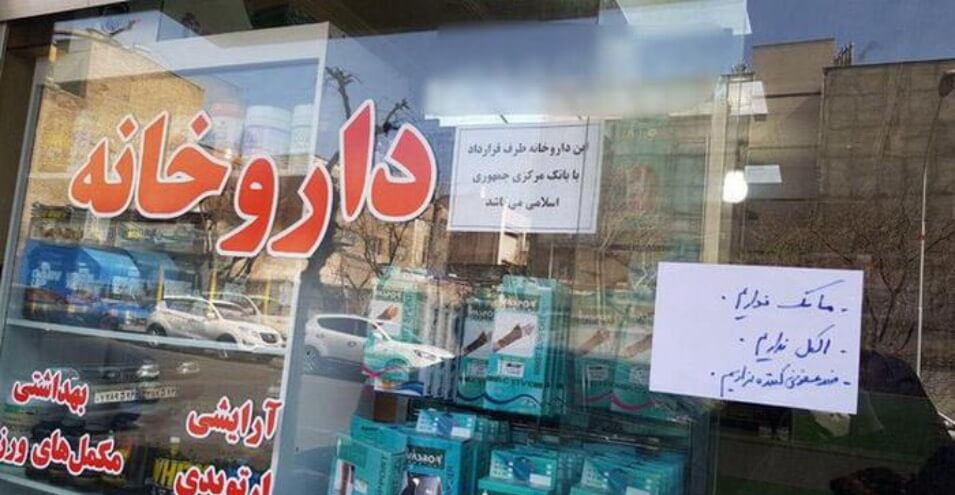
Concurrent with the distribution of free masks and disinfectants to families, the health minister asked people not to travel to Qom and pilgrimage sites. Quarantining cities is not on the agenda, but the health ministry has been given authority to decide on city closures.
Saeid Namaki, Iran’s health minister, has asked people to prevent the spread of coronavirus through home quarantine, avoiding kissing, staying away from crowded places, and not sharing personal items or public ATMs.
He asked residents of Qom not to travel anywhere and advised citizens of other cities not to travel to Qom and pilgrimage cities: “Currently, Qom is the epicenter of the disease and we must manage it. Most of the cases that tested positive have originated from travel to Qom.”
Namaki prioritized adherence to preventive measures over quarantining Qom or other cities and announced the distribution of free masks in Qom as well as disinfectants and educational brochures to families living in the city. Dr. Mehdi Goya, head of the infectious disease management center at the health ministry, also described the decision to quarantine cities as an inappropriate and failed approach that only causes panic among people.
The health minister said that since the coronavirus outbreak in China was announced, through his insistence and government support, direct flights from China were canceled, but indirect flights continued: “Of course, we stationed personnel at 36 border crossing points to carefully monitor everything… We were checking indirect cases entering the country from China, but if these individuals were in the incubation period and had no symptoms, they may have entered the country while infected.”
Namaki recalled that the origin of the virus was “Chinese carriers” and one of the people who died in Qom was a merchant who had traveled to China through indirect flights.
Surge in Coronavirus Cases in Iran
According to official reports, as of noon on Sunday, the 4th of Esfand, the death toll from coronavirus in Iran was 8 and the number of virus infections was 43 people. Saeid Namaki, when asked why the number of infected and deceased was higher than in other countries, said: “This is due to the transparency of our information dissemination system… There are also countries that have no information dissemination structure in this field at all and claim that they have had no positive cases to date. Therefore, people should not interpret this as one country being backward and having no positive cases so far, while we, as a country that has one of the best health and medical infrastructures, have had positive coronavirus cases.”
Meanwhile, Mohammad Reza Qadir, head of Qom University of Medical Sciences, warning of alarm bells in the city, has appealed to the health ministry and the government cabinet to address Qom differently: “…The situation in Qom is not suitable… In addition to Kamkar Hospital, Farghani Hospital in Qom with 400 beds has been allocated for combating coronavirus, but currently it is difficult to distinguish between influenza-like patients, H1N1 influenza, and coronavirus, and until tests are performed and results are determined for each patient, all are admitted to designated hospitals.”
Meanwhile, the vice president of Tehran City Council announced the quarantine of seven members of the council, saying coronavirus has become epidemic in some cities and the health ministry should address the issue more seriously. While Tehran buses and metro stations are scheduled to be disinfected twice daily according to the health ministry’s orders and free masks are to be given to people, the Tehran taxi management and supervision organization has called for electronic fare payment to prevent the manual exchange of money between passengers and drivers.
At the same time, Iraj Harirchi, deputy health minister, announced that in a meeting of the National Security Council, the ministry has been given special authority to decide on city closures if necessary.
Source: DW