Health Minister: We Must Live With Coronavirus for at Least Two Years
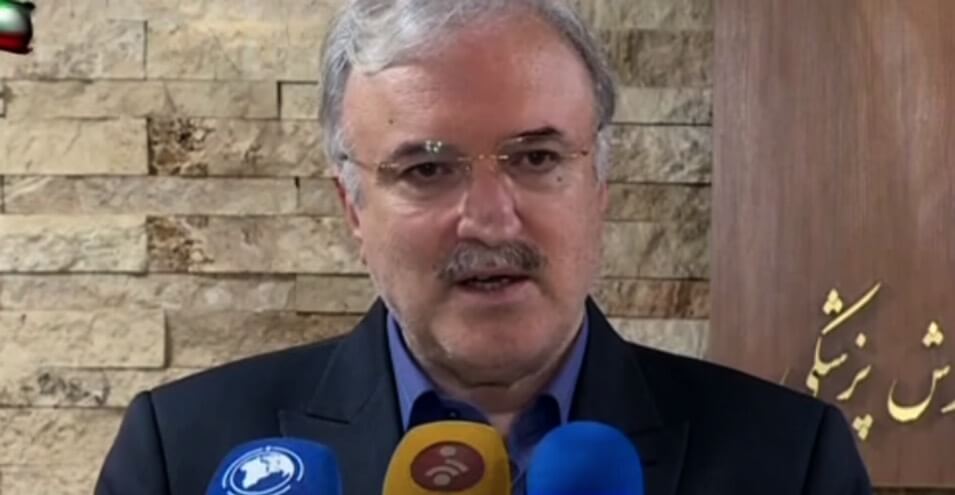
Iran’s health minister emphasizes that people must be told that the coronavirus has not ended, the disease peak has not passed, and it may take at least two years to live with coronavirus. The education minister also discussed hybrid even-odd shift schooling in schools.
According to Iranian authorities, the coronavirus situation in the country has not yet been contained, and people are still in the grip of coronavirus. The health minister told the heads of universities and medical science faculties that living with coronavirus may last at least two years.
Dr. Saeid Namaki said in a virtual meeting with heads of universities and medical science faculties across the country on Sunday, June 21 (June 21, 2021), that Iran is still in the first wave of COVID-19 and is experiencing the first wave of coronavirus, but it is possible that the shape of the first wave of coronavirus in one province may differ from what has been experienced in another province.
Namaki added: “We must believe and tell people that the coronavirus has not ended, the disease peak has not passed, and coronavirus is a complex virus with a hundred thousand faces, and it is possible that one treatment protocol works in one region and does not work in another region.”
The health minister has likened the coronavirus to “a camel-cow-leopard” that can accelerate and kick and gore.
Namaki emphasized that the behavior of coronavirus in southern Kerman differs completely from Hormozgan, or Minab with Bandar Abbas and other cities. Therefore, coronavirus exhibits different manifestations in different climates, races, and weather conditions.
Regarding people who were infected with coronavirus or lost their lives, the health minister also said that approximately 87 percent of COVID-19 patients suffered from obesity, diabetes, and underlying diseases, and 12.6 percent of people who died due to COVID-19 had no underlying diseases, and among people under 50 years of age, the main cause of coronavirus deaths was obesity.
Why was a red alert declared in five cities in Golestan Province?
According to Iranian authorities, in some provinces of the country, coronavirus has experienced a resurgence. For example, five cities in Golestan Province have been declared in a red alert state. Abdolreza Fadel, head of the University of Medical Sciences in Golestan Province, told the Fars News Agency that the cities of Gonbad Kavus, Aq Qala, Bandar Turkmen, Maraveh Tappeh, and Bandar Gaz are in red condition.
But what factors have caused the spread of COVID-19 in Golestan Province?
A civil activist from Golestan Province who did not wish to be named, in response to this question, told Deutsche Welle: “The normalization policies or normalizing conditions by the government and subsequently opening weekly markets in cities, Eid al-Fitr visits, holding wedding celebrations and mourning ceremonies, and the failure of many people to take this deadly disease seriously are among the factors that caused the severe spread of coronavirus.”
This civil activist further emphasized that if the government does not implement programs to restrict gatherings, if extensive awareness campaigns are not carried out, if people do not follow health protocols, and if civil organizations do not actively intervene in this regard, one should expect a widespread epidemic in Golestan Province.
Sending 40 Special Nurses to Khuzestan
But what emergency plans does the government have to control coronavirus in provinces declared to be in red alert?
Dr. Maryam Hazrati, Deputy for Nursing at the Ministry of Health, announced the dispatch of 40 special ICU nurses to Khuzestan Province following the increase in coronavirus prevalence in the province.
These nurses were sent to Ahvaz, Abadan, and Dezful for at least 15 days in coordination with universities of Bushehr, Razavi Khorasan, Tehran, Ardabil, Shahid Beheshti, Yazd, and Nishapur Faculty.
Hybrid Even-Odd Shift Schooling
Meanwhile, Iran’s education minister also said on the sidelines of a visit to the final examination venue of Albarz High School in Tehran that life cannot be shut down on the assumption of coronavirus’s existence, and students will participate in exam sessions while observing health protocols.
According to Mohsen Haji Mirzaei, school activities in sparsely populated areas will be held regularly and in densely populated areas on an even-odd shift basis.
The health minister has also said in this regard that education in universities and medical science faculties cannot be suspended in coronavirus conditions because the types of education are such that not all of them can be presented virtually.
Source: DW