Health Minister’s Concern Over Worsening Economic Conditions in Year 99
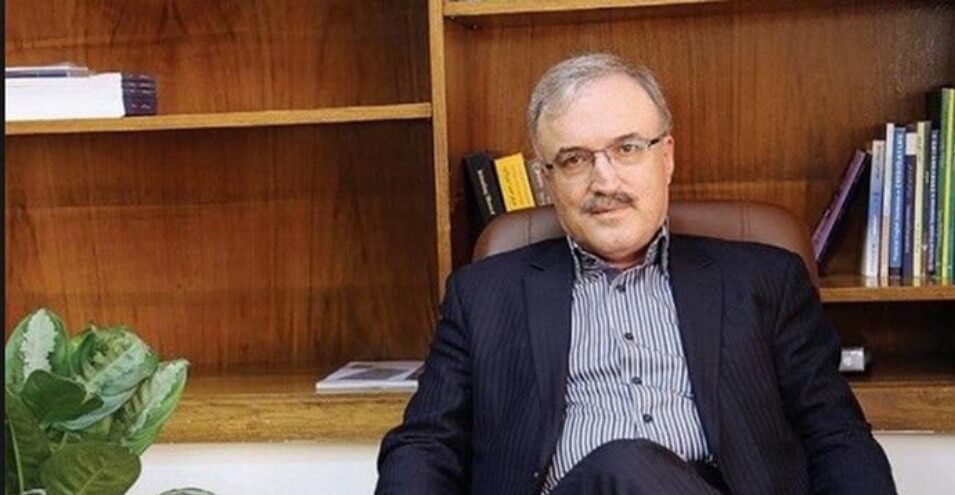
The health minister called injustice the cause of social upheaval and predicted that year 99 would be a difficult year. Saeed Namaki said that nurses are among those groups with 18 months of overdue salaries, and hospitals are also facing a shortage of nursing staff.
Saeed Namaki, the health minister, in a meeting of the Supreme Council of Nursing, considered discrimination and injustice as grounds for social upheavals and said that if people do not face these feelings, they show more patience and tolerance.
According to Iranian media reports, Saeed Namaki on Monday, December 9 (December 30) also stated that if the country’s economic situation continues in this manner, year 99 would be more difficult than year 98, and he as health minister must “balance the expenses of this ministry with the country’s pocket.”
Nursing associations have still not been able to collect 16 to 18 months of overdue allowances and overtime for many nurses across the country. Last August, nurses in hospitals in several major Iranian cities complained of a “sharp and even negative” decrease in allowances calculated based on the “Ghasedak” plan.
Ghasedak is a plan that, with a specific formula based on performance, mandatory hours, overtime, place of service, and other factors, determines the amount of allowance paid to each individual.
Discrimination and improper implementation of nursing laws, including tariff-setting laws, productivity and hard jobs, are among the other main axes of nurses’ protests.
“Ghasedak” That Brings No Good News!
The health minister considered the Ghasedak plan “unsuccessful, unjust” and economically irrational and called for its reform.
According to nurses and protesters working in medical centers, the implementation of the Ghasedak plan has resulted in a significant reduction in their overtime and allowance payments. For example, before the implementation of the Ghasedak plan, nurses’ monthly allowances were one and a half to two million tomans, but after this plan, these amounts have now decreased to 800,000 tomans.
The Iranian Nursing Association stated that it has been pursuing the reform of this plan since 2017, and officials of the Ministry of Health and Parliament have not heeded the nurses’ requests. Nurses in widespread protests and gatherings in late 2017 published a letter containing 20 articles addressed to officials of the Ministry of Health and announced their demands.
The “House of Nurses” also criticized the very unfavorable condition of nurses in Iran on Wednesday, December 4 in a letter to Hassan Rouhani, saying “with the meager allowances that have not been paid for 16 months, we see no reason to participate in the celebration of Nurses’ Day.”
Saeed Namaki on Monday, regarding the situation of nurses, said that the Ministry of Health owed 10 trillion tomans from the Social Security Organization, of which 5 trillion tomans has been collected.
The health minister confirmed 18 months of overdue allowances and overtime for Iranian nurses and said that nurses’ salaries and amounts received must be coordinated and compatible with the country’s economic conditions.
Nurse Migration
It appears that this very incompatibility between salaries and economic conditions is what has attracted healthcare aides, nurses, and bachelor’s to doctoral degree graduates in nursing to emigrate from the country.
The secretary general of the House of Nurses of Iran informed ILNA of the annual emigration of 400 nurses outside the country.
Based on statistics from the House of Nurses, the process of nurse migration increased in early 2016 compared to 2015. This statistic in 2017 was accompanied by ups and downs, so that in March 2017, 8 nurses emigrated. This figure increased by 4 people in April 2017, reaching 12 nurses. These statistics were obtained after nurses’ self-declaration to quit their jobs and obtain professional certification from the House of Nurses.
Mohammad Sharifi Moghadam, secretary general of the House of Nurses of Iran, considered financial problems as a factor in nurses’ migration to Australia, Canada, and even the Persian Gulf region. According to him, according to the latest 2017 statistics, more than 180 nurses emigrated to Australia alone.
Difficult Working Conditions
Assaults on nurses, along with mandatory overtime and non-payment of claims, have joined forces to diminish work motivation for nurses.
Source: DW