Hezbollah’s Victory in Lebanese Elections and Its Impact on Iran-Israel Tensions
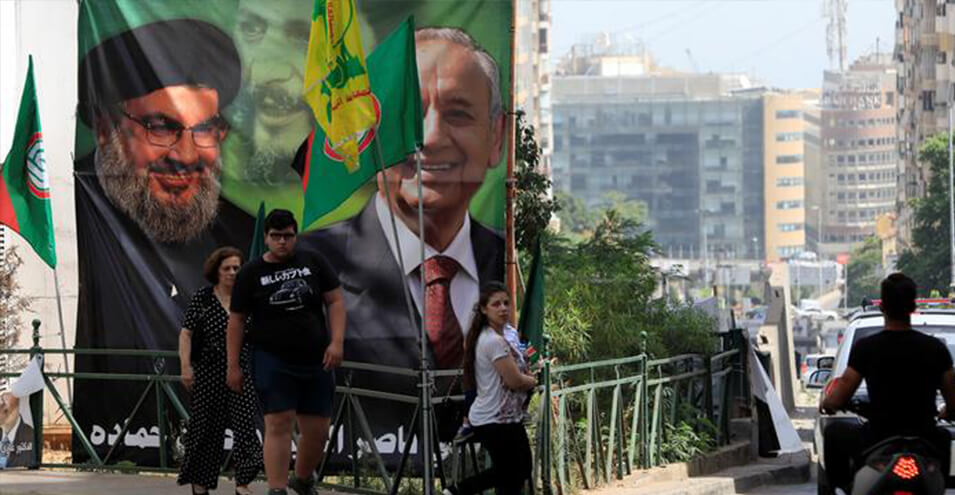
Lebanon’s parliamentary elections were affected by the situation in Syria and tensions among regional powers. Hezbollah and its allied groups were able to secure a majority of votes in the Lebanese parliament. This victory coincides with the peak of verbal warfare between Iran and Israel.
On Sunday (May 7/Ordibehesht 17), Hezbollah and its political allies, the Shiite movement “Amal” led by Nabih Berri, Speaker of Parliament, and the independent movement “Free Patriotic Movement” led by Michel Aoun, President of Lebanon, were able to secure more than half of the parliamentary seats in the country’s first elections in 9 years.
Saad Hariri’s Future Party, a Sunni prime minister backed by the West, despite losing several seats, will continue to form Lebanon’s new government. The Lebanese Prime Minister, based on the sectarian power-sharing system in the country, must be a Sunni.
Christian parties have also managed to achieve a major victory by doubling their representatives in parliament from eight to 15.
Public participation in the parliamentary elections was lower than in the 2009 elections. In that period, 54 percent of eligible voters participated in the elections. This time, participation did not exceed 49 percent. In Shiite-populated areas of Lebanon, unlike other parts of the country, the number of voters was higher.
Israel’s Response: Hezbollah = Lebanon
Naftali Bennett, Israel’s Minister of Education, was one of the first Israeli politicians to immediately react to “Hezbollah’s victory.” Bennett wrote in a tweet: “The result of Lebanon’s elections has been sealed based on calculations we have had for a long time. Hezbollah = Lebanon.”
He emphasized that Israel makes no distinction between Hezbollah and Lebanon’s independent government.
Bahram Qassemi, spokesman for Iran’s Foreign Ministry, also said on Monday (April 7/Ordibehesht 17) in response to parliamentary elections in Lebanon that Iran supports the Lebanese people’s choice. Qassemi added: “We congratulate those who were able to win the majority of Lebanese people’s votes.”
Exactly one day before Lebanon’s parliamentary elections, Israeli Prime Minister Benjamin Netanyahu heavily attacked the Islamic Republic for its military presence in Syria, saying: “We are not looking for a confrontation [with Iran], but if such a confrontation is necessary, it is better that it happen now than in the future.”
According to Israel’s prime minister, Iran is trying, with the help of its regional ally Hezbollah, to open a new front in Syria against Israel. In 2006, there was a large-scale military conflict between Israel and Hezbollah.
In such circumstances, to what extent can the victory of an Iran-friendly movement in Lebanon affect tensions between Iran and Israel?
“Only Hezbollah Did Not Win”
Menshe Amir, a Middle Eastern affairs expert from Israel, tells Deutsche Welle that Hezbollah’s absolute majority was through cooperation with Amal Party and other Shiite organizations, and Hezbollah did not achieve it alone and did not come to power alone.
He added: “The largest party faction in Lebanon will still be the Future Party belonging to Hariri. The Future Party and Sunnis in Lebanon are still considered Lebanon’s largest political party. Although we also count the Phalangists and Maronites. The Maronites are of two types. One group supports Hezbollah and backs Iran’s government, and the other group is opposed to Iran and supports the Future Party.”
According to Menshe Amir, the greatest danger to Israel comes from two directions: on one hand, the presence of the Islamic Revolutionary Guard Corps in Syria, and on the other hand, Hezbollah in southern Lebanon. This Israeli Middle Eastern affairs expert said: “It should be noted that 10 years have passed since the military conflict between Hezbollah and Israel, and in these 10 years, Hezbollah has not dared to launch a new attack against Israel. But tensions between Iran’s government and Israel have reached a sensitive point, and Iran favors proxy warfare and perhaps wants to put Lebanon’s Hezbollah against Israel once again.”
According to Mr. Menshe, Hezbollah is in a difficult position and is accused of the flight of tens of thousands of Syrians to Lebanese soil. He also considered “the large sums of money Iran’s government spent in Lebanon’s elections” as one of the factors in Hezbollah’s victory.
Strengthening of Hezbollah and Increased Tensions Between Iran and Israel
Menshe Amir continued: “The stronger Hezbollah becomes in Lebanon, the more tensions between Israel and Iran will increase. Because Hezbollah is not a domestic and national Lebanese movement, but rather the operational arm of a foreign government that, with the help of large sums of money, was able to gain this power in Lebanon. Israel does not want war and wants peace to be maintained in the region, and Israel’s reaction to Hezbollah’s action depends on Hezbollah’s action.”
Gil Morsiana, from the Science and Politics Foundation in Berlin, in an interview with Deutsche Welle Farsi about the impact of Hezbollah’s victory on Israel-Iran tensions, said that from Israel’s perspective, even without regard to the outcome of elections in Lebanon, Hezbollah will still have the upper hand in that country, and any outcome will not significantly change this situation.
This expert from the Science and Politics Foundation in Berlin emphasizes: “Hezbollah’s military capabilities are not affected by political developments in Lebanon, and Israel does not recognize this group as an independent political force representing the views of Lebanese people. For example, one can point to Hezbollah Lebanon’s joining Iran in the Syria dispute, which was contrary to the opinion of many Lebanese.”
Israel and Hezbollah Dispute Over Maritime Border and Wall Construction
According to Mr. Morsiana, if Hezbollah achieves political victory in Lebanon, it will have a better position to support Iran’s regional policies.
In this regard, he also emphasizes: “Currently, Hezbollah can have two issues to escalate tensions with Israel and use them to attack Israel. The first issue relates to the disagreement in determining the maritime border between Israel and Lebanon, where there are gas resources in this region. The other issue is the construction of a wall on the Israel-Lebanon border.”
According to this expert, Hezbollah’s political victory and the group’s increased power in Lebanon could give Iran more room for maneuver to attack Israel. However, all of this does not change Israel’s situation, because they know that Hezbollah will participate in any activity against Israel.
Source: DW