Highest Number of Executions in 25 Years: 82 Percent of Regional Executions Carried Out in Iran

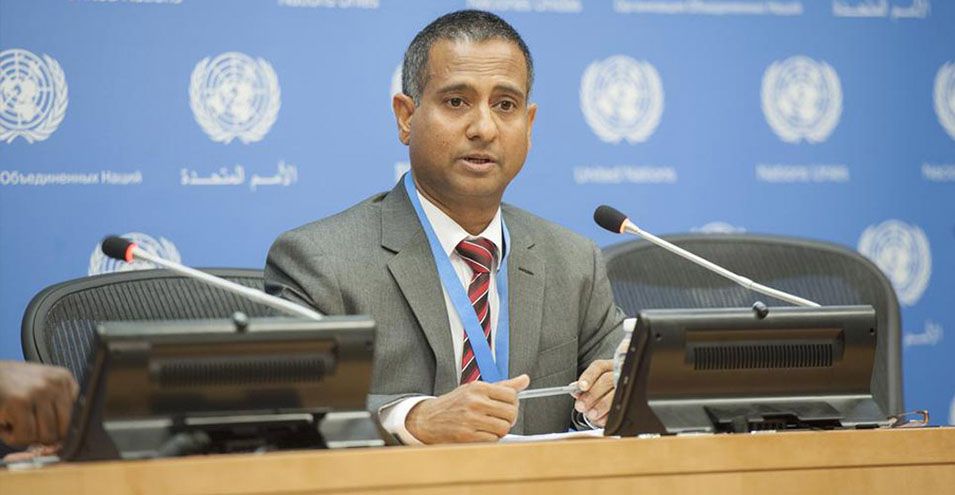
According to CNN’s report, at this press conference, the media official of Amnesty International noted that “the fight against executions is not always accompanied by good news, but today I can only tell you that after 9 years of effort and struggle, we can inform you of the news of the annulment of the execution sentence of Moses Akataobi in Nigeria. He was only 16 years old at the time of the crime and was tortured to confess, but after years of struggle, today he is a free man, and this means that our activities also bear good fruits.”
Then Audrey Gagen, Director of Global Affairs at Amnesty International, considered the increase in executions worldwide “concerning” and added: “The highest number of executions in the past 25 years, excluding all executions carried out in China, is estimated, and we still do not have the ability to verify the number of executions in that country.”
In the next stage, he mentioned the highest rate of increase in executions in three countries—Iran, Saudi Arabia, and Pakistan—and said: “89 percent of all world executions—considering that China is not included in this statistic—have been carried out in these 3 countries.” Audrey Gagen emphasizes that based on our estimates, the number of executions in China will be more than a thousand people, but since all execution news in that country is classified, we cannot provide accurate statistics about it.
In total, 1,634 people were executed in 2015, which is nearly a 50 percent increase compared to the previous year. This report specifically mentions the carrying out of at least 977 executions in Iran—this figure was reported as 743 people last year—most of which are related to drug-related crimes and were sentenced to death in unfair courts and their sentences were carried out. According to Amnesty International’s report, at least 4 people who were under 18 at the time of committing the crime were executed after reaching legal age, and 58 executions were also carried out in public. The Islamic Republic of Iran is solely responsible for 82 percent of executions carried out in the Middle East and North Africa region.
In the Iran section of this year’s Amnesty International report, reference is made to the issuance of an execution sentence for Mohammad Ali Taheri, the founder of “Erfan-e Halgheh,” which according to this organization is contrary to freedom of speech and belief and freedom of assembly. This report also refers to the execution of Behrouz Alkhani on the charge of membership in the Pejak group and the holding of 10-minute trials for 6 Sunni religious activists whose execution sentences were carried out.
James Lynch, Head of the Middle East Section of Amnesty International in the field of executions, at a press conference held on Tuesday, April 5, referred to the Islamic Consultative Assembly’s proposal to replace the execution sentence related to drug-related crimes, but emphasized that “this is only a draft and many people in Iran still face the serious possibility of execution.” He also referred to the doubling of executions in Saudi Arabia and added: “Iran protested the execution of Sheikh Nimr in Saudi Arabia and the failure to hold a fair trial for him. This is while they themselves do not observe any of these matters in their own country.”
I asked James Lynch about the issue of Iran and the claims of the Islamic Republic’s authorities regarding the independence of powers. This claim is raised while even according to the Islamic Republic’s own constitution, the government has the responsibility to protect citizens’ rights. In response to Kayhan London, he said: “It is clear that executions are carried out by Iran’s state authority, and we have observed in many cases that fair process has not been observed. We do not accept this independence issue in this way because each of the authorities can play an important role in the execution or prevention of these sentences. We welcome any dialogue with Iranian authorities and invite them to swiftly implement all of the United Nations human rights recommendations.”
On the sidelines of this press conference, I also had a brief conversation with Raha Bahraini, Amnesty International researcher in the field of Iran.
– Despite warnings and activities of human rights organizations, the rate of execution of death sentences in Iran has been reported to be close to 1,000 cases. What do you attribute this increase to?
– The execution statistics for 2015 are truly horrific. Most of these executions are related to drug-related crimes that should fundamentally not be subject to the death penalty under international law. The statistics specifically show that the execution of death sentences in these cases has no specific impact on combating such crimes, and even the authorities of the Islamic Republic of Iran themselves have acknowledged this. Despite this, Iran’s authorities have taken no practical steps to replace or abolish the death penalty, and for this reason, we are faced with wholesale execution sentences for drug crimes in Iran. As long as Iran’s laws are not reformed and the death penalty for drug-related crimes and of course other crimes is not abolished, the risk of an increase in executions in Iran will exist.
– Many human rights activists have warned about political and ideological executions being hidden in the shadow of the high number of executions related to drug crimes. How do you evaluate these warnings?
– In these cases, there are multiple shortcomings that Amnesty International has repeatedly mentioned in its reports. Religious and ethnic minorities are disproportionately prosecuted with charges of “moharebeh” and “corruption on earth.” “Corruption on earth” is specifically not defined in the Islamic Republic’s criminal law, and for this reason, the hands of security and judicial forces are free to use this title for actions that are not fundamentally considered crimes and fall in the realm of freedom of speech and opinion. It is in such circumstances that many are accused of corruption on earth and execution sentences are issued for them. For example, the conviction of Mohammad Ali Taheri on charges of corruption on earth is just one of these cases; this is while he only exercised his right to freedom of speech, opinion, assembly, and communication with others. Regarding the crime of moharebeh, although since 2013 the law has undergone changes and this crime is only related to armed activities, we still see that many are in the execution queue on the charge of moharebeh without even carrying weapons. I should add here that Amnesty International is opposed to the death penalty in any form, under any charge, and regardless of the characteristics of the criminal, but the issuance of executions in unfair courts and based on crimes that fundamentally should not be considered crimes is more cause for concern.
– How do you evaluate the proposal presented in the Islamic Consultative Assembly to replace the death sentence?
– Amnesty International certainly welcomes any action to abolish the death penalty for drug-related crimes, but regarding this proposal, several points must be considered. First, the text of this proposal is currently very preliminary and introductory, and no process has been proposed for presenting and deciding on it, therefore, it is too early to consider this proposal as an effective action by Iran’s authorities in response to the many concerns that exist about Iran’s dark execution record. I should also add that this law intends to replace the death penalty with life imprisonment, which, given the unfairness of the processes followed in revolutionary courts, is itself cause for concern.