History Repeating Itself; This Time at Tehran’s Armenian Cemetery!
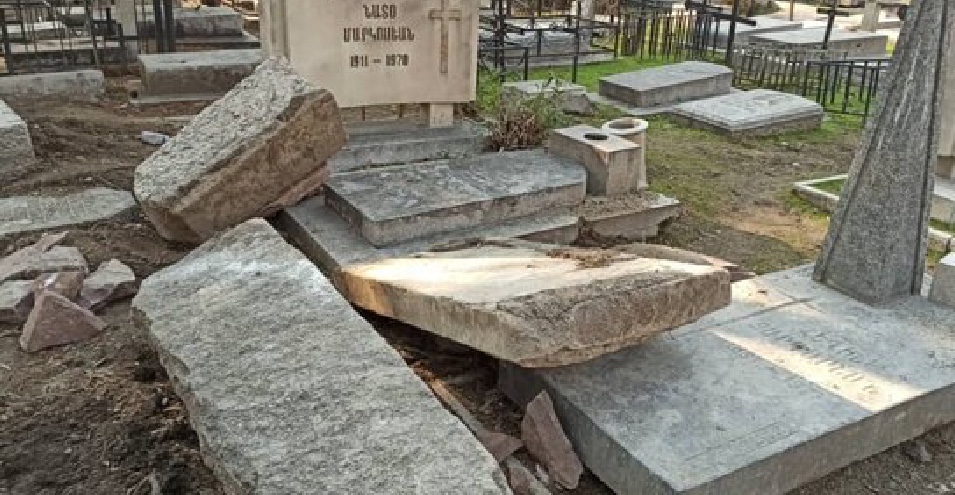
This time history has repeated itself for the capital’s cemeteries, and it makes no difference whether it’s Ray or Tehran; although the orchestrators of this repeated scenario are different. The Endowments Administration drafted an organization plan for Ibn Babuyeh Cemetery and Amzade Abdullah Shrine, and now the City Council has approved the same plan, this time for organizing the ancient Armenian cemeteries in Dolab, Tehran.
According to ISNA, these plans all say the same thing: there will only be organization and the surrounding space will be tidied up, but in the process, ancient, valuable, and historical gravestones are unknowingly broken, piled on top of each other, and ultimately when access to the old, historical, and sometimes Qajar-era gravestones is lost, they are forced to replace them with uniform marble stones that display only a deceased person’s name and two dates.
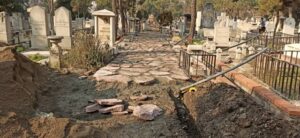
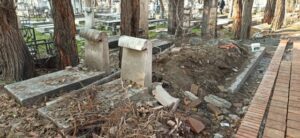
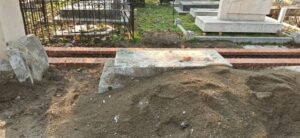
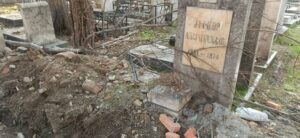
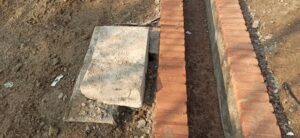
Now, published images from the Armenian Cemetery at Dolab Gate have once again stirred fear and concern among heritage activists. Images that three Tehran researchers had after visiting the project’s implementation at the cemetery on December 31st and published on their personal Instagram pages continue to show the condition of the gravestones in the same way.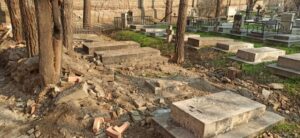
In one place a gravestone is broken, another is uprooted or has cracks; these are like the same signs that contradict what the endowments officials said during the implementation of their organization plan, particularly at Ibn Babuyeh Cemetery, when they said old gravestones would remain in their places, but apparently they forgot to emphasize this note: “if they are not damaged during project implementation.”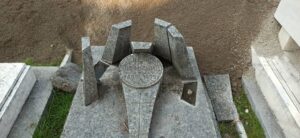
These damages also included the “Dzizernakaberd,” meaning “Fortress of Swallows,” memorial project dedicated to the martyrs of 1915, which has been placed on some of the gravestones in these cemeteries. (This project contains 12 converging columns representing the 12 provinces where Armenians were killed. A needle-shaped column with a height of 44 meters is also located beside the columns, symbolizing the rebirth of the Armenian people.)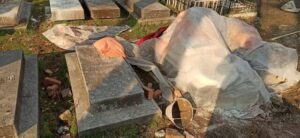
Now, history is repeating itself in the organization of ancient cemeteries in Tehran.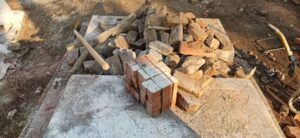
Of course, Morteza Adibzadeh – Deputy of Cultural Heritage at the General Office of Cultural Heritage, Tourism and Handicrafts of Tehran Province – had told ISNA a few days after the project began at the Dolab area in Tehran that “the Dolab cemetery complex is being restored and organized by the Behesht-e Zahra Organization in line with protecting Tehran’s historical cemeteries, and in this project the intermediate passage of the cemetery complex, which was previously an asphalt street, has been paved with stone and pedestrian walkway with a tourism infrastructure approach in the region, and all external walls of the graves are being restored.
Regarding the internal plan of the cemetery, he had also emphasized: “All visitor paths between the graves have also been covered with gravel, and by reviving the original channels and cement and brick canals to their original form, the internal structure is also being organized. In this phase, sanitary facility improvements and restoration and organization of internal walls and benches and some elements inside the cemetery are underway.”
Source: Turbat Ma